



Solving challenges through co-creation
Achieving a level of precision previously thought impossible with robots
First released April, 2026

When it comes to using factory automation (FA) to improve production processes, the best approach is not always clear from the start, and the more complex the project is, the more likely you are to need to remain flexible. In these cases, an effective approach is a direct collaboration between the end user and their FA vendor. For example, when Yokowo Co., Ltd. was looking to automate the production of semiconductor inspection probes, it launched a co-creation project with Mitsubishi Electric to help overcome its process challenges. By uniting the expertise of a diverse group of people, the combined team was able to come up with improvements and remove the barriers standing between them and success.
Key Points:
- 1. Real-time correction of robot motion based on camera images
- 2. Achieving processing times similar to skilled technicians
- 3. Creating innovation through collaboration between people with diverse perspectives
Yokowo Co., Ltd. Tomioka Plant
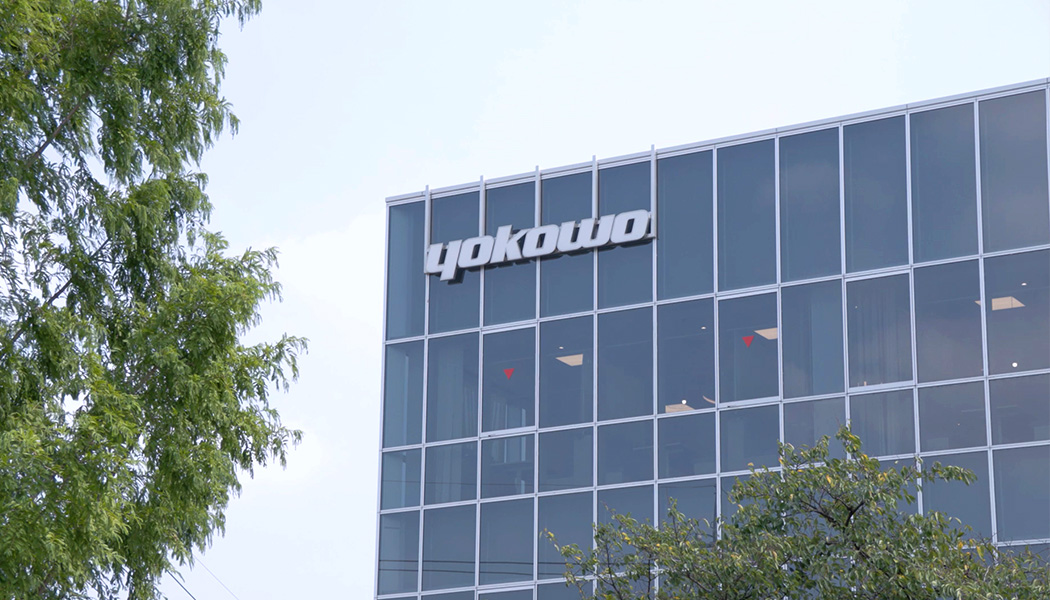
As a long-established manufacturer with over a century of history, Yokowo develops, manufactures, and sells antennas for vehicle communication and infrastructure solutions in addition to connectors for electronic devices and advanced medical devices. One of the company’s production locations is based in Tomioka City, in Japan’s Gunma Prefecture.
The Tomioka site manufactures ultra-small semiconductor inspection probes, which consist of a spring and a terminal embedded in a superfine metal tube that is less than half the thickness of a human hair. Because they require micron-level processing precision, these probes are assembled either manually by skilled technicians or by in‑house production machines that require product‑specific fixtures. However, it takes a long time to train technicians, and there are more than 200 types of probes, making it difficult to prepare dedicated equipment for each product.
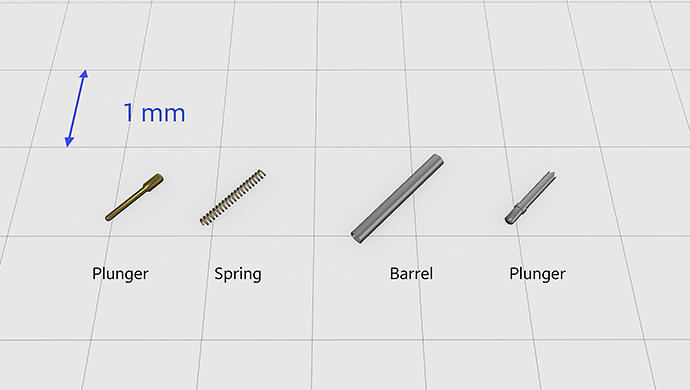
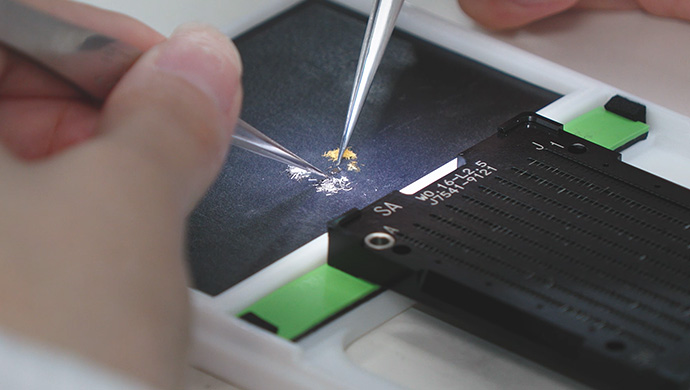
Yokowo produces ultra-small probes by assembling tiny components, each less than 1mm long. Assembly involves manual work by skilled technicians or machines with product-specific fixture.
That’s why the team at the Tomioka Plant decided to explore the possibility of using robots to automate production, with the goal of developing a flexible system capable of creating various products. However, when the project began in 2023, the team was not sure whether micron-level processing was even possible with a robot. The Tomioka Plant’s probe production process required precision of 5 microns or less, whereas robots typically have a control accuracy of around 30 microns.
“It was impossible using robots in the usual way,” says Yuji Kobori, Senior Engineer in the Innovation Promotion Department, Production Process Innovation Headquarters.
Kobori had experience fully automating production. At a major manufacturer where he previously worked, he had been in charge of a project to introduce robots. But even with this experience, he had a feeling that automating the probe production process might prove to be tricky.
Yuji Kobori, Senior Engineer
Innovation Promotion Department, Production Process Innovation Headquarters
Kobori consulted Mitsubishi Electric, which had supplied robots for his previous project. One idea that emerged was to use camera data as feedback to control the robot’s motion. Unlike the usual teaching process, the goal was to increase control precision by using camera images to correct the robot’s motion in real time. In Kobori’s words, this would “bring out performance beyond the limits of robotics” – not an easy thing to achieve.
When Kobori put this ambitious idea to Mitsubishi Electric’s robot sensor division, the reply was positive: “I think we can do it.”
“I was impressed that they would take on such a challenge when its feasibility was so uncertain,” Kobori said.
The robot’s rigidity was a key factor
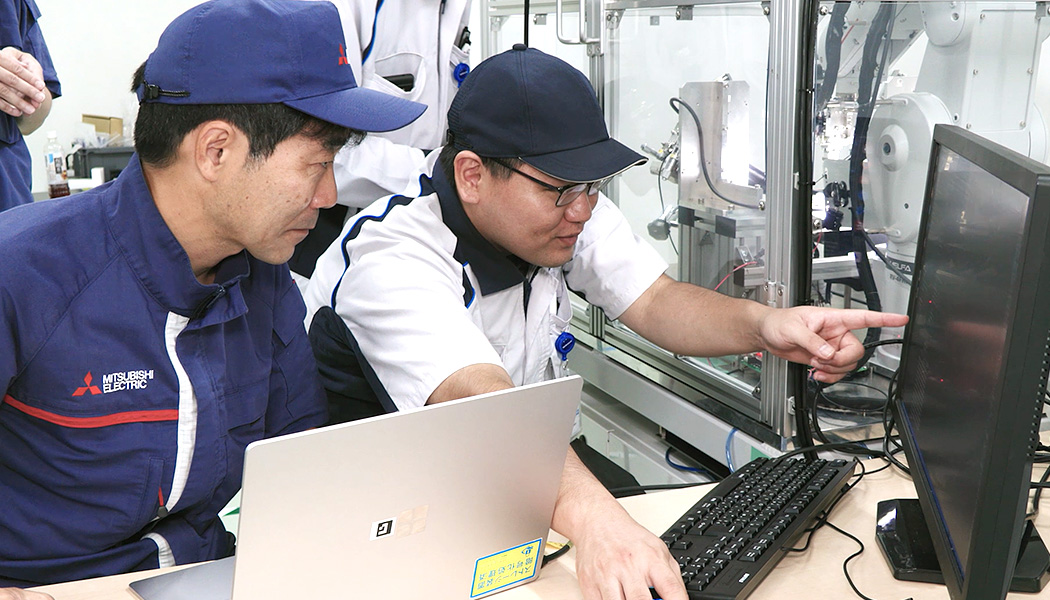
Engineers from Yokowo and Mitsubishi Electric worked together to solve challenges.
The project began at Mitsubishi Electric’s co-creation laboratory, which is open to engineers from other companies. The team of engineers from Yokowo and Mitsubishi Electric worked together, repeatedly testing and verifying ideas until they finally produced a feedback system combining two cameras.
In the system, images are captured by two cameras, which alternately provide feedback to the robot via an industrial PC (IPC). This means that any slight misalignment of the robot is corrected in real time.
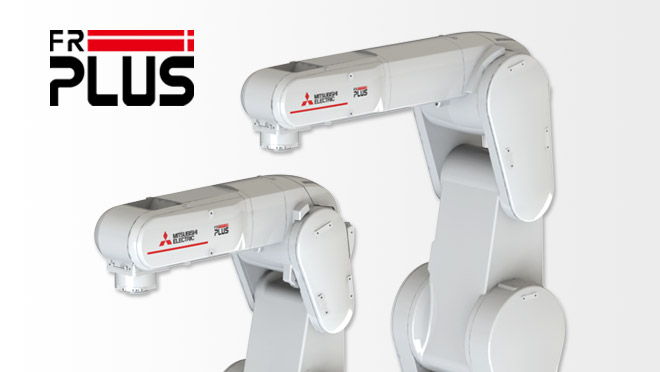
“The high rigidity of the robot was a key factor. We tried out various robots, but the only one that could satisfy our criteria was Mitsubishi Electric’s MELFA,” Kobori said.
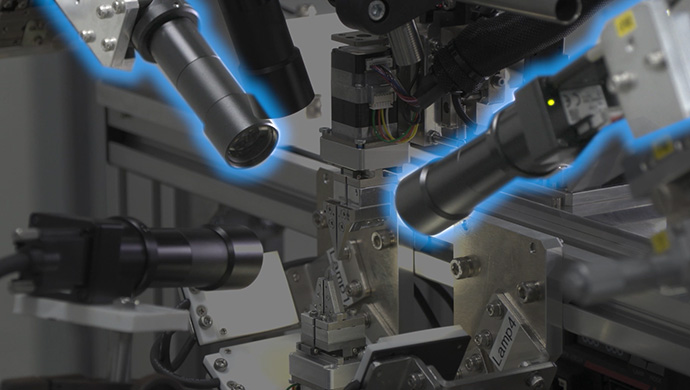
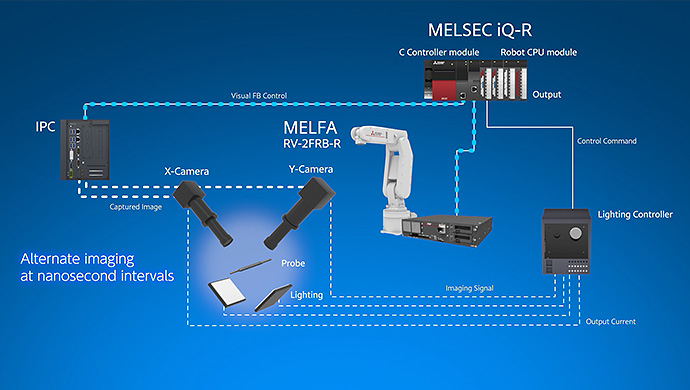
Images are captured by two cameras alternately (left), and this information is provided as feedback to the robot (right).
Images are captured by two cameras alternately (top), and this information is provided as feedback to the robot (bottom).
However, the co-creation project between Yokowo and Mitsubishi Electric did not end there. “An experienced technician can assemble a probe in 25 seconds. It would be meaningless to automate this process unless the robot can do it in under 50 seconds. That was our challenge,” explained Takeshi Akao, Executive Officer, Head of Production Process Innovation Headquarters and Head of CTC/FC/MD Manufacturing.
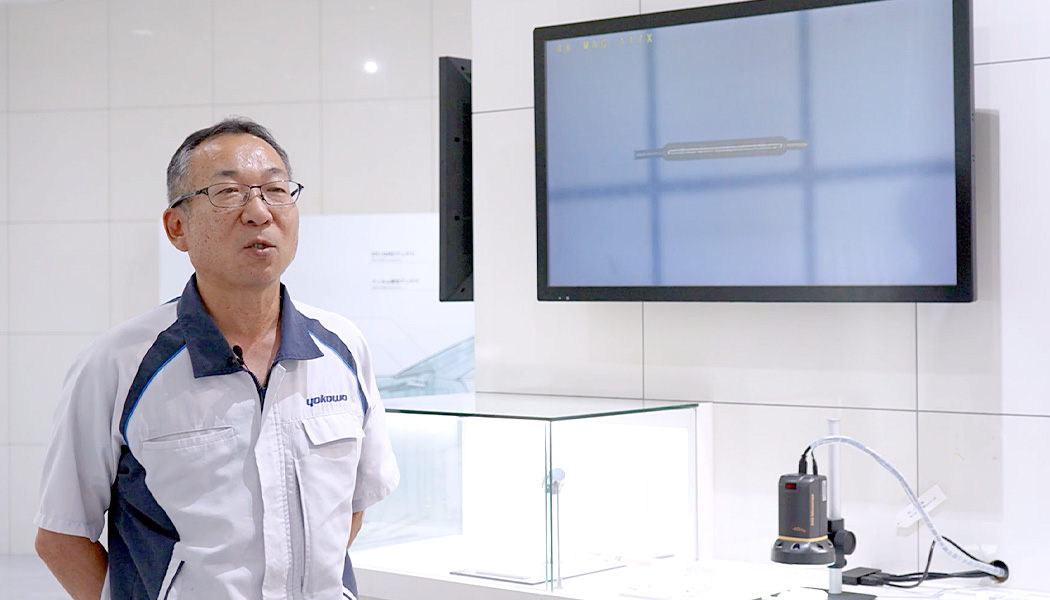
Takeshi Akao, Executive Officer
Head of Production Process Innovation HQ & Head of CTC/FC/MD Manufacturing
Engineers from the two companies continued to work together, pursuing not only automation but also performance levels comparable to those of a human. After several refinements to the system, they achieved a speed of 34 seconds per cycle, approaching the same speed as a skilled technician.
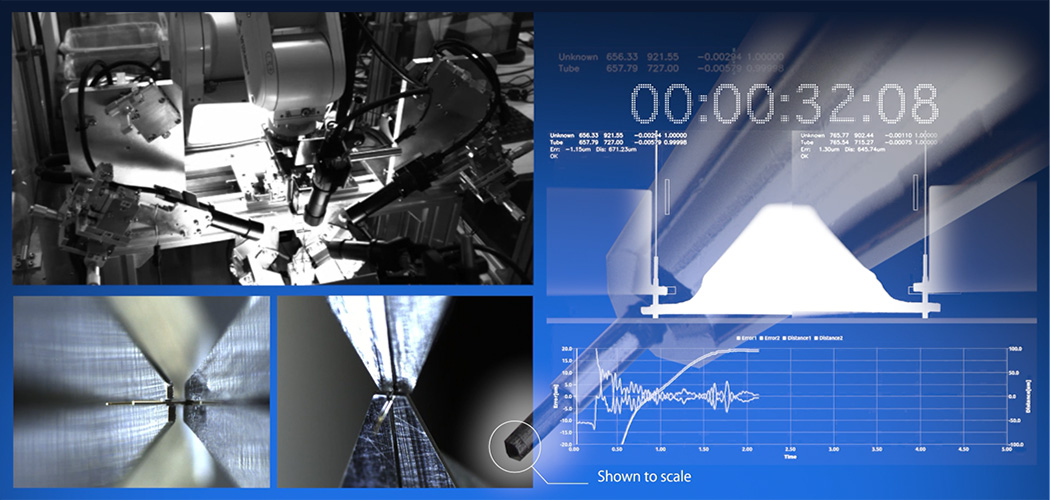
Further co-creation work achieved cycle times comparable to those of a skilled technician.
The key to this success was the cutting-edge technology provided by Mitsubishi Electric during the co-creation project. The system incorporated the latest high-speed imaging and vision technologies then under development. As well as achieving unprecedented accuracy and speed, it also made control more stable, as it could read and predict position information.
“It’s crucial to have a partner we can trust”
Looking back on the project, Satoshi Kanoko, Deputy General Manager of the Innovation Promotion Department, explains: “Making something that doesn’t yet exist is part of Yokowo’s DNA. To do that, it’s crucial to have a partner we can trust. This time, by working together with Mitsubishi Electric, we were able to aim for a system that is the first of its kind in the world.”
Kobori agrees that the key to success was working with people from different backgrounds, saying: “I believe that collaboration between people with diverse perspectives can reveal innovation that goes beyond limits.”
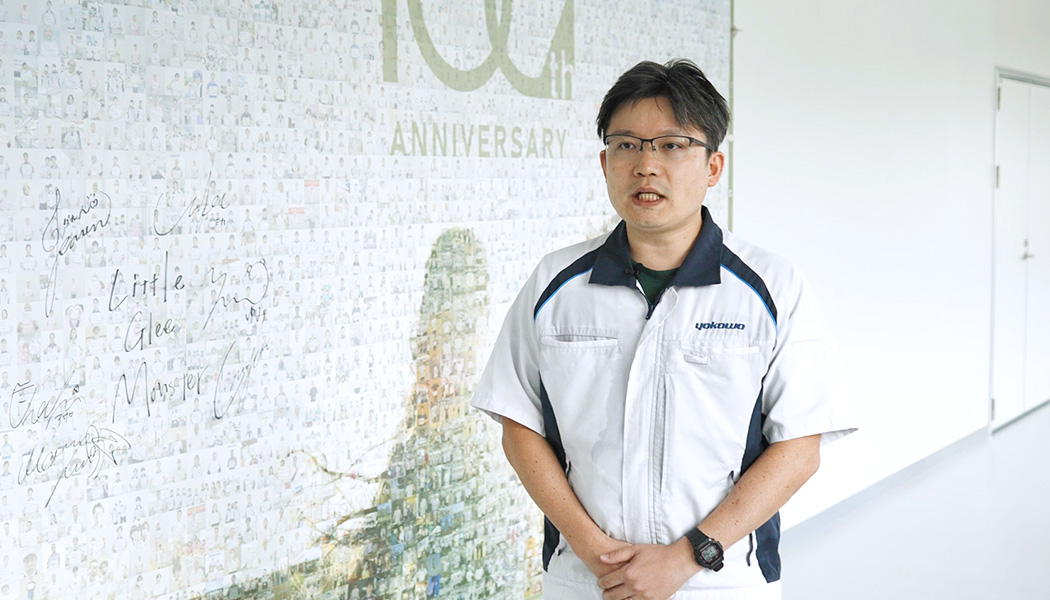
Satoshi Kanoko, Deputy Manager
Innovation Promotion Department, Production Process Innovation Headquarters
The robot control system produced by the co-creation project is still at the prototype stage, but there are already plans to roll it out to mass production lines at Yokowo.
Products and Solutions

Yokowo Co., Ltd.
- Company founded : 1 September 1922
- Business areas : Vehicle communication equipment, circuit testing connectors, connectors for electronic devices, medical devices, microwave communication equipment for electronic testing, ceramics, infrastructure solutions
- URL : https://www.yokowo.co.jp/english/