World roundup

Young student engineers battle it out
Report on the MECA 2025 student competition in Vietnam
First Published in Japanese in October 2025 [2 parts]

Part 1: Students take on the challenge of creating solutions for the future
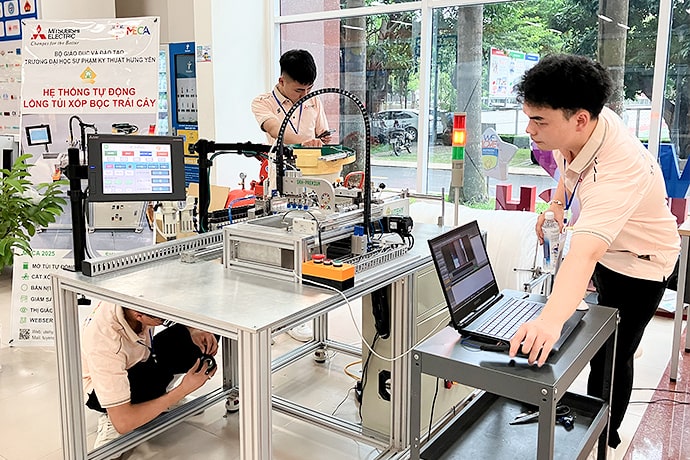
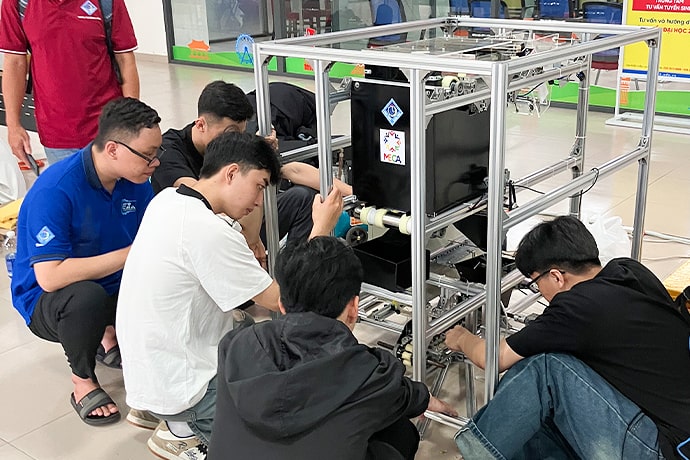
The first two days gave the teams vital time to test and adjust their machines. The venue was HUTECH’s ground floor lobby, and despite the warm conditions, the teams worked late into the evening to make adjustments and ensure their creations were ready for the final.
Organisers and judges supported the contest
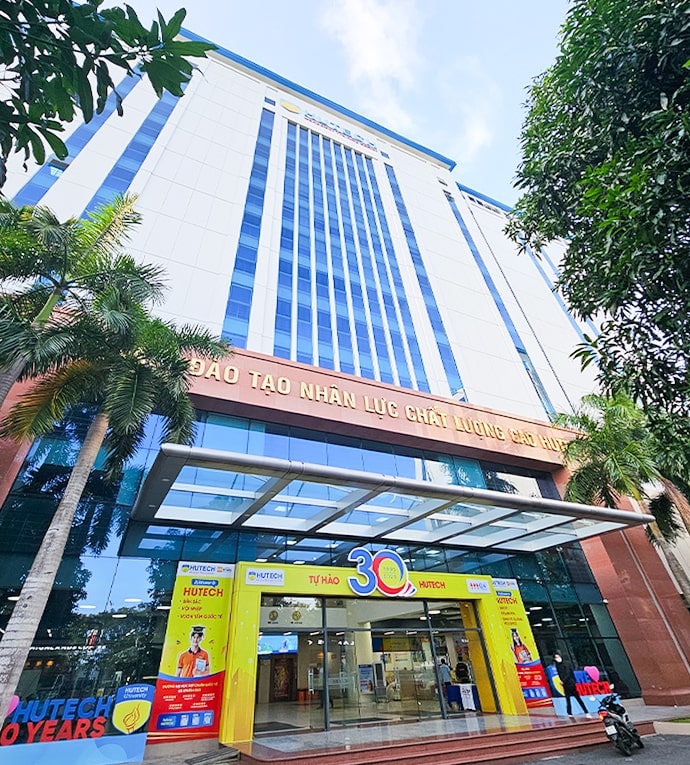
Vietnamese universities take it in turns to host the MECA competition each year. As well as providing the venue, the host is responsible for operational support, including technical training support and team management while the projects are being implemented. HUTECH was chosen to host the fifth MECA in Vietnam in celebration of the university’s 30th anniversary.
In 2025, for the first time, the judging panel included a professor from each university, further enhancing the judging process strengthening the professionalism and impartiality so the events are as fair as possible.
At the party held to welcome the university representatives and judges to Ho Chi Minh City, many of the professors commented on how the MECA contest "fosters connections between universities." There was even an exciting reunion between one of Mitsubishi Electric Vietnam’s team members and a university professor who had been responsible for mentoring them many years ago.
Also at the welcome party, representatives from Mitsubishi Electric’s headquarters announced that a global tournament will be hosted in Japan in 2026, with next year’s winners from Vietnam and other countries invited to attend. This was met with great excitement when it was revealed.
Only six teams out of 21 secured a place in the final round
The finals consisted of two rounds. From the 21 teams, the judges selected the six best teams to present their projects in front of the judging panel and guests.
Varied entries with a quintessentially Vietnamese touch
The teams were challenged to come up with practical projects, designed and implemented by the team members alone. Several of the projects were closely linked with Vietnamese food culture, including a lotus seed shelling machine, a nipa palm flesh separator and a system built to sort lemons. It was fascinating to see each team develop their ideas to solve challenges unique to Vietnam.
In the first round, teams were given just two and a half minutes each to explain their projects. While the students did their best, with many speaking passionately to the judges, several teams struggled with the strictly enforced time limit.
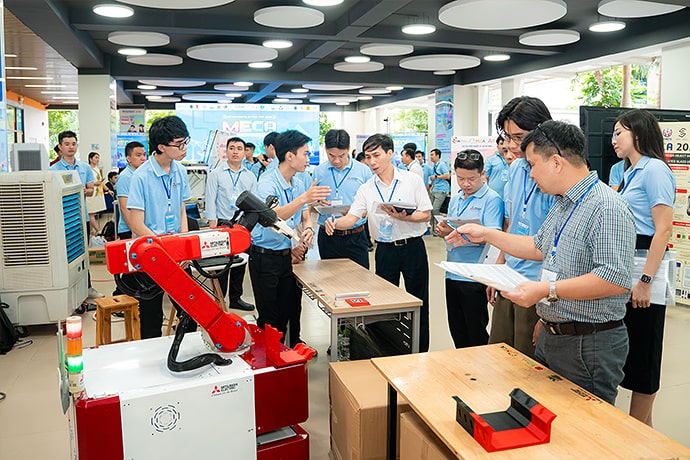
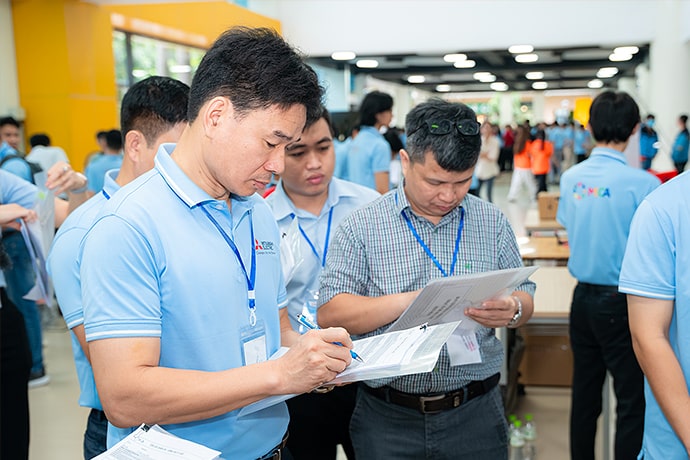
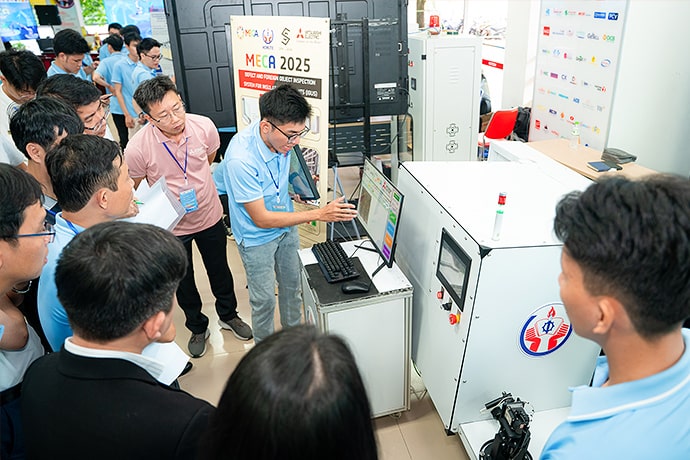
These presentations were followed by a Q&A session, when the judges sent rapid-fire questions at the students. To make up for the short explanation time, the students had to answer the judges’ probing questions to demonstrate the true potential of their machines.
An entry that caught the eye of Japanese staff
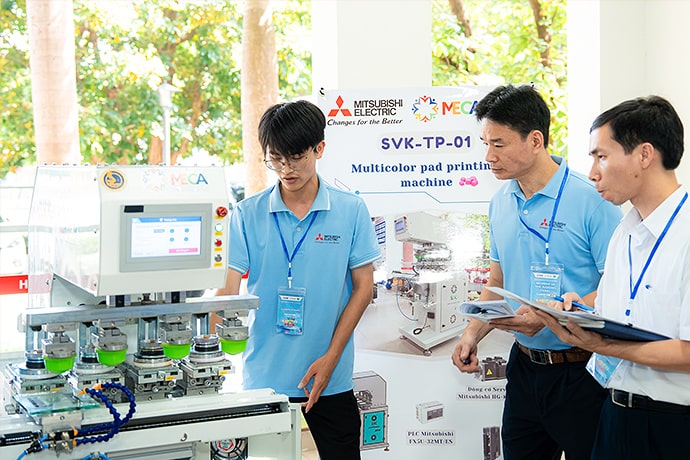
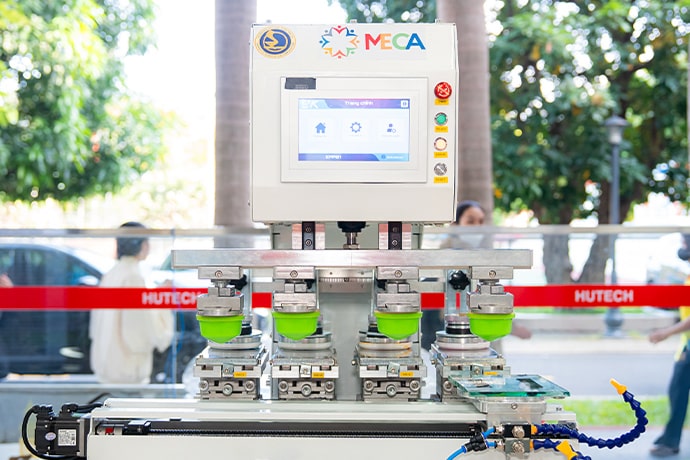
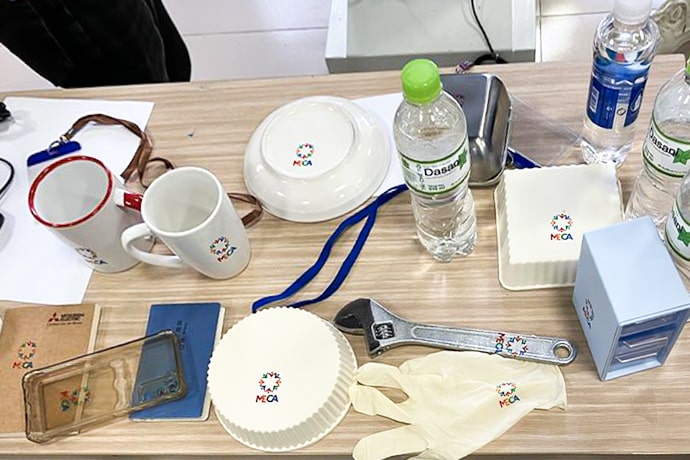
One entry that caught the Japanese staff’s attention was a multi-colour printing machine made by the SVK-TP team from the University of Transport and Communications. This innovative machine could print the four-color MECA logo onto various materials.
The team’s system prints one colour at a time, from right to left. Thanks to the cushioned printing surface (the green elements seen in the below photo), the print quality is incredibly high, even on uneven objects or curved surfaces like mugs. The machine could be customised to print on a huge array of items simply by adjusting a few settings on the HMI – visitors were even getting the MECA logo printed onto their smartphone covers.
Rather than just a printing machine, the system provided a genuinely new experience and brought a real sense of excitement to the contest, showing off the ingenuity of the SVK-TP team.
Flashing red light could mean trouble
A tense moment came during the first round of judging, when a red warning light flashed to indicate a malfunction on one of the machines the judges were inspecting. The students calmly started to fix the program, but would they be able to get their demo machine working before the judging time was up?
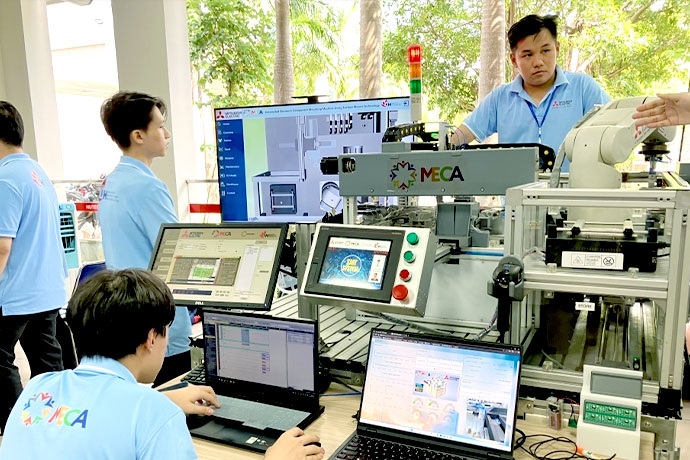
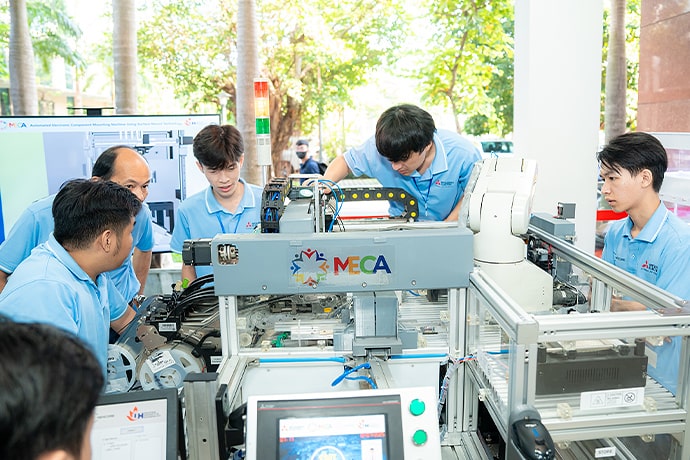
Once they had evaluated all the teams, the judges left to deliberate.
A moment of freedom
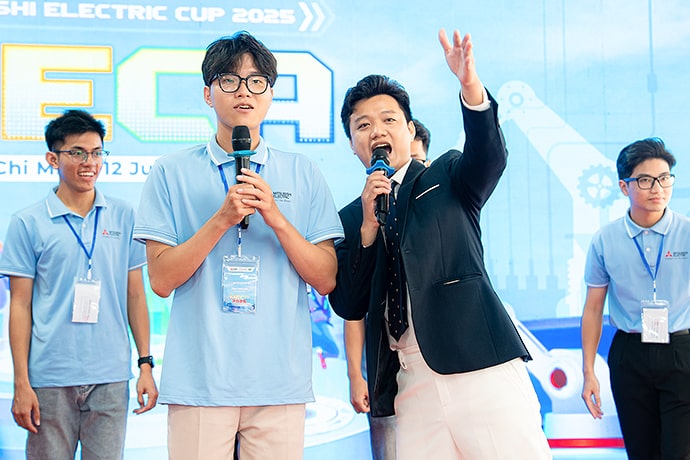
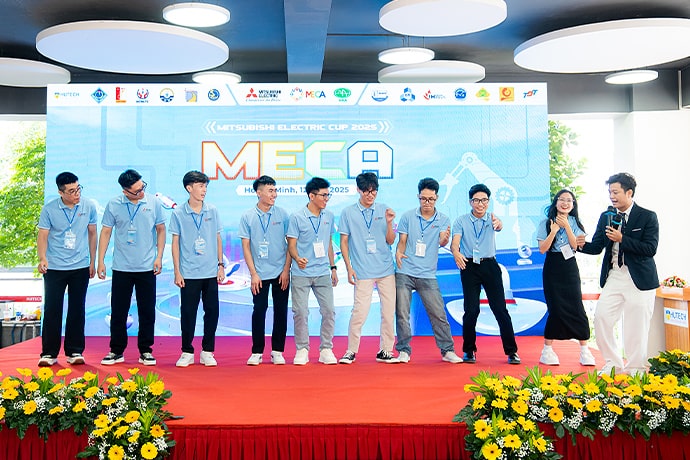
There was suspense in the venue as the teams waited for the judges to make their decision, but the host started a freestyle activity to lighten the atmosphere. The students from each university took to the stage and – despite looking a little apprehensive – were soon joining in the rapid series of challenges, including dances, quizzes, rap battles and tongue-twisters.
Their enjoyment and laughter soon lit up the venue, contrasting with the serious atmosphere that had filled the room when they were working on their demo machines. In just a few minutes, the host had skilfully managed to transform the tense wait into a moment of joy, allowing the students to relax and express themselves.