About Mitsubishi Electric Factory Automation The Road to Automating the World Interviews with People Involved in the Factory Automation Systems Business

Believing That Manufacturing Will Become a Socially Responsible
Industry, Not Just a Business Sector
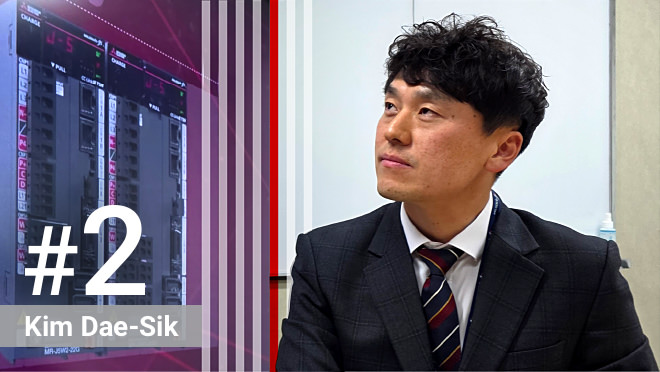
Kim Dae-Sik,
Group Manager, Servo Systems Marketing 2 Team, Drive Systems
Business Unit,
joined Mitsubishi Electric Automation Korea in 2008.
2025-03
Mitsubishi Electric’s FA systems business aims to enable employees
to fully demonstrate their ideas, technologies, and beliefs to
achieve the common goal of “Automating the World.”
Through the “Road to Automating the World” series, we share their
authentic voices from around the world.
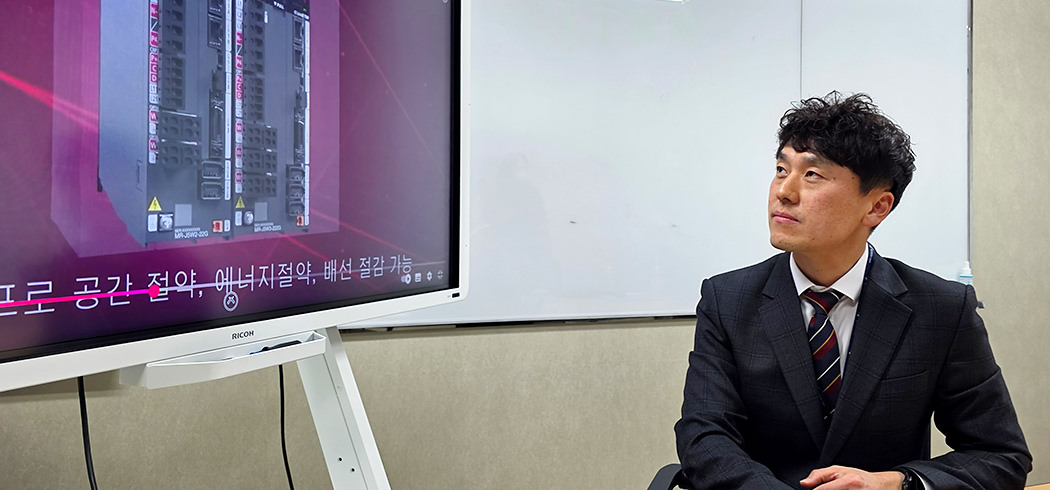
This article features Mr. Kim Dae-Sik who plays a dual role in
both customer sales and human resource development.
Always Thinking from the Customer’s Perspective
── What made you decide to join Mitsubishi Electric?
Kim: My goal was to apply the practical skills in electronic engineering that I learned at university to create value for industrial customers—enhancing productivity and improving product quality. Mitsubishi Electric’s Factory Automation Systems Business Group provides automation solutions across a wide range of industries while also offering a stable and structured working environment. I believed this was the ideal place for me to leverage my technical expertise, which is why I decided to join.
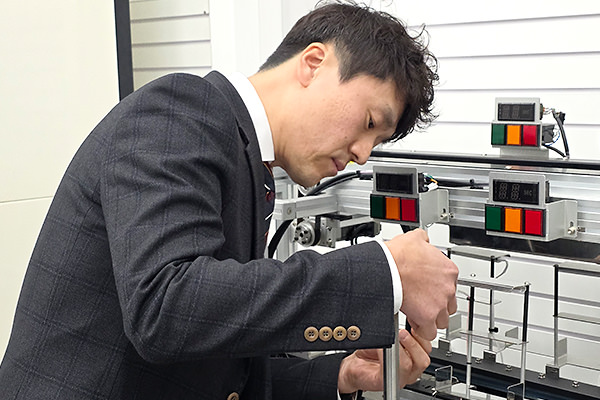
── Could you tell us about your current responsibilities?
Kim:
In servo system sales, I conduct market trend analysis and develop
differentiation strategies to help customers gain a competitive
edge. Based on these insights, I propose tailored solutions that
align with their specific needs and circumstances.
Additionally, as the group leader of the Servo Systems Division, I
focus on understanding the strengths, weaknesses, and working
styles of each team member. By distributing responsibilities
effectively and providing targeted feedback, I aim to build a
strong and cohesive team.
── When interacting with customers, what do you focus on?
Kim:
I always try to “think from the customer’s perspective” and “be
honest and sincere.” My job revolves around understanding
exactly what customers need and how we can contribute to their
success.
If an ordered product is not the best fit for a customer’s
situation, I make it a point to communicate this openly and
suggest an alternative solution that better meets their
requirements.
Becoming a Trusted Partner Through Total Solutions
── Was there a particular experience that shaped this belief?
Kim:
One defining moment was a challenge we faced regarding delivery
times.
A customer had an urgent need, but due to production
constraints, we initially thought it was impossible to meet the
deadline. However, through discussions, we learned that the
customer was struggling to scale up production to keep pace with
the surging demand for secondary cells during the pandemic.
To address this, we collaborated closely with our headquarters
in Japan and other departments in a cross-border effort.
Ultimately, we were able to expedite production and deliver the
product as quickly as possible, leading to a mutually beneficial
solution.
This experience reinforced my commitment to always thinking from
the customer’s perspective. It not only strengthened our
relationship with the client but also taught me valuable lessons
about problem-solving and perseverance.
── With this mindset, what kind of relationships do you want to build with customers?
Kim:
My goal is to become a go-to partner for customers—a status that
reflects their trust in me.
I apply the same belief to my team as well. I encourage mutual
respect and support among team members, ensuring that everyone
considers each other's unique circumstances.
── What do you hope to achieve in your role?
Kim:
As someone responsible for the servo system business, my focus
is on providing products that meet customer needs while solving
their challenges. I aim to earn customer trust by offering
solutions tailored to each specific situation.
Additionally, servo systems play a crucial role in enhancing
productivity by integrating with industrial machinery and
robots. By proposing complete system solutions rather than just
individual devices, I hope to address complex manufacturing
challenges, support customer growth, and drive innovation in the
industry. Ultimately, I believe this contributes to creating
social value through manufacturing.
── Finally, could you share your vision for the future of manufacturing?
Kim: I have two major dreams for the future of manufacturing: advancing smart factories for greater efficiency and sustainability, and establishing ethical and transparent manufacturing methods. By harnessing AI, the Internet of Things (IoT), and big data, we can analyze production data in real time. Through automation, we can minimize human intervention while maximizing productivity and product quality. Beyond improving efficiency, I want to promote a fair working environment and eco-friendly production practices. Furthermore, I hope to communicate these efforts to consumers in a clear and accessible way, allowing them to actively support sustainable manufacturing. If we can achieve these goals, manufacturing will evolve into a socially responsible industry—not just a business sector. When these two dreams come true, I believe manufacturing will take a sustainable and innovative path forward.
* This article is based on interviews conducted in February 2025.