
2026.11.26
Young Innovators Shaping the Future of Manufacturing: The Journey of Team India at MECA Cup Global Finals
Manufacturing sites worldwide face a range of challenges, including labor shortages and a decline in the number of skilled workers. To address these issues through the latest FA (factory automation) technologies and flexible thinking, Mitsubishi Electric hosted MECA Cup Global Finals 2026 as part of its global FA competition program.
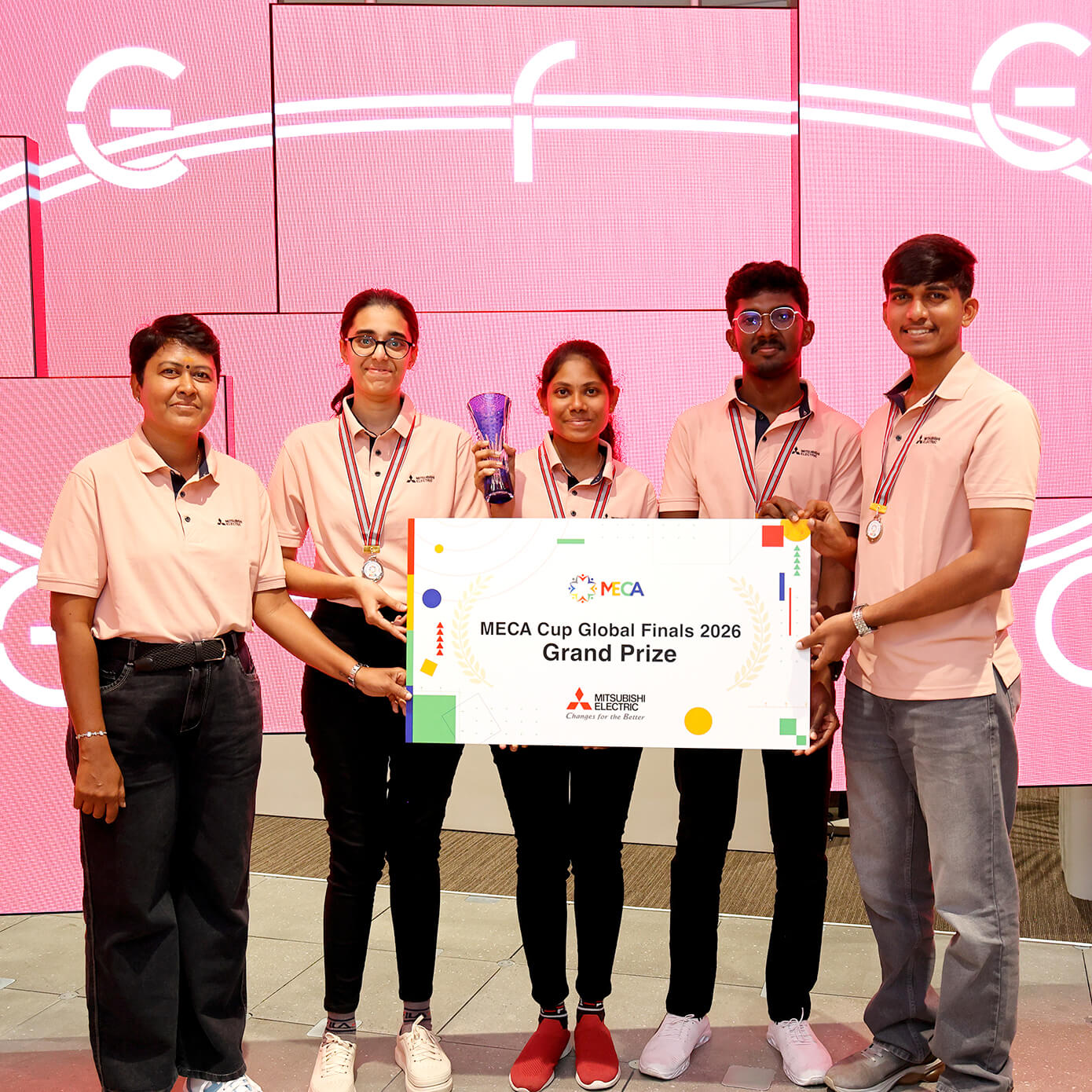
The competition was the main program of MECA Frontier Forum 2026, a comprehensive forum that brought together teams from seven countries and regions in Japan for technical exchanges, facility tours, and more. Amid the enthusiasm that transcended borders, the team from Sona College of Technology in India took home the Grand Prize. What drove them to take on the challenge, and how did they overcome the obstacles? This is the story of their passionate pursuit and the mentors who supported them along the way.
Contents
MECA Cup Global Finals - Where the World’s Young Talents Meet
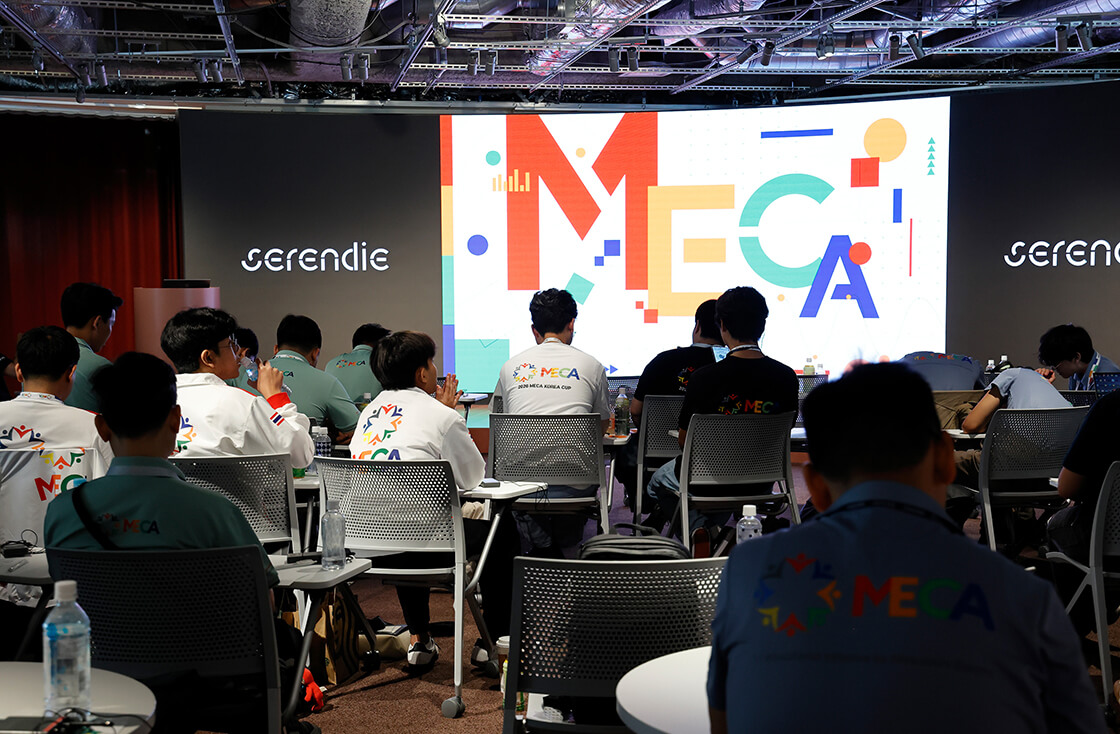
On September 1, 2026, the venue in Yokohama was filled with the energy and exciting sense of anticipation of students from around the world. MECA Cup Global Finals 2026, an FA competition program hosted by Mitsubishi Electric’s Factory Automation Systems Group, was about to begin. MECA (Mission, Experience, Communication, Achievement) consolidates and strengthens Mitsubishi Electric’s global FA education support initiatives, serving as an industry-academia collaboration platform that develops the next generation of FA talent while connecting students with industry needs.
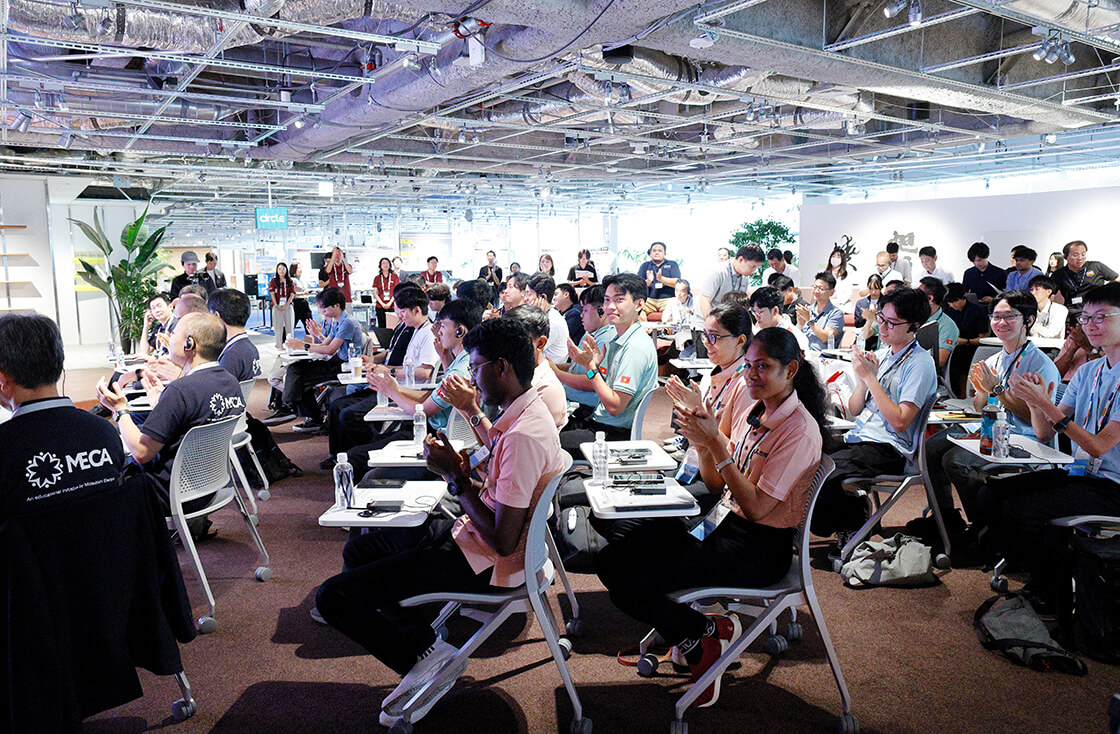
This year’s Global Finals brought together top teams that had advanced through rigorous qualifying rounds in India, Japan, South Korea, the Philippines, Taiwan, Thailand, and Vietnam. They were challenged to demonstrate advanced problem-solving skills using real equipment and the latest software to tackle challenges such as labor shortages, the transfer of technical skills, rising costs, and the implementation of AI. As stated at the opening ceremony, “MECA serves as a bridge connecting students’ flexible thinking with the needs of industry on a global scale.” The venue was filled with youthful energy as participants looked beyond the competition and came together to co-create the future of manufacturing around the world.
Taking on Challenges at Manufacturing Sites - Team India Wins the Grand Prize
Each region faces its own unique challenges. Team Japan proposed automating indoor tomato cultivation in response to the shortage of successors in agriculture, while Team South Korea presented an FA-based solution to optimize truck loading in response to frequent loading accidents. As each team showcased a high level of technical expertise and unique perspectives, the team from Sona College of Technology in India ultimately took home the Grand Prize.
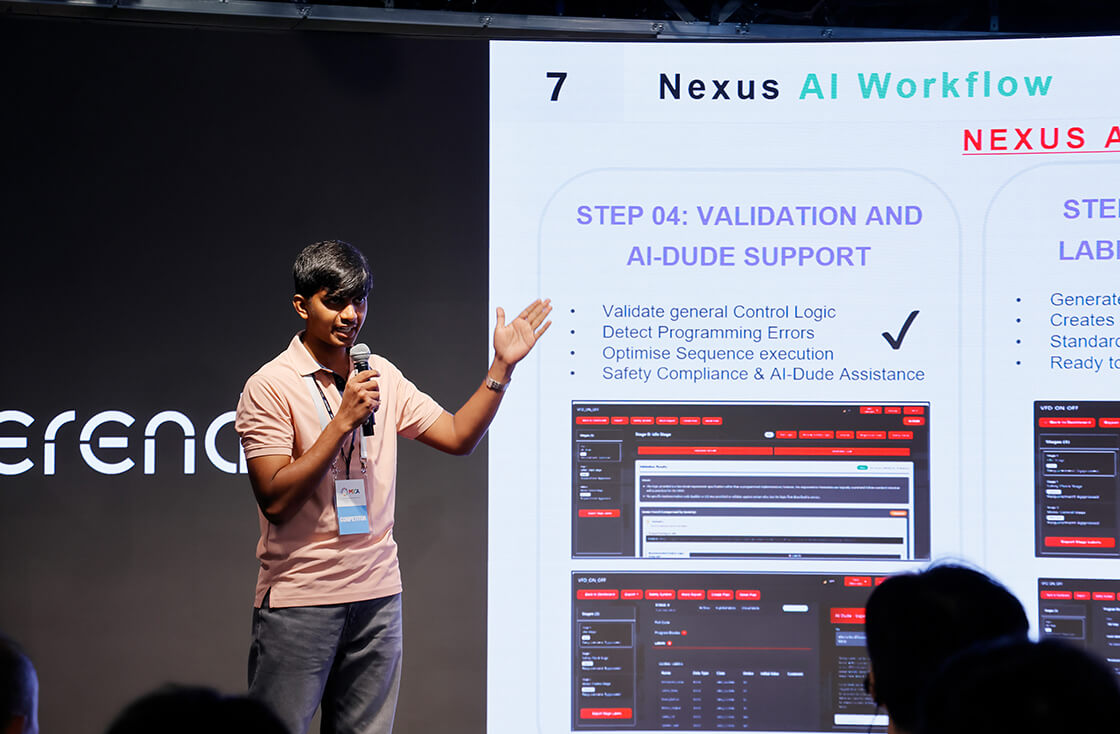
Their proposal, titled “Intelligent PLC Programming Assistant for Mitsubishi Electric Automation,” focused on a niche challenge at manufacturing sites: despite the rapid evolution of AI technology, it has yet to be fully utilized for PLC (Sequencer) programming, a key component of manufacturing operations.
Their system uses a two-layer AI architecture that incorporates natural language processing to automatically generate efficient PLC code. They developed an advanced process that virtually tests the accuracy of the generated code using Mitsubishi Electric’s 3D simulator “MELSOFT Gemini,” before ultimately running the code on the actual dyeing equipment.
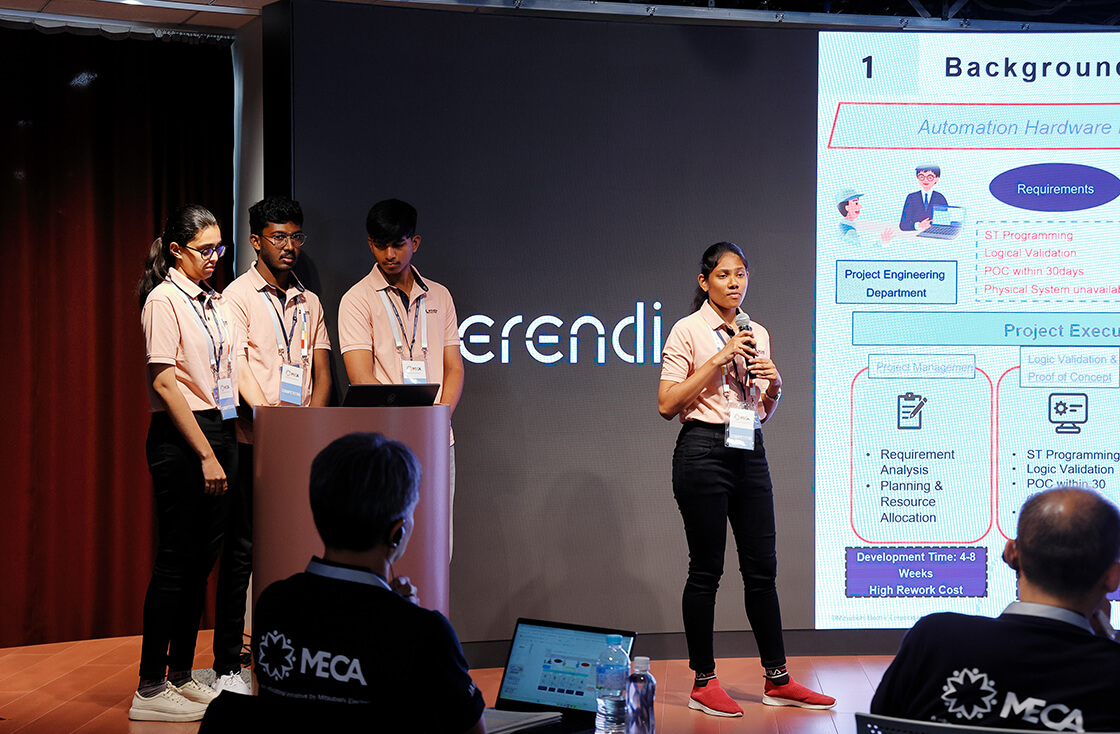
Their proposal covered the entire process, from identifying the challenges and developing the system to demonstrating its implementation benefits. Its originality, practicality, and scalability impressed the judges, and the team’s strong presentation skills made the performance truly outstanding.
Building Unshakable Bonds and Confidence Through Setbacks and Discussions
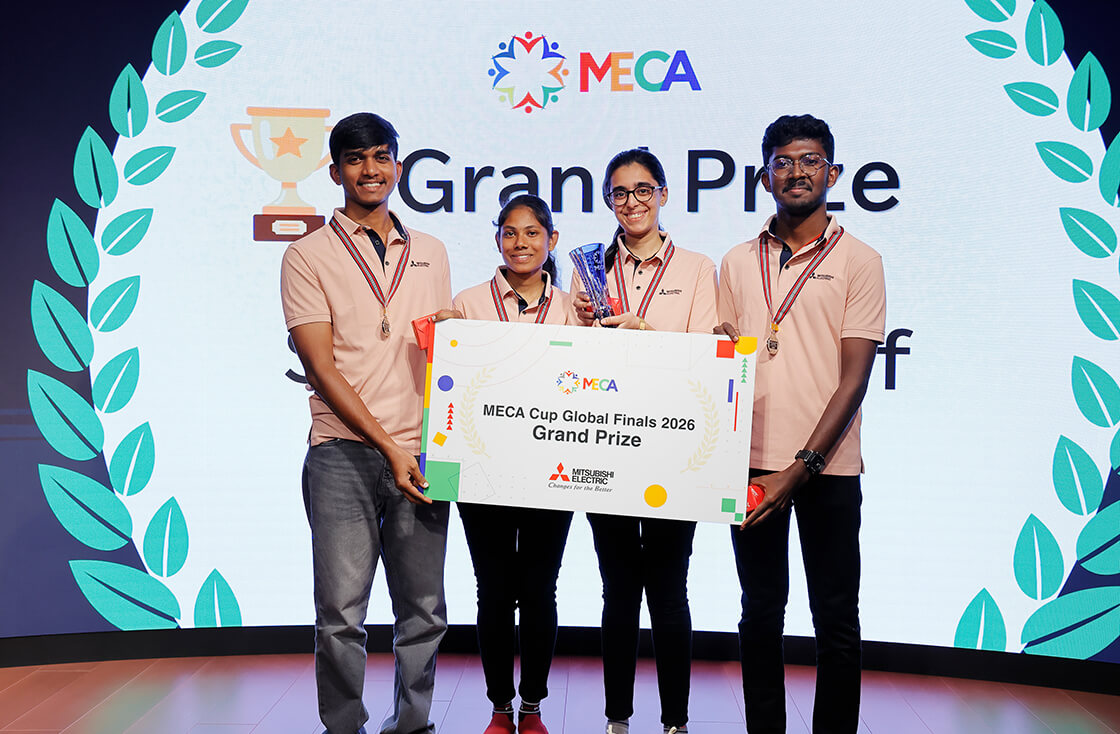 Members of the winning team from Sona College of Technology, India
For the Indian team that ultimately claimed the top prize, the road to victory was filled with trial and error. Formed in August 2025, the four-member team brought together individuals with complementary strengths. They began by thoroughly identifying challenges on the manufacturing floor through both online research and on-site investigation. “By speaking directly with engineers, we realized that the field of automation has yet to fully benefit from AI. The most difficult part was comparing our own hypotheses with the actual needs of industry and finding common ground.”
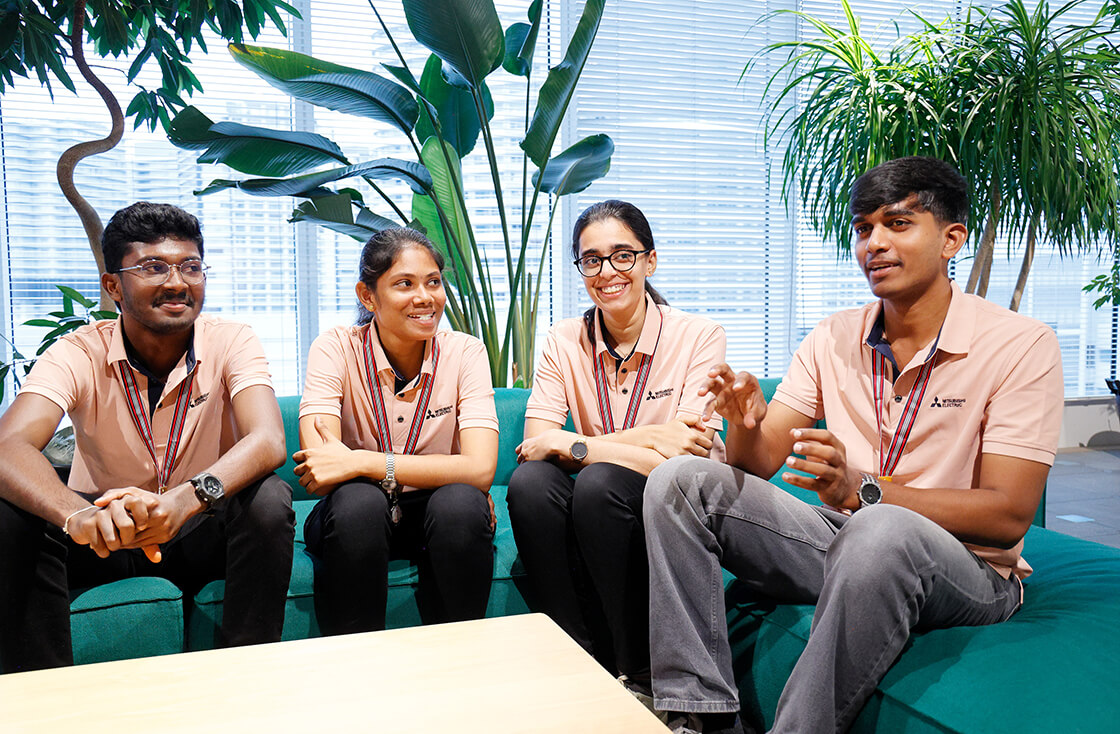
Even after identifying the challenge, problems frequently arose when synchronizing the simulation with the actual machine. The team spent long hours in the laboratory, from morning until late at night, repeatedly testing and validating their work while visualizing their tasks on a wall covered with Post-it notes.
A culture that encourages open debate and constructive disagreement also played an important role in supporting the team. “We expressed our opinions without becoming emotional and repeated this process until everyone was satisfied.” Rather than appointing a leader, the team made the most of each member’s individual strengths and complemented one another, demonstrating exceptional teamwork.
“We learned the importance of asking for help and sharing our knowledge rather than trying to figure everything out on our own. By communicating with engineers and mentors, we grew not only in terms of our technical expertise, but also in our teamwork and networking.”
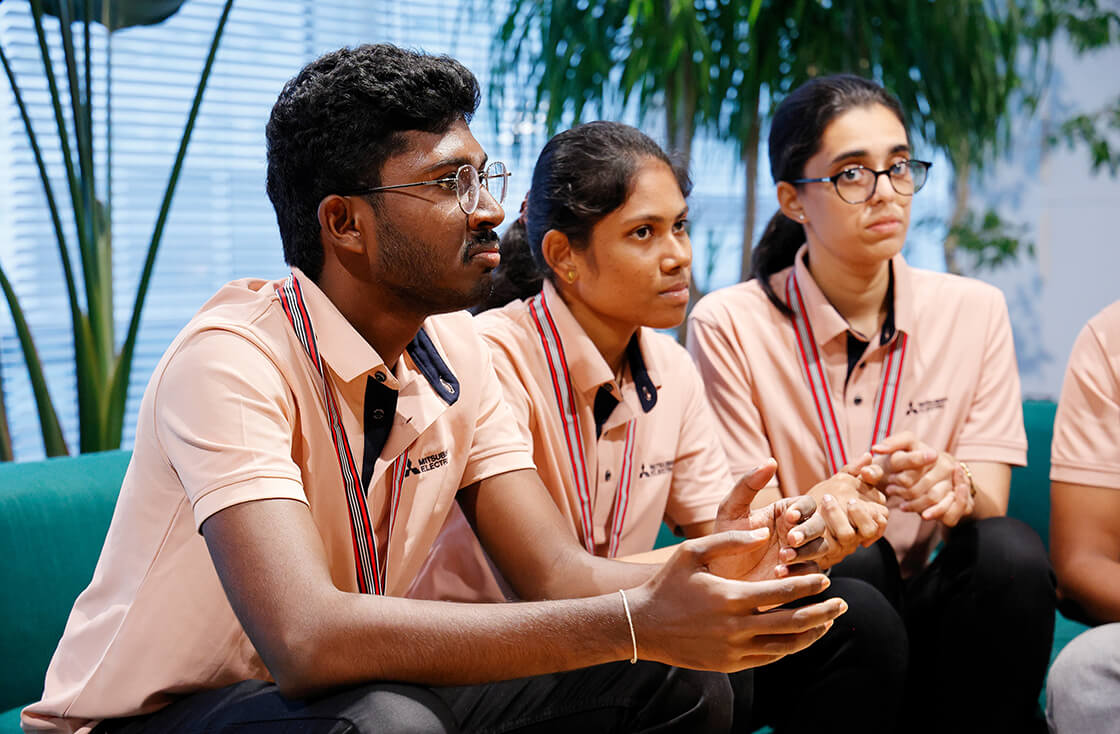
Reflecting on the confidence they had gained by overcoming numerous challenges, they spoke with a strong sense of conviction.
“What matters is pushing beyond our imagination. There are no limits to engineering. We became convinced that no problem is truly unsolvable as long as we let our curiosity drive us and continue to think creatively.”
The Perspectives of Those Who Support Them - How a Chain of Challenges Nurtures the Future
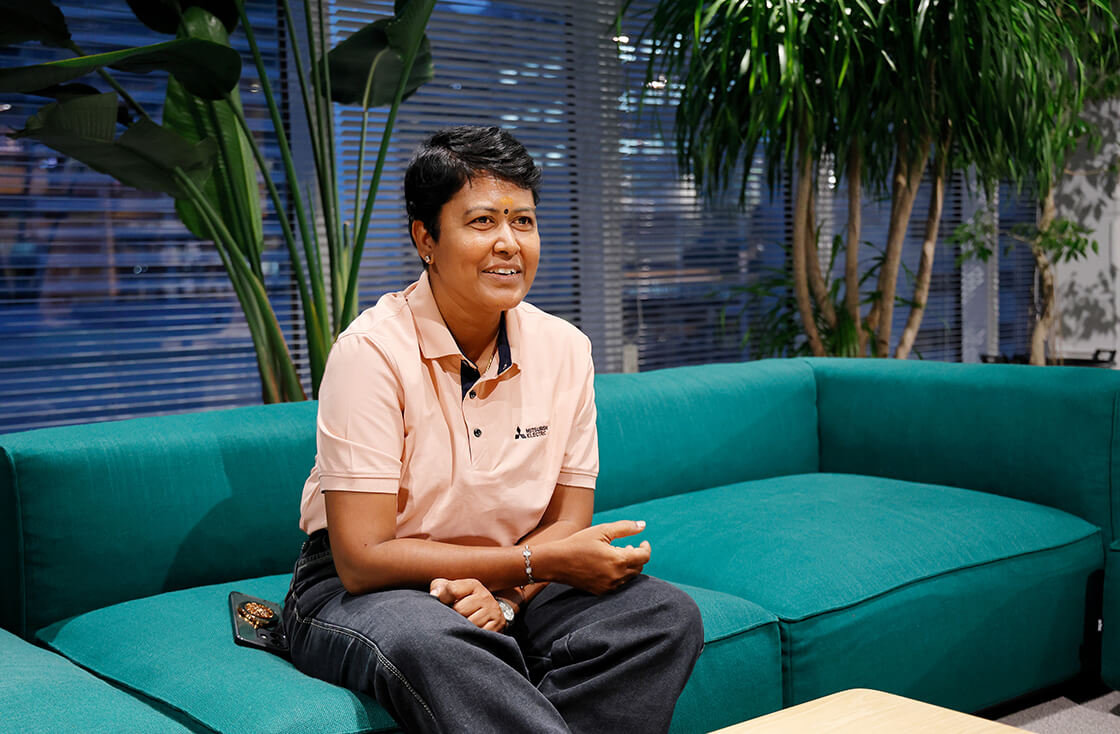 Advising professor from Sona College of Technology
The support of the adults who stood by these young challengers, offering both warmth and strength, was equally essential.
The professor who supervised the team at Sona College of Technology reflected, “While I believe it is important to be demanding when necessary, I have always valued being there for them as a ‘second parent’—someone they can feel comfortable coming to for help with anything.”
For the students, this competition was an invaluable opportunity to engage deeply with industry, gain firsthand insight into how technology is used at manufacturing sites, and learn the significance of collaboration.
“I have never seen students show this level of determination and dedication. They stayed in the room from morning until night and worked relentlessly to complete their tasks,” the professor said with a smile.
She showered them with praise, adding, “Despite struggling to validate the hardware, their process of finding solutions on their own through trial and error was remarkable. There is no doubt that they have a bright future ahead of them.”
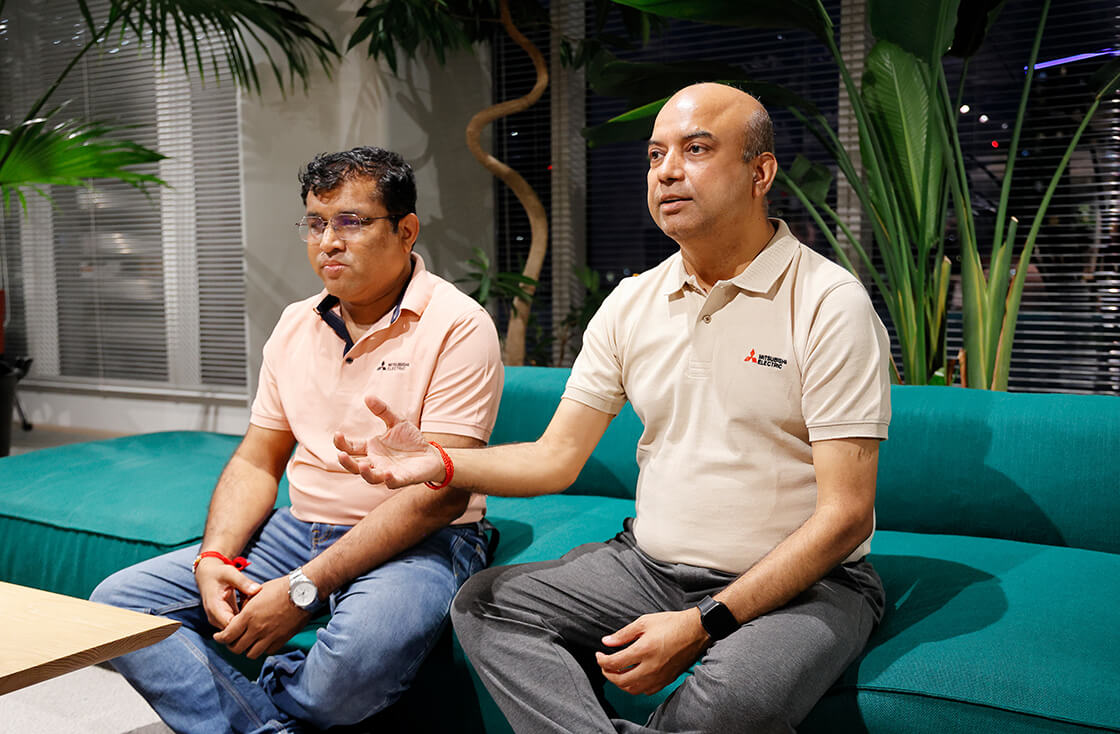 Local support staff from Mitsubishi Electric India
A member of the local support team who continued to work alongside the team in India also highlighted the high expectations placed on the competition at the national level and its true value.
“In India, the government is currently providing strong support for the advancement of FA and frontier technologies. MECA serves as an outstanding platform for students to gain a deep understanding of state-of-the-art FA technologies and to spread it throughout society. I hope the students will further strengthen collaboration across industry, government, and academia, and continue to pursue even more innovative technologies in the future.”
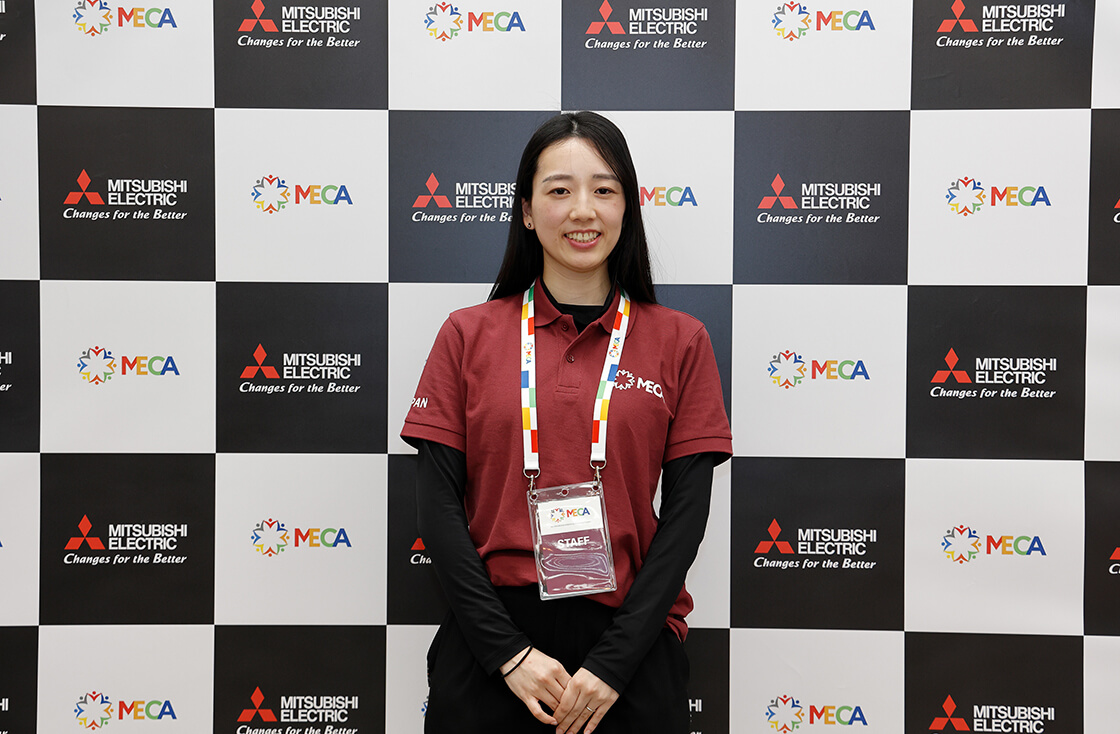 Hinako Hayashi, Factory Automation Systems Group, Mitsubishi Electric
Hinako Hayashi of Mitsubishi Electric’s Factory Automation Systems Group, who organized the competition, also shared her thoughts on the students’ performances.
“I was deeply impressed by the way they presented their work with confidence, transcending national and regional differences, as well as by their high level of technical expertise. Because each region has its own culture and background, the teams brought diverse ideas and approaches to the table, which was also a valuable learning experience for me. At its core, an engineer’s work involves collaborating with people who have different perspectives, identifying issues, and finding better solutions through trial and error. If the students were able to experience the joy of connecting with people around the world and discover the possibilities of manufacturing through MECA Cup Global Finals 2026, nothing would make me happier.”
Our Future Beyond the Competition
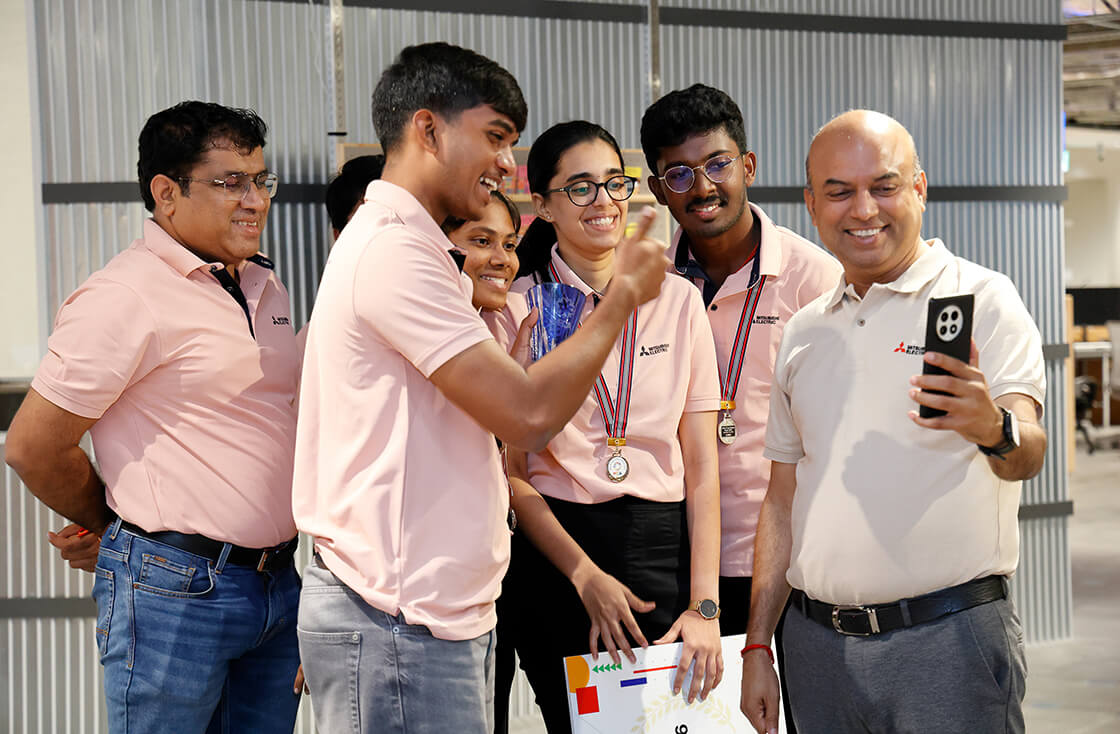
What these students gained from MECA Cup Global Finals 2026 was more than just the result of the competition. They gained teammates with whom they shared the process of trial and error, new knowledge, and a strong determination to use technology to make society better.
After the competition, each member of Team India began pursuing new challenges, including careers in public service and the development of AI-integrated technologies.
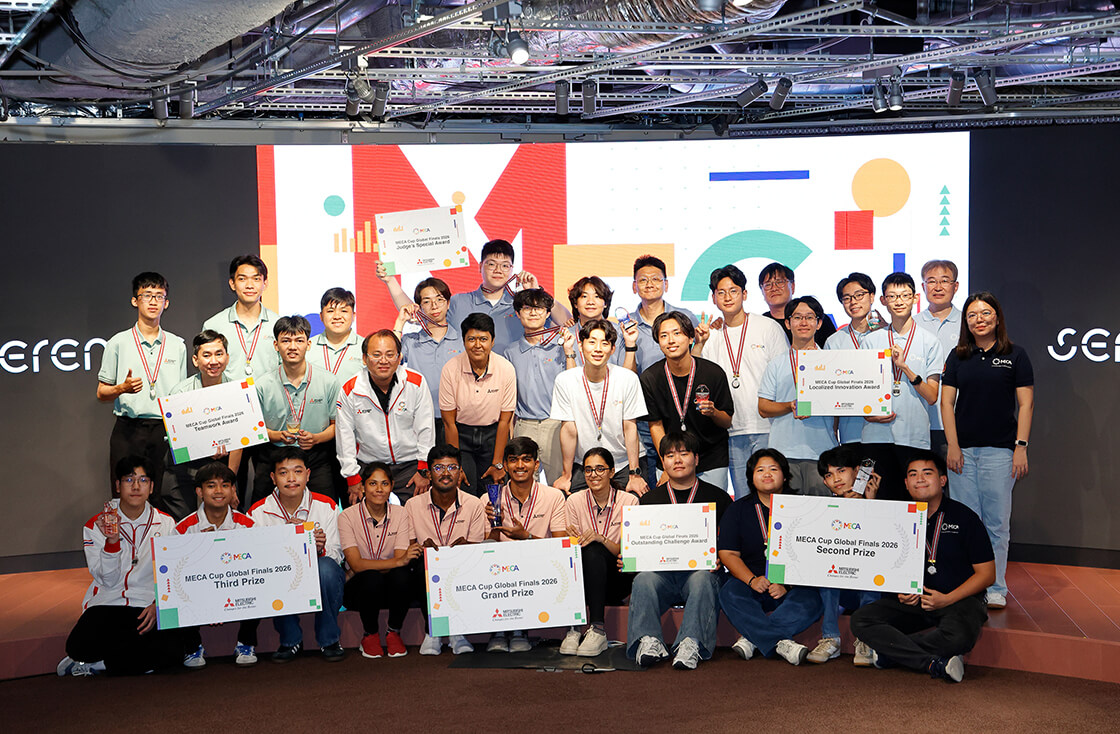 MECA Cup Global Finals 2026 participants
By continuing to take on challenges, people can grow without limits.
* The information on this page is current as of November, 2026.


