Preserving biodiversity at business sites
Gunma Factory
Promoting Harmonious Coexisting in Nature at Our
Business Sites by Initiating Studies on Living Creatures
Focusing on Planting Native Species and Expanding Green Spaces
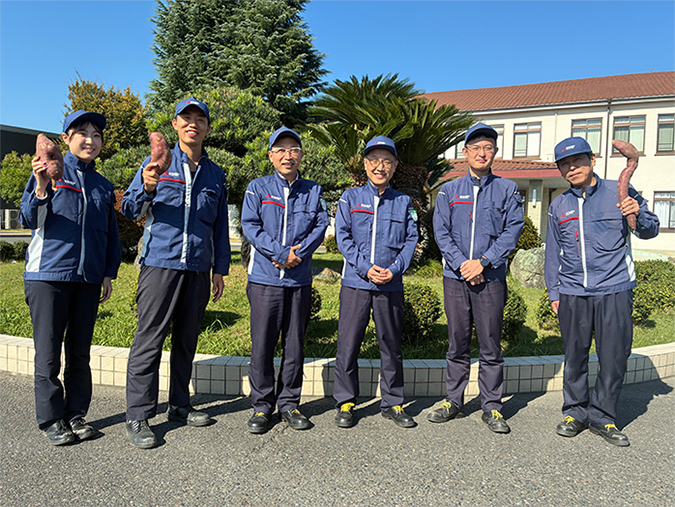
The team in charge of promoting biodiversity conservation activities at the Gunma Factory
The Gunma Factory is located on a plain near the foot of the mountains in Gunma Prefecture. Since 2017, whenever old facilities or buildings remaining on the premises have been rebuilt or updated, we have replaced the invasive plants around the buildings with native plants in an effort to preserve biodiversity.
In June 2018, we established an area for growing native plant species called the Hometown Native Plant Garden. Here, we grow seedlings of Gunma Prefecture's prefectural tree (black pine) and prefectural flower (Japanese azalea), as well as tree species closely associated with the region, such as the Japanese flowering dogwood. These seedlings are not just grown, but are also used as learning materials to raise employee interest in protecting native species and deepen their understanding of biodiversity conservation.
The fence surrounding the grounds of the Gunma Factory is being gradually rebuilt to increase its resilience against earthquakes and other issues. As part of this project, new planters have been created inside the fence, featuring native trees and flowers such as Japanese yews and azaleas. We are also transplanting seedlings grown in the Hometown Native Plant Garden to the south side of the facility. However, because it takes time to grow seedlings, we are incorporating native species from other regions of Japan and planting them in a balanced manner.
In 2025, we conducted a vegetation survey on the premises with the cooperation of external experts. The survey identified over 150 species of plants, including rare species such as the Ophioglossum thermale (native fern species), the small-seeded cress, and the wavy-leaf speedwell. These rare species are protected, and some native species are transplanted to the Hometown Native Plant Garden to promote their conservation.
We will continue to expand the green space in line with plans to renovate or construct new buildings and facilities on the site.
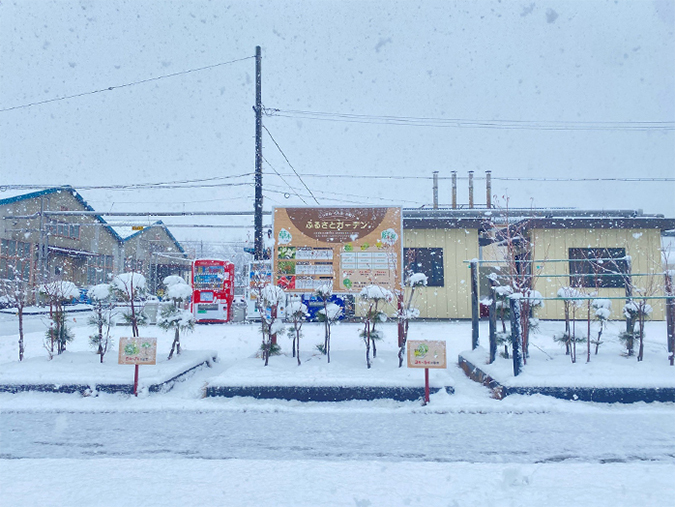
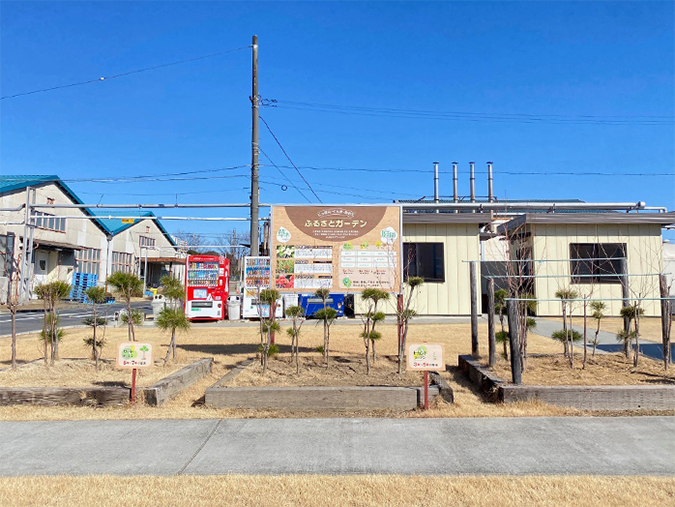
The Hometown Native Plant Garden and the surrounding lawn change appearances with the seasons, providing a place of relaxation that also dazzle the eyes of employees.
-
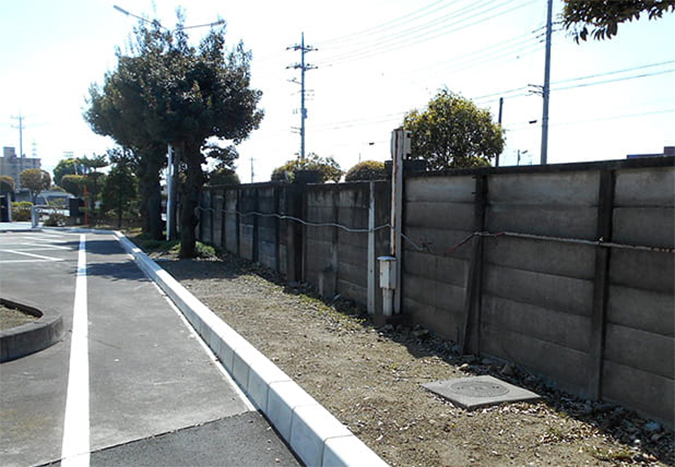
The fence and surrounding vegetation (before)
-
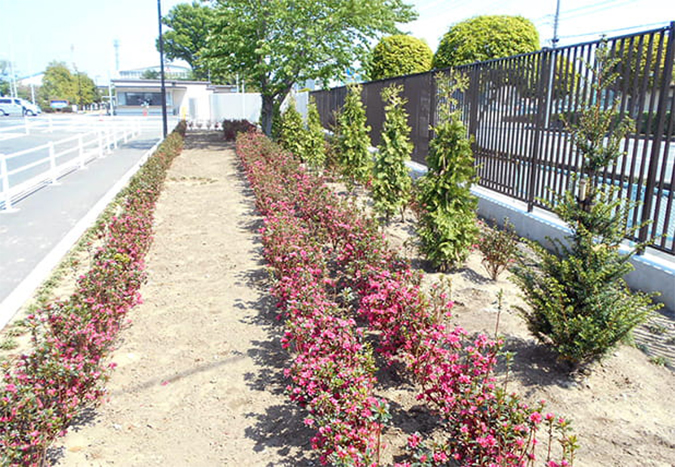
The fence and surrounding vegetation (after)
Transplanting Native Species and Creating a Biotope in Support of Nature Positive
At the Gunma Factory, we are transplanting native species into the green spaces on the premises. These green spaces are managed in several separate areas. These include an area where cogongrass and Japanese silver grass have been planted to match the surrounding environment of the two rivers that flow near the Gunma Factory and an area where we aim to restore a native grassland environment using plant seeds buried in the soil of the city's floodplains that have long remained dormant without germinating. Currently, plants that we first grew in the Hometown Native Plant Garden are being planted in these areas as well.
In July 2025, the area that was originally a fishpond was transformed into a biotope. Since then, we have confirmed the presence of aquatic insects such as dragonflies, which were not seen before the biotope was created. In the future, we plan to maintain the environment through monitoring, as well as install signs introducing the flora and fauna that inhabit the biotope.
-
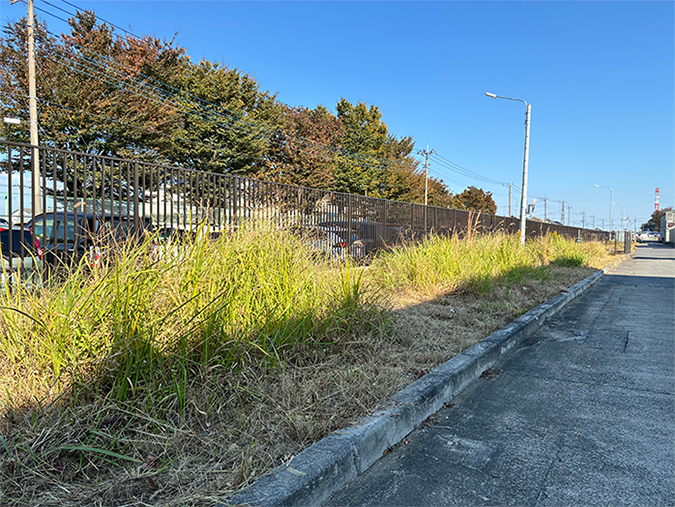
Area where cogongrass and Japanese silver grass have been planted
-
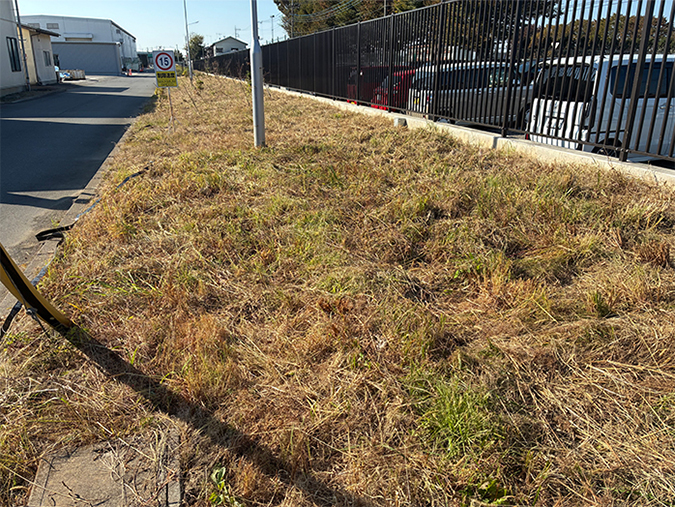
Area where buried seeds from outside the facility were introduced
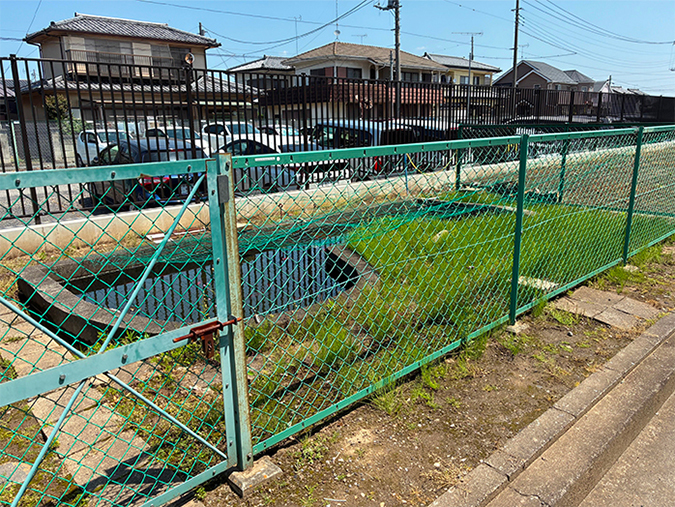
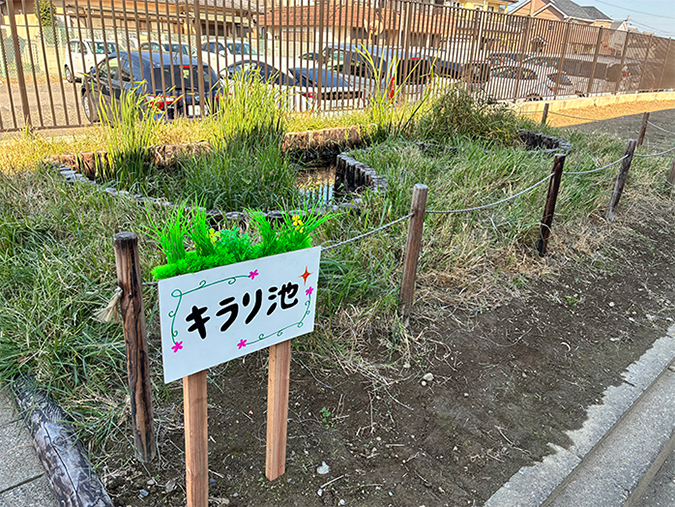
The fishpond before the biotope was created (left) and the newly created biotope (right)
The fishpond before the biotope was created (top) and the newly created biotope (bottom)