Preserving biodiversity at business sites
Air-Conditioning & Refrigeration
Systems Works
Promoting Harmonious Coexisting in Nature at Our
Business Sites by Initiating Studies on Living Creatures
Creating Green Space in Harmony with the Local Ecosystem
The Air-Conditioning & Refrigeration Systems Works, which is located in a region of Wakayama Prefecture surrounded by mountains and the sea, has created an on-site wildlife-friendly green space to support biodiversity. This green space is designed to attract birds and insects from the nearby mountains and ocean. Although the site of the works is relatively small, the green space is thoughtfully designed to connect with surrounding greenery and water sources.
In 2021, we commissioned an external research firm to conduct a biodiversity survey on our premises. The results confirmed the presence of 202 plant species, 14 bird species, and 51 insect species. While a variety of flying species were observed visiting the green space, the population of each species was relatively small.
We are currently taking steps to create an environment that is more inviting to wildlife. For example, we have installed a small-scale biotope using plastic containers. We are also working to raise awareness among employees by putting up signs in the green space and sharing articles about onsite wildlife on our internal website.
-
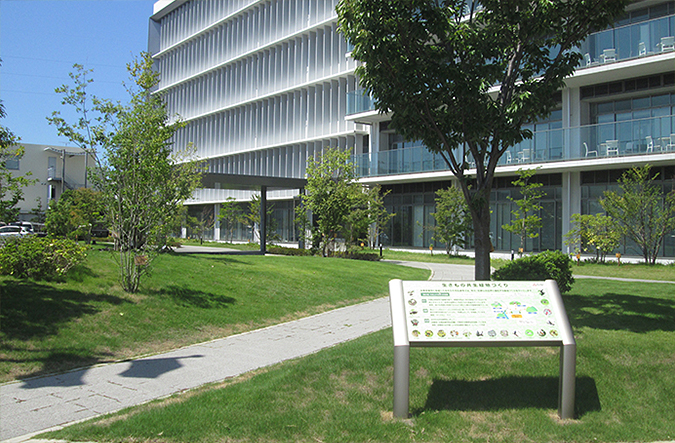
We have created a green space on the premises to attract creatures from the surrounding mountains and sea.
-
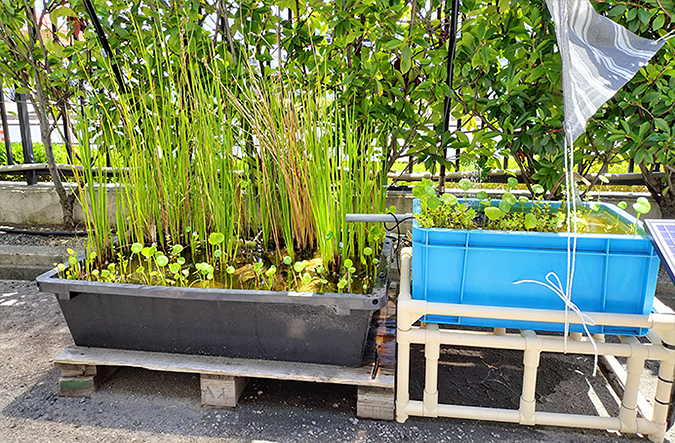
A biotope created using plastic containers, featuring native aquatic plants and Japanese rice fish. Dragonflies and other flying insects have been observed visiting.
Ecosystem Support Through Tree Cultivation
In February 2024, we implemented measures to care for the trees within the wildlife-friendly green space. This was in response to issues such as slow growth and thinning trunks among trees that had been planted or transplanted during the initial landscaping.
With expert guidance, we investigated the causes and found that soil hardness, lack of oxygen and microorganisms in the soil, and strong wind (building-induced wind) were hindering tree growth. To address these challenges, we implemented three key measures: (1) digging planting holes around tree bases to improve soil conditions; (2) group planting tall, medium, and low trees to enhance wind resistance and protect trunks; and (3) mulching with fallen leaves to improve soil health.
Thanks to the measures taken, the treated trees are now growing well. We will continue to monitor the trees and take necessary measures based on their condition. Additionally, we plan to conduct biodiversity surveys every few years to assess ecological impacts.
-
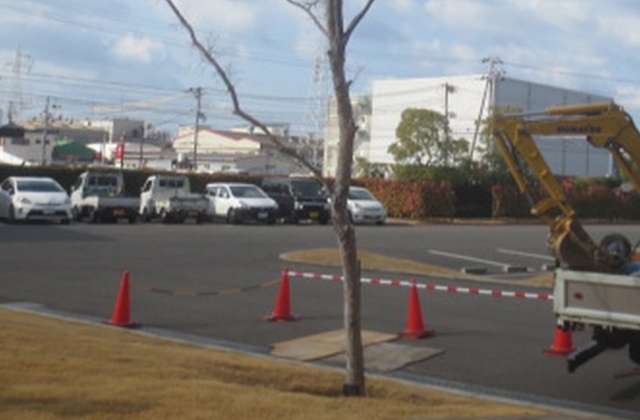
A weakened Chinese elm (February 2024)
-
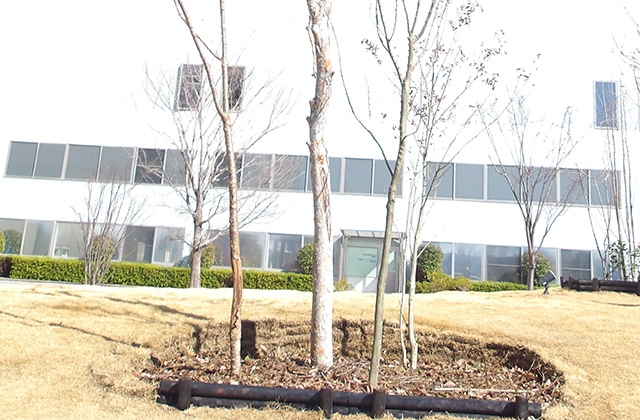
We dug planting holes, planted in groups, and added mulch (February 2024).
-
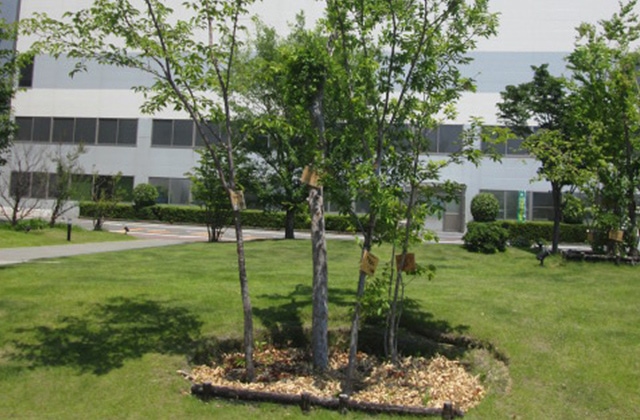
Trees have returned to health and have thicker trunks (June 2024).