Preserving biodiversity at business sites
Sanda area
Promoting Harmonious Coexisting in Nature at Our
Business Sites by Initiating Studies on Living Creatures
Fostering Locally Native Species Through Employee Engagement
Nature observation area
The Sanda area, where the Sanda Office is located, is blessed with a rich natural environment, with mountainous terrain stretching to the north and east. The Sanda Office is committed to protecting locally native species. Since 2014, employees have carried out biodiversity surveys and regularly shared updates with colleagues. One goal of these activities is to spark interest in biodiversity among employees who may be unfamiliar with local wildlife.
Following expert advice, we established an onsite nature observation area planted with locally native species. We recorded long-term vegetation changes in both maintained and intentionally unmanaged sections of this area.
We have been restoring the area and growing native wildflowers received from neighboring parks and wetland ecosystems. Our ongoing efforts will remain centered on safeguarding the region’s native biodiversity.
Cultivating Native Seedlings in Nursery Plots
Based on insights from an expert dialogue held in December 2015, we established a nature observation area planted with cogongrass, a locally native grass species, and have been monitoring its development over time. In part of this area, we deliberately refrained from human intervention. After approximately four years, seeds carried by birds and wind began to sprout, and we observed the emergence of non-native species.
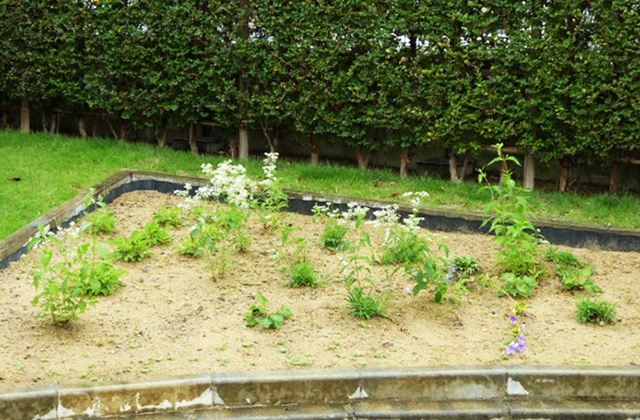
In light of invasive species management considerations, we concluded our observations in March 2023 and repurposed the area into a cultivated field. We began cultivating local native plants in our field using seedlings received from nearby natural areas: Arimafuji Park, a large urban park; Saraike Wetlands, a valuable cluster of wetland ecosystems; and Sumada in Sanda City, a town surrounded by farmland and forests. These areas contain wetland habitats that are rare in urban areas and shelter species recognized as endangered by the prefecture.
Protecting seedlings on our own site provides a safeguard against potential environmental changes. Also, because the field is located near the office cafeteria, it provides an opportunity for employees to take an interest in the native plants growing there.
-
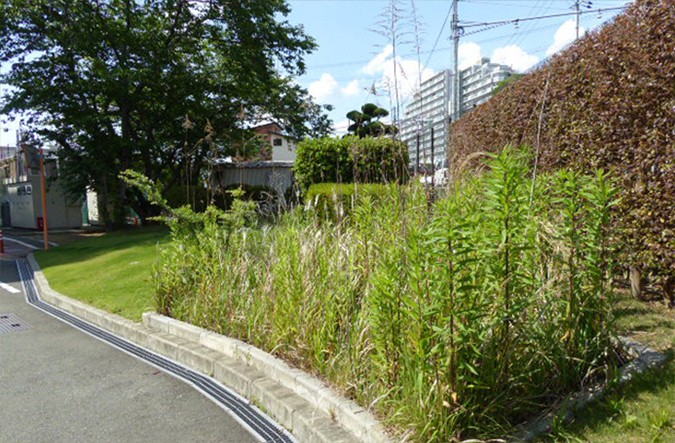
Nature observation area (before repurposing)
-
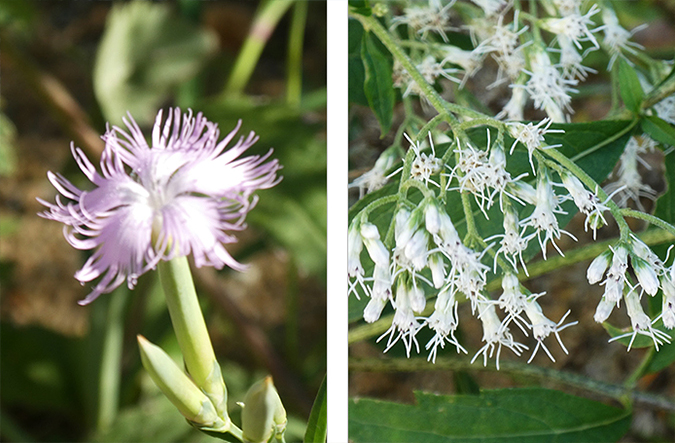
Fringed pink (left) and boneset (right). The gentian bloomed in its first year.