
2026.03.27
Communicating the Drive for Change through Experience: #BETTERVERSE Challenge in Southeast Asia
In 2025, Mitsubishi Electric announced a transformation into an “Innovative Company.” Young employees took on the challenge of communicating this drive for change to audiences in Southeast Asia in an entirely new way. Working closely with colleagues across borders, they brought #BETTERVERSE— a music-driven project—to life. We spoke with Saki Matsumoto and Yuta Ito about the thoughts and determination that went into this unprecedented challenge.
Contents
How the Unprecedented Project #BETTERVERSE Came to Life
- What challenges did you see in communicating Mitsubishi Electric Group’s drive for change in Southeast Asia?
Matsumoto: Mitsubishi Electric Group has been sponsoring international soccer tournaments in Southeast Asia until 2024, and I believe this has helped raise awareness of the Group in the region. However, it’s difficult to say that our drive for change had really come across. To find partners willing to co-create new value with us, we felt it was essential to first communicate the Group’s strong drive for change.
- Why did #BETTERVERSE emerge as the approach to communicating Mitsubishi Electric Group’s drive for change in Southeast Asia?
Ito: In considering how best to convey the Group’s drive for change, we first discussed who exactly we hoped to reach—who we would like to have as customers and potential partners in business. As a result of carefully examining various data and holding extensive discussions with colleagues in Thailand and Singapore, we narrowed our focus to a hypothetical target group of young business professionals in their 20s and 30s who are not satisfied with the status quo and are eager to take on challenges with a sense of speed.
Matsumoto: In Thailand and Singapore, many people hold management positions at a younger age than in Japan. Even those in their 20s and 30s already have decision-making authority or serve as leaders within their companies.
- Once you had identified your target audience, why did you decide to create a music-based project?
Matsumoto: We asked ourselves what the best way would be to appeal to young business professionals. When we profiled and analyzed the values and interests of our target audience in Southeast Asia, we found many of them to be highly attuned to trends and the arts. We therefore came up with the idea of using art and music to create an experience that would resonate with them.
- Using music as an approach sounds like quite a challenge. How did you use it to convey Mitsubishi Electric Group’s drive for change?
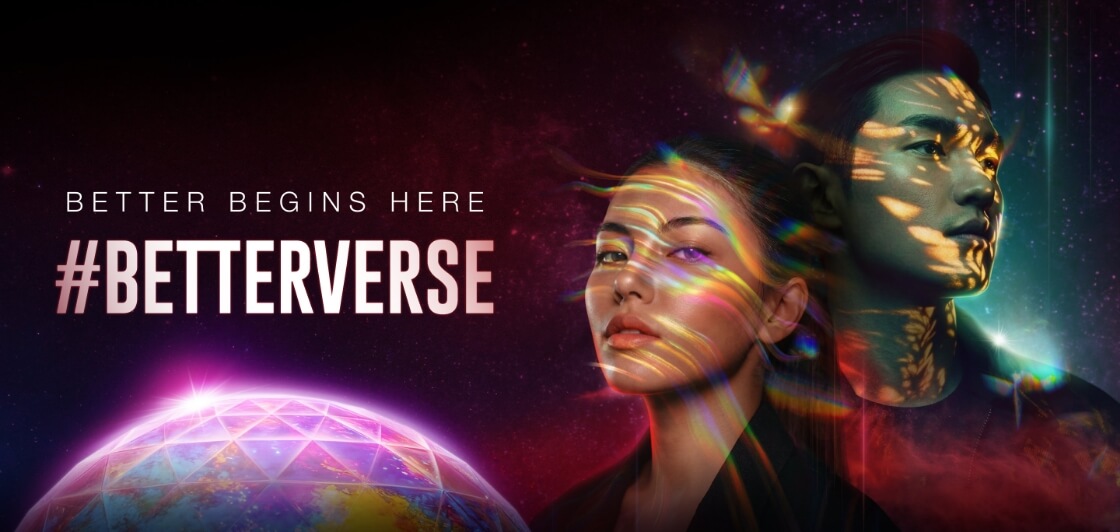
Ito: When developing the project, we decided that we wouldn’t simply send out a one-way message. Rather, we focused on how our target audience would best understand that the Mitsubishi Electric Group is an innovator striving to create a better society. Our goal extends beyond simply selling equipment; we aim to create new value from data obtained from that equipment and return it to society through a “circular business” model. In the same way, #BETTERVERSE combines users’ vital data, such as heart rate, with thoughts and ideas obtained through conversations with AI to generate new value in the form of music and music videos, which are then returned to the users. We believed this process would illustrate the vision behind the circular business model we aim to achieve.
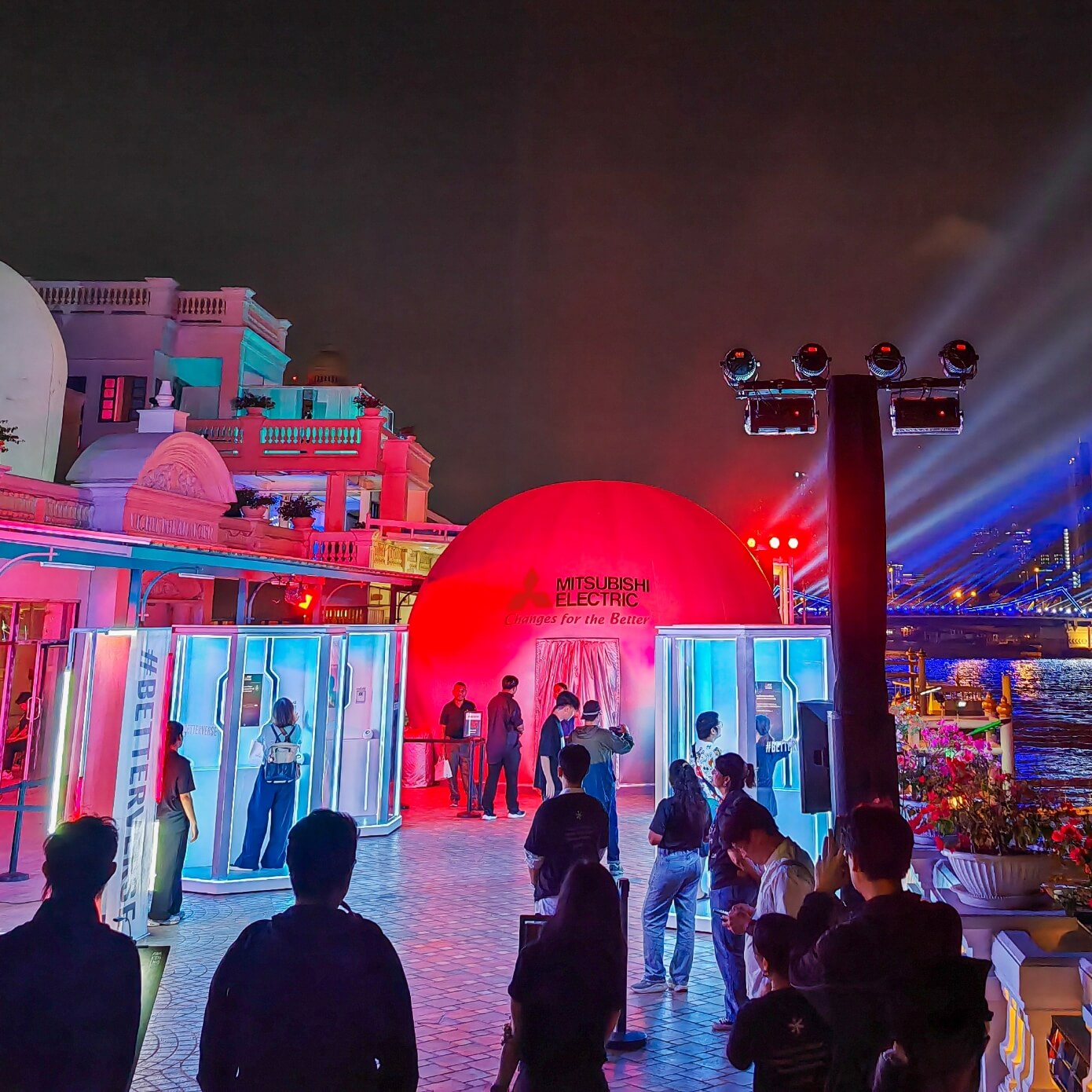
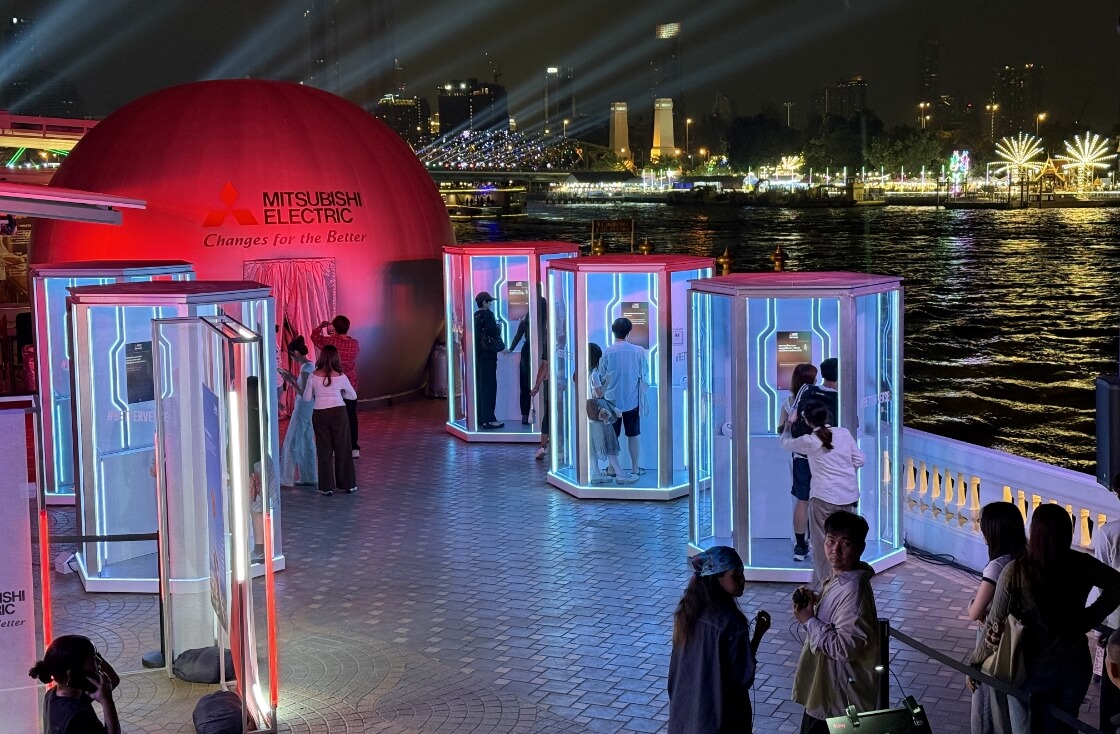
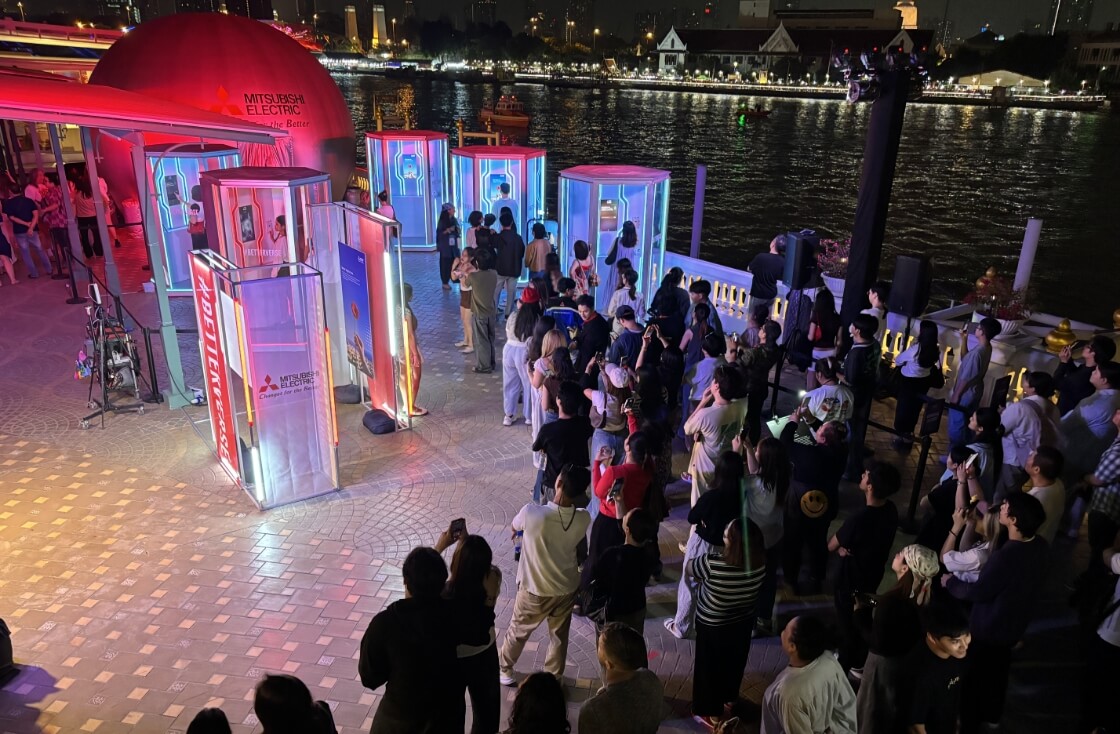
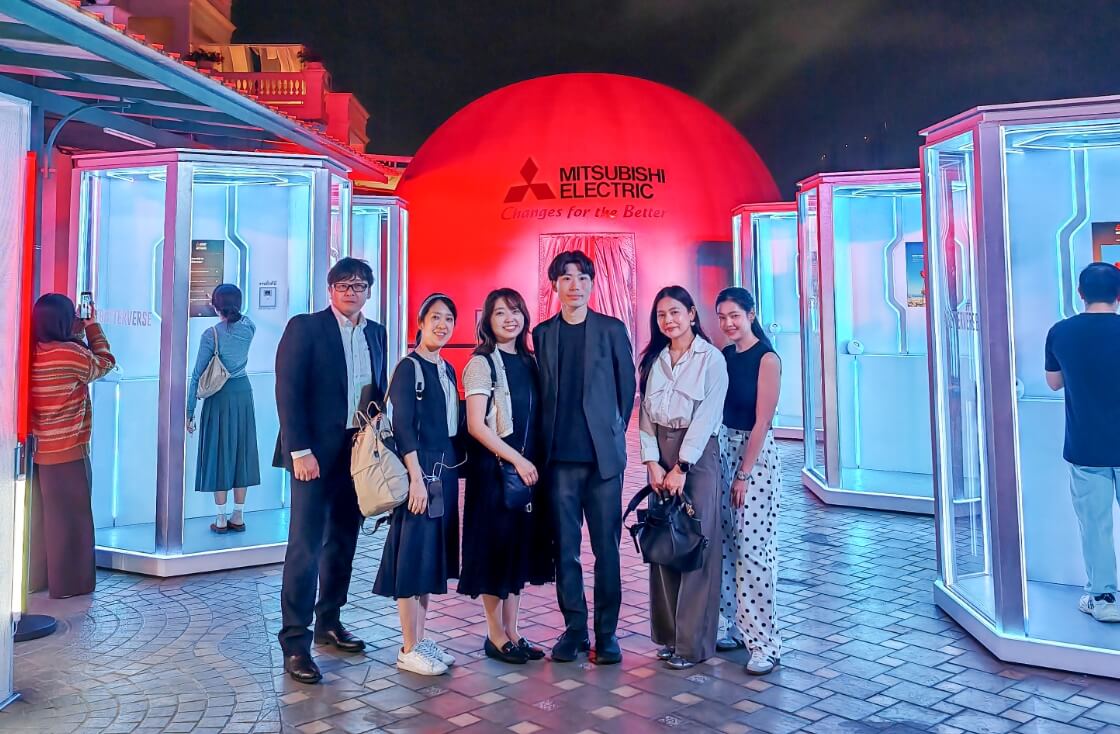
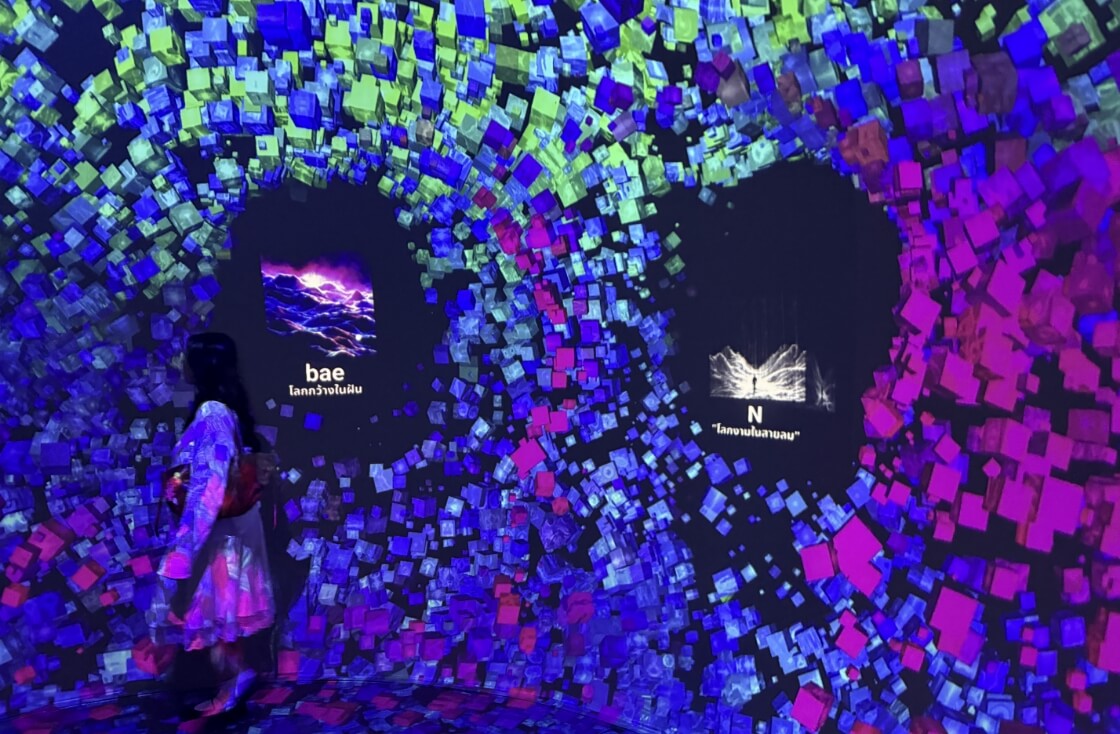 At the live event in Thailand, music videos created by #BETTERVERSE participants were projected inside the dome.
- I see. I actually tried it myself and found that some of the questions were surprisingly profound for something aimed at creating music, such as “What would your expectations for your dream future world be?” What was the intention of these questions?
Ito: The answer choices for the questions all express Mitsubishi Electric Group’s drive to create a better society. Since the target audience for this project consisted of people who share that same aspiration, we wanted them to feel a sense of connection while also gaining a clear understanding of the kind of company we are. We continued refining both the questions and the answer choices through repeated discussions with the production team.
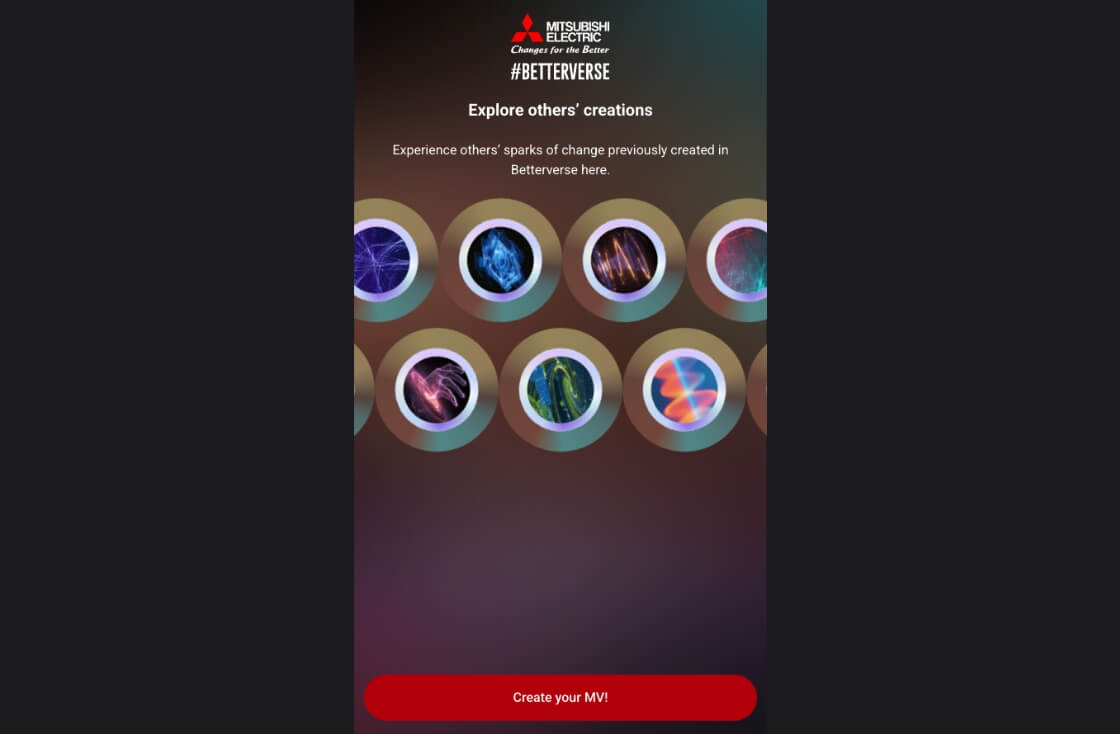
- I was surprised when the answer I entered to the question “What passion drives you to continuously challenge it?” appeared as a part of the lyrics in the music.
Matsumoto: We thought it would be meaningful if people could share their motivations for changing society with one another, so we incorporated the words they used into the music. They could then post it on social media and connect with other users through a shared sense of empathy.
“Expectation” as the Keyword: T-Shirts That Brought the Team Together
- The project was launched in February 2025, and by December of the same year you had already held a live event in Thailand and released a music app. With such a tight schedule, what did you focus on most?
Matsumoto: The #BETTERVERSE team was an international group of about 30 people, including local employees in Thailand and Singapore. We therefore focused most on fostering a strong sense of ownership. That is, we kept in mind that this wasn’t a project decided by one person, but one we would decide on together as a team. Even arranging a single meeting was difficult, because coordinating everyone’s schedules took time. In addition, our discussions were conducted in English, but since English is a second language for members in both Thailand and Japan, there were times when we struggled to get our thoughts across and nearly lost heart. However, by hanging in there and patiently continuing our discussions, we gradually became able to entrust more and more decisions to the teams on the ground in Thailand and Singapore. I believe that was one of the key reasons for the project’s success.
- Was there anything you did in particular to keep everyone aligned?
Matsumoto: We chose “expectation” as the keyword for our team, because we wanted to raise expectations for the Mitsubishi Electric Group. When we traveled to hold local in-person meetings, we brought T-shirts with “Expectation” printed in large letters across the chest and had everyone wear them. We would all wear the shirts and shout, “Expectation!” to share the goal of the project (laughs). What we most wanted to avoid was hearing someone say, “If that’s what headquarters decided, that’s fine.” We wanted our members to feel, “This is something we’re doing in our regions, and something we’re doing together.”
- So, the T-shirts helped create a sense of unity! The live event and the music app were subsequently both launched in December. Did everything go smoothly?
Matsumoto: Actually, quite a few things came up. When the system suddenly shut down on the day of the press preview just before the event, we nearly panicked. However, project members immediately sprang into action to identify the cause, and we were able to respond flexibly.
Ito: We ran into a few glitches on the app side as well. For example, we had trouble projecting the music videos inside the dome, and because the settings for filtering inappropriate language were very strict, even words like “Passion” and “Joyful” were blocked. Many of these problems only became apparent by setting things up on-site. Dealing with the language filter was a learning experience for us in terms of responding quickly and flexibly, such as by adjusting the settings on the spot.
Lessons from the Challenge: Insights for Continued Innovation
- How did the live event turn out?
Ito: We participated as part of a popular digital art event in Thailand, which attracted around 370,000 visitors over its ten-day run. Of those, about 13,000 people experienced the Mitsubishi Electric booth. This turnout far exceeded our expectations, with long lines forming during the limited hours the booth was open, from 6:00 p.m. to 11:00 p.m.
Matsumoto: Many people posted their experience on social media, saying things like “It was fun!” and “I made music!” I was especially relieved and happy when I saw young business professionals, the very group we had envisioned as our target audience, taking lots of photos.
- This event went beyond the traditional image of Mitsubishi Electric Group—in a good way. Did you have any worries about that?
Matsumoto: Yes, I did. With unexpected troubles and problems coming up almost daily, it was quite nerve-racking. However, more than anything, the challenge felt worthwhile. There was also the sense that, as the company pursues its transformation into an innovative company, each of us employees need to change as well.
- What feelings do you have about the members who shared the hardships with you?
Ito: To be honest, I’m the kind of person who prefers following a clearly laid-out path, and I tend to worry about whether the decisions I make are the right ones (laughs). However, this time we were able to create a completely new event by bringing together team members in Thailand and Singapore. Drawing on her experience spending a year in Thailand as an OJT trainee, Ms. Matsumoto made wise decisions even in situations where there were no clear answers. I think she is an employee who truly embodies what it means to be an “Innovative Company.”
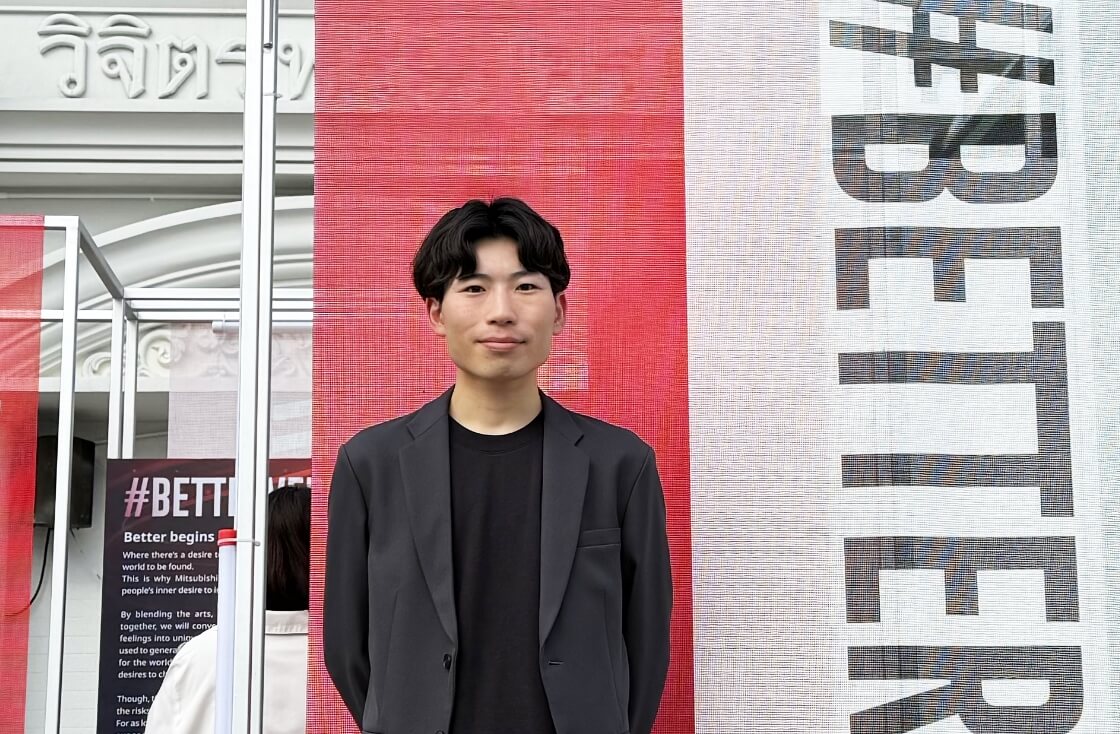
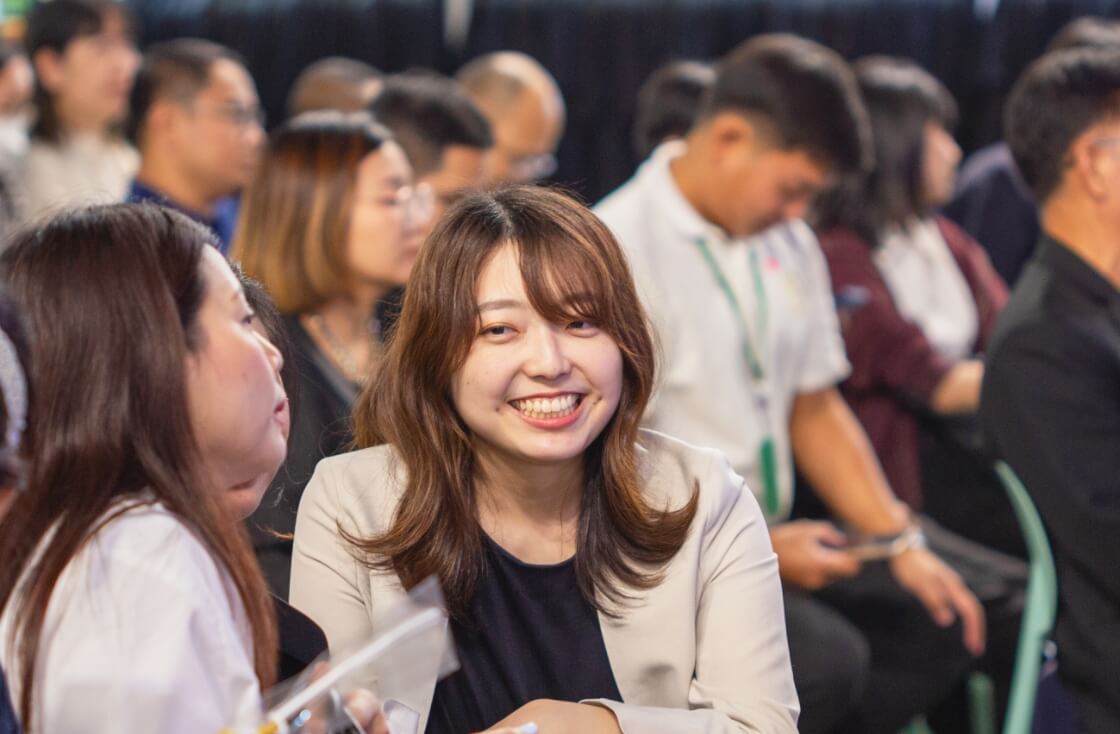
Matsumoto: That makes me so happy (tears up). I’m not a particularly innovative person to begin with, so taking the lead on something like this largely on my own initiative was a challenging experience for me. However, the fact that we struggled together and ultimately celebrated our success together made the whole project extremely meaningful for me, and I’m filled with deep gratitude to all the members.
- How would you like to apply this experience going forward?
Ito: This experience showed me that even when there’s no clear right answer, it’s okay to give shape to ideas that we believe in. While building on what we’ve done so far, I feel I’ve gained the confidence to take a step forward by trusting my own thinking and instincts.
Matsumoto: I’d like to take on even more global initiatives. The knowledge that this challenge succeeded thanks to the strong connections we built with our teammates has given me a lot of confidence. I’ve developed a mindset that we’re ready to take on any troubles that may come our way, and that we can overcome them as a team no matter how different our cultures may be. The experience has become a source of motivation—and encouragement—for my next challenge.
Ito: When, for example, we had a goal for the kind of image we wanted people to have of the Mitsubishi Electric Group, I was able to gain experience in the knowhow such as of localizing our approach to spark interest among local people whose culture and values largely differ according to country and ultimately connect that interest to stronger expectations for the company. I believe the know-how we gained will be useful for future initiatives in other countries as well.
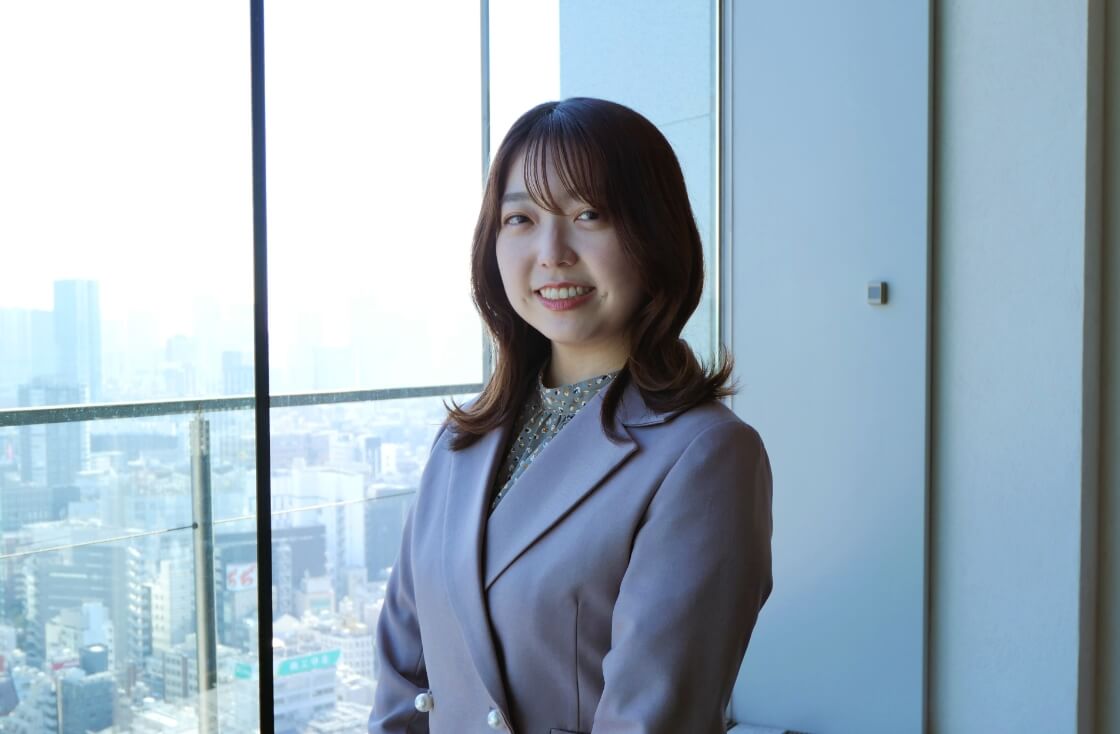
INTERVIEWEE
Customer Experience Communication Dept., Brand Communication Div., Mitsubishi Electric Corporation
Saki Matsumoto
#BETTERVERSE project member responsible for operational coordination. Joined Mitsubishi Electric in 2018. After a year of OJT training in Thailand until July 2024, she worked on initiatives such as the sponsorship of international soccer tournaments and corporate exhibitions.
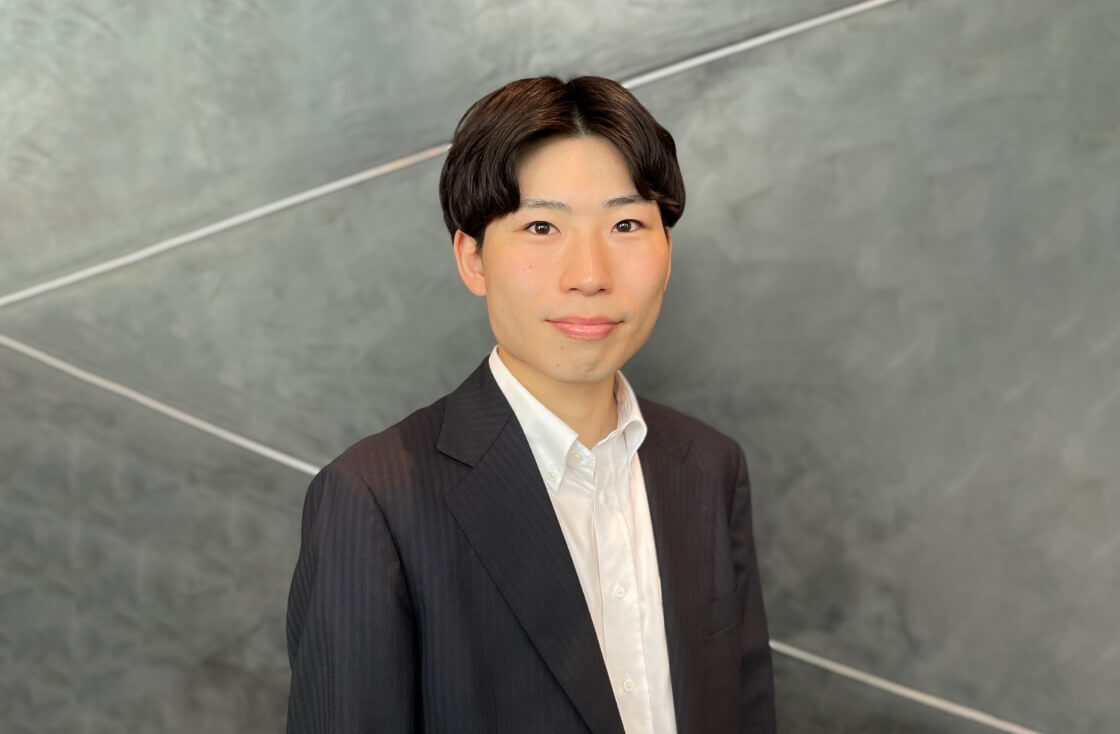
INTERVIEWEE
Business Communication Dept. B, Brand Communication Div., Mitsubishi Electric Corporation
Yuta Ito
#BETTERVERSE project member responsible for development of the #BETTERVERSE app. Joined Mitsubishi Electric in 2021. In his current position, he is mainly involved in communications for home appliances and residential equipment products. He has long hoped to work on projects with an international scope.


