
2026.03.13
Kanazawa Institute of Technology Introduces GENESIS64™ As Part of a Demonstrative Experiment in Thermoelectric-Linked DC Microgrids*1
Kanazawa Institute of Technology has teamed up with Seiko Electric Corporation (Komatsu City, Ishikawa Prefecture) to build a DC microgrid system utilizing thermoelectric-integrated renewable energy at its Hakusanroku Campus where it has conducted various demonstrative experiences from 2018 until now.
Mitsubishi Electric's SCADA software “GENESIS64™” is significantly contributing to system visualization in this project, which has the main objectives of local production for local consumption of energy through off-grid management*2 and strengthening of energy resilience*3.
The project incorporates cogeneration (heat and power supply) using renewable energy from the local Ishikawa Prefecture, and establishes a DC power supply network.
Furthermore, by utilizing electric vehicles (EV) and artificial intelligence (AI), the research team has demonstrated that even in the event of a blackout of the AC commercial power system, it is possible to shift straight to independent power supply without even a momentary power outage.
What has been expected of GENESIS64™ during these efforts, and what is expected of Mitsubishi Electric in the future?
In this interview, we speak with Professor Izui of the Kanazawa Institute of Technology and President Natsuume of Seiko Electric.
- 1 Microgrid: A small-scale power generation network/a concept integrating power supply sources and consumption sites within a determined small area.
- 2 Off-grid: Power system not connected to the power grid (e.g., electric power company)/independent power sources
- 3 Energy resilience: The resilience of the electric power supply system in terms of how strong and how speedily it can recover from stresses such as natural disasters and human-caused incidents.
 Professor Yoshio Izui
Doctor of Engineering
Faculty of Engineering, Department of Electrical and Electronic Engineering
Kanazawa Institute of Technology
 Mr. Daisuke Natsuume
Class 2 Chief Electricity Engineer/Energy Manager
President & CEO
Seiko Electric Corporation
Contents
Local production for local consumption of energy is becoming increasingly important against a backdrop of natural disasters that have occurred frequently in recent years.
“In recent years, Japan has been rocked by multiple natural disasters including the flooding of Kakehashi River system, Ishikawa prefecture in 2022 and the Noto Peninsula Earthquake that struck on January 1, 2024. Even before these tragic events occurred in Ishikawa, other regions of Japan also went through periods of extreme hardship, including a major power outage in Hokkaido and the large-scale power outage in Chiba prefecture and regional Kyushu as a result of typhoons. In recent years, there has been much talk about strengthening energy resilience, as people's lives and economies are at stake when electricity supply is abruptly severed due to a natural disaster. In order to build a more robust power supply system, local production for local consumption of energy through off-grid management is garnering a great deal of attention,” says Professor Izui, summarizing the trends of the past few years.
“My family and I experienced an earthquake on New Year’s Day this year when we were out at a shopping mall. Immediately after it struck, the power went out in the surrounding vicinity and it made me painfully aware just how greatly natural disasters can impact our everyday lives. So, when I thought about whether or not the conventional power supply models, namely centralized power generation and long-distance power transmission, would actually remain viable moving forward, I became extremely aware of the importance of local production for local consumption of energy and the establishment of an off-grid management system, which is precisely what this project is aiming for,” shares President Natsuume, drawing upon his own personal experience.
Multiple demonstrative experiments currently underway at Hakusanroku Campus
- Professor Izui, could you please tell us the key point of this system?
“The most important point of the DC microgrid system is the unification of the flow of electricity, in other words the ‘making, sending (storing), and using,’ of electricity as DC. Solar power generation produces DC electricity, which power companies then convert to AC before transmitting to the grid. In the case of a DC microgrid system, electricity is transmitted as DC, which means it is both distributed and used in the state it was originally generated in. By standardizing the type of electricity to DC, which is stable and not easily susceptible to power outages, we have built a system that we believe is superior in terms of resilience.”
DC Microgrid
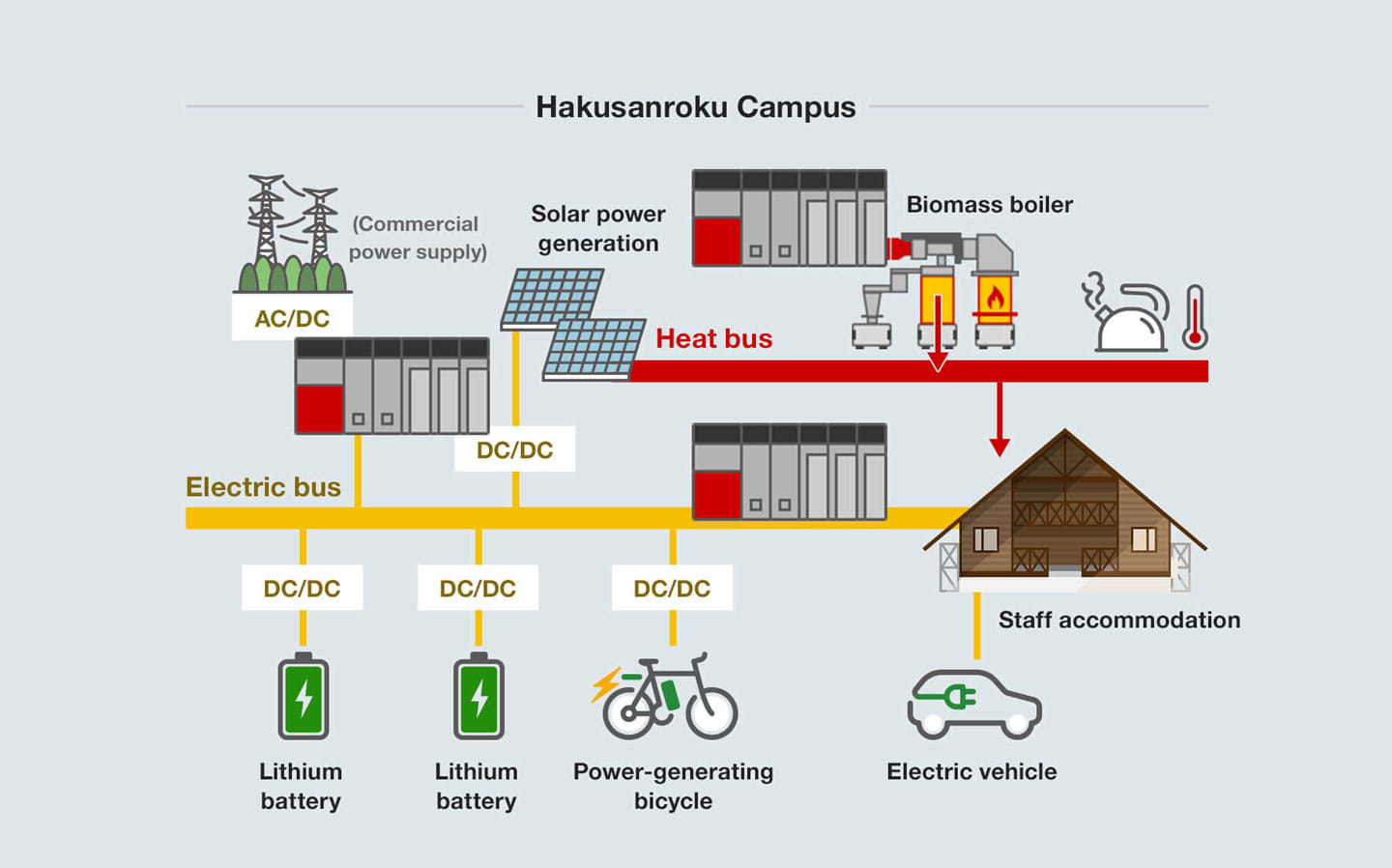
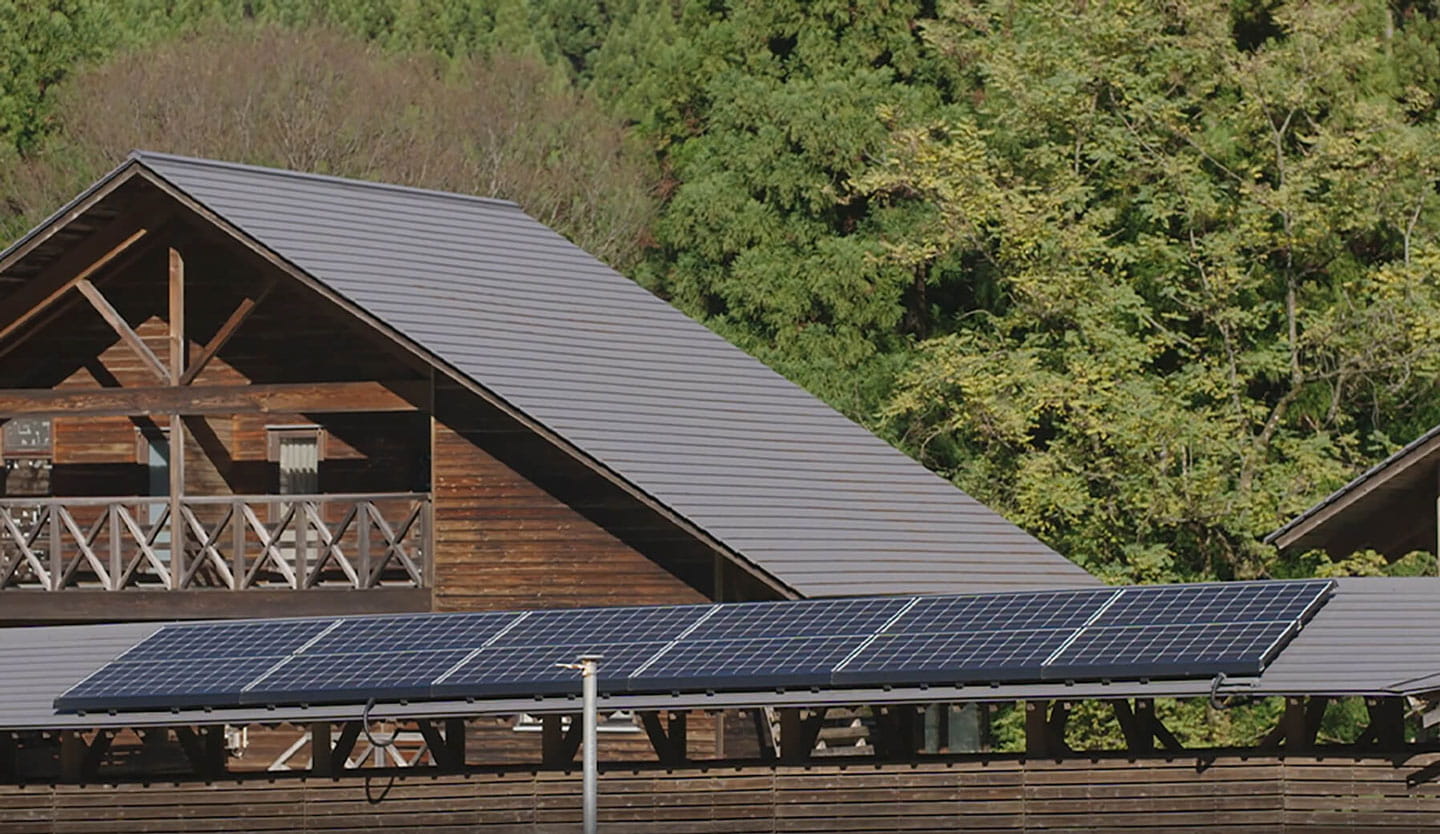
- Build a DC microgrid system utilizing thermoelectric-integrated renewable energy as a unique autonomous energy supply network within a specific area. Solar panels are installed on the roofs of the nearest dormitory buildings on the university campus, and the electricity generated by these panels is stored in electric vehicles for transportation.
In the event of a disaster, the campus will be able to use electric power by utilizing a two-way charger. Moreover, a biomass boiler utilizing thinned wood was introduced to resolve the instability of solar power generation. The demonstration experiment has succeeded at operating a system for the generation and consumption of clean, highly efficient and stable heat and electricity. This initiative was implemented as a community model demonstration of the best mix of renewable energy. The goal is to achieve efficient use of energy and zero-carbon emissions, not only by responding to emergencies but also by sharing renewable energy during normal times.
- You are also conducting extremely unique experiments, aren’t you?
“Yes. One unique aspect is that we use electric bicycles. We generate power by riding these e-bikes and can actually store up quite a bit. In fact, if we do get a power outage, e-bikes can store enough power to charge dozens of peoples’ tablets, smartphones and so on, so depending on the circumstances, these e-bikes play an important part.”
- I also heard you are proactively utilizing heat as well. How so?
“We use electricity every day, for heating and cooling and so on. The source of electricity is, in fact, heat. Therefore, our simple idea is that it is better to use the heat at the point it is generated. This system incorporates a biomass boiler. With the help of the forestry cooperative, the cogeneration system uses waste wood and other locally produced wood as fuel, making it environmentally friendly and contributing to the promotion of local industry.”
- You also use electric vehicles (EV) to transport electricity?
“For some time now, there have been cases of EVs being used in a battery-like way during disasters. But there was surprisingly little effort to use EVs to systematically store electricity and actively move it to blackout areas to supply power. It was first proactively implemented in the Typhoon Faxai , what we call ‘Boso Peninsula Typhoon’ in 2019, and students at the Hakusanroku Campus are now conducting various experiments on solar power and EV-based electricity transport.”
Meanwhile, it seems like even the students gained a lot from this initiative.
“I didn't know about the idea of local production for local consumption of energy until I came to the lab. I was really surprised when we actually used solar power to generate electricity, store it in electric cars to carry it to places with power outages and use it,” said Mr. Kaisei Higa, sharing his experience.
Mr. Keita Hayagaki shares with us his struggles. “I am currently utilizing a forecasting system to compare solar power generation and storage, calculating the accuracy and error from the results and making graphs. I am also trying to find out the cause of any error, but that is proving very difficult.”
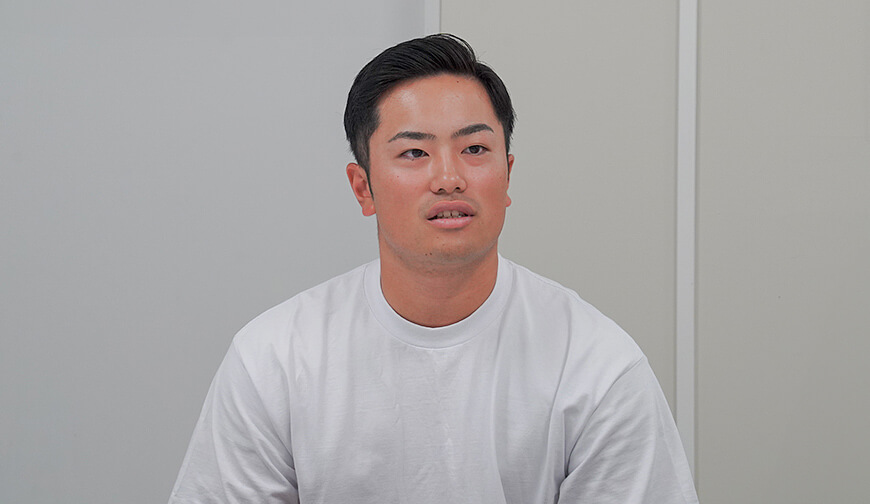 Mr. Kaisei Higa
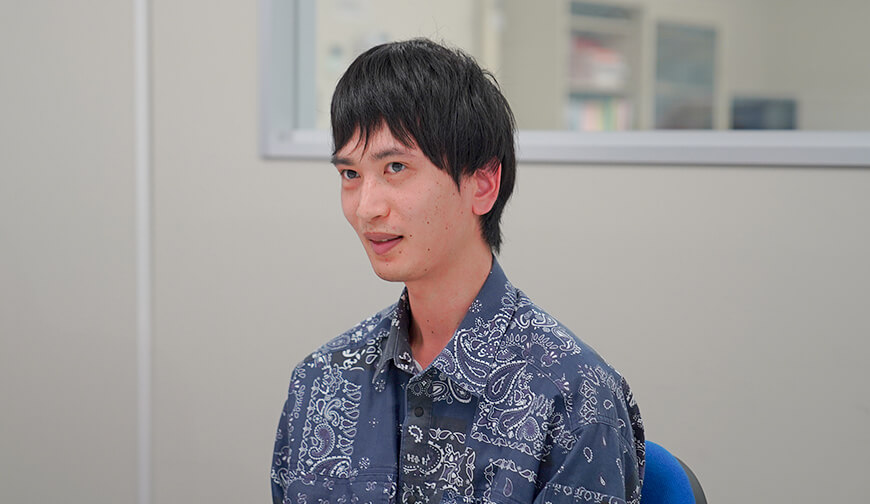 Mr. Keita Hayagaki
The secret to demonstrative experiments is just how well we can collect and analyze a variety of data
Professor Izui goes on to share with us the importance of visualization. “The basic premise is that without visualization, we know nothing. The DC microgrid system accumulates data using Mitsubishi Electric’s programmable controller, and this creates a list of numerical values. The data is vast because it is accumulated every two seconds, but we would like the results of this analysis to be visualized immediately in an intuitive and straightforward way. In that respect, GENESIS64™ really meets our demands.”
“It is important to not just focus on one area, but several areas simultaneously in order to visualize the relationship between them. Visualization is critical in controlling energy and seeing exactly how stable the DC power grid is, whether the loss is minimal and, if there is loss, what the reason behind this is.”
Adopting Mitsubishi Electric’s GENESIS64™ - a product with a solid track record in the FA field
- President Natsuume, let me ask you, what made you decide to adopt Mitsubishi Electric’s GENESIS64™?
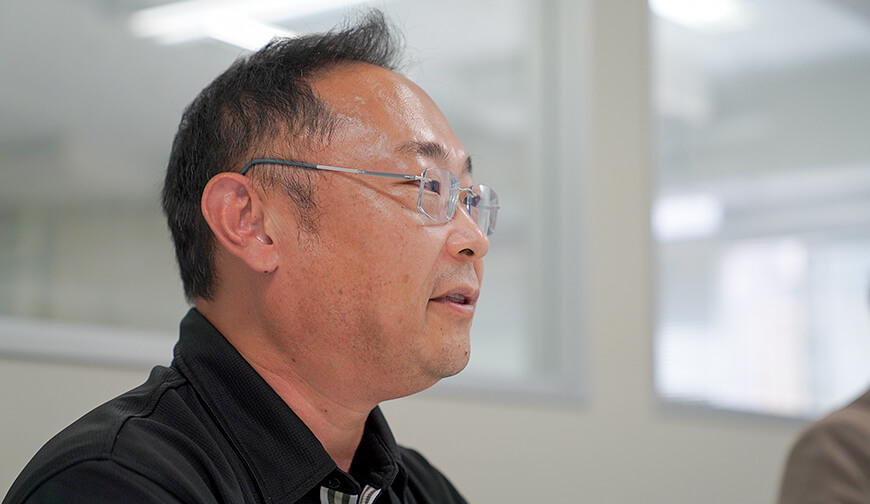
“The biggest reason is scalability. The system we’ve built needs to be scaled up to relate to real life by connecting equipment (e.g., air conditioning) to destinations beyond the power grid. Mitsubishi Electric has a wide range of commercial products for equipment, so I thought that was a big advantage and recommended them when we were at the stage of considering which product to introduce.”
“Of course, we have to be able to update security on a timely basis, and conventional SCADA software is unable to support this. Mitsubishi Electric is a company that oversees everything from home appliances to space satellites, so they have an extremely far-reaching radar when it comes to security. That is why we have such peace of mind knowing that their products satisfy the latest safety regulations and global standards.”
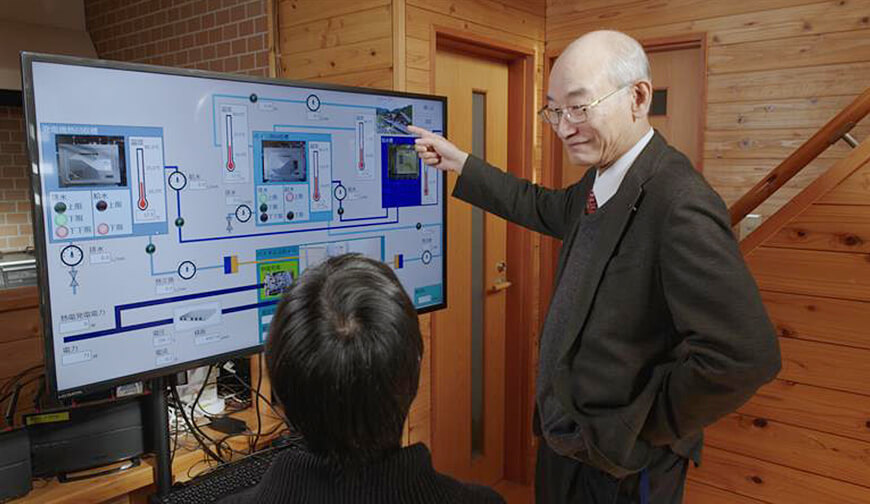
Professor Izui reflects on the time when they worked on the scalability of functions. “Allow me to add something on the topic of scalability. We are engaging in R&D, so there will be situations where we will want to introduce and evaluate new features that have never before been available. In this case, biomass is a function added at a later stage, and this was also a theme that we were jointly researching with Mitsubishi Electric's Advanced Technology R&D Center.
In such a situation, we connected the system to GENESIS64™, which is often difficult to do with supervisory control and data acquisition (SCADA software). In this respect, GENESIS64™ was surprisingly easy to use thanks to Mitsubishi Electric's detailed explanations on how to add functions.”
Repeated thorough communication at the time of system development
“The project team needed a BI (business intelligence)-like view that would allow anyone to visually see the flow of energy and the amount of energy stored. It is an aesthetically-pleasing way to see movement in a three-dimensional representation. We planned to place the monitor at the entrance, so we were particular about making it an eye-catching, state-of-the-art visual tool,” says President Natsume, looking back on the time of development.
- President Natsuume, we heard that you also communicated with the developers of this technology.
“Yes, that’s right. Foreign developers were also invited to join us for technical discussions. The fact that it was so easy to talk to developers in person is one of the big reasons we decided to go with Mitsubishi Electric. In the FA field, many manufacturers simply say “Just read to the manual,” but with Mitsubishi Electric, we had the developers right there in front of us, which made for a wonderful environment in terms of communication.”
- Apparently, there was a lot of back and forth. Is that true?
“Yes. We used an Excel spreadsheet for all technical communication and in total there were around 100 issues that we exchanged information on. We have all that firmly recorded so we can refer back to it whenever we need to. It is such an invaluable file jam-packed with useful information and we will use it meaningfully for future professional development, etc.”
Response ensuring we never felt taking on a new product would be challenging
“We had a lot of configuration work to get done just before the system went live, but couldn't find a way to set it up on our own or search for it because it was a new product, so that was somewhat challenging,” admits President Natsuume, looking back on the difficulties encountered just prior to the start of operations.
Meanwhile, Professor Izui explains the difficulties faced after the system went into full-scale operation, “Even after the system was completely up and running, we had to learn a lot from Mitsubishi Electric because we didn't possess the know-how on how to absorb data or how to assign and write control commands when we added new R&D functions.
“But when I contacted Mr. Okada of Mitsubishi Electric, he was extremely willing to provide answers on how to proceed,” recalls President Natsume with a smile. “I am very grateful to him for his efforts to achieve a single project, involving the technical members of the plant.”
“Mitsubishi Electric’s support team responded to all of our questions or concerns so amazingly fast. We are a university, so in all honestly, introducing a certain special technology can be time-consuming and cumbersome in some aspects. For example, in the past, we have reached out for support to other manufacturers via email and been made to wait anywhere from one to two weeks. But Mitsubishi Electric would always reply to us within around 30 minutes! They even told us we could email them about multiple problems at once so things would get solved quicker. Not to mention, in addition to answering our original questions, Mitsubishi Electric’s support team would always predict what it is we wanted to do and provide us with the right advice. We are so extremely grateful to them for this too!” reflects Professor Izui with a smile.
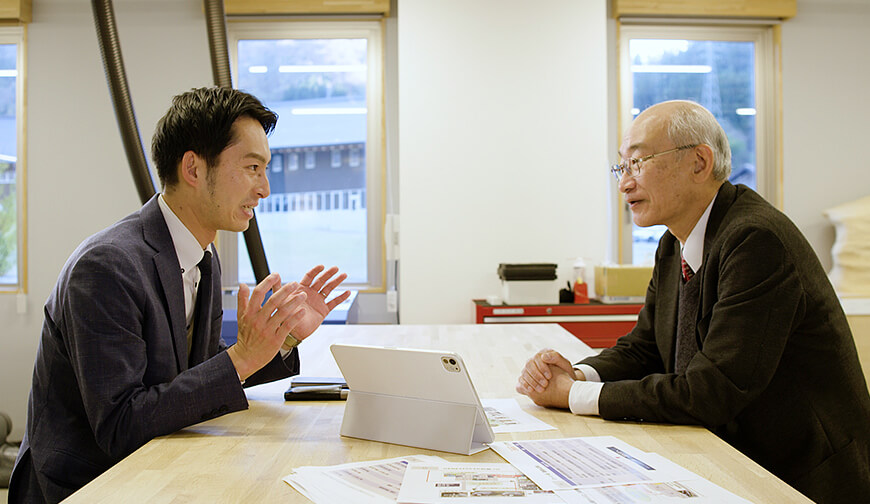
Mitsubishi Electric’s Mr. Okada had this to add as he recalled the endeavor to date.
“This was Mitsubishi Electric's first SCADA software project, and we were took the initiative by inviting everyone to join us in this project right before the release of the software. We are so grateful to Professor Izui and President Natsuume for working with us to make this project happen, so we also wanted to do our absolute best to support them as much as possible.”
Expectations towards an ongoing partnership and future proposals
- Professor Izui, please tell us your vision for the future.
“Actually, we are carrying out the same kind of research at campuses other than Hakusanroku and are considered introducing GENESIS64™ at these locations too. It seems this technology has a function that enables comprehensive visualization from a remote location so we want to achieve even greater benefits by seeing everything together. In that sense, I truly hope we can forge an even stronger partnership with Mitsubishi Electric and grow together moving forward. Moreover, we are an R&D institute so we hope to leverage the various knowledge we obtain through the DC microgrid to contribute to future FA, electricity, households, and environmental activities promoting carbon neutrality in a diversity of domains. I believe, together with Mitsubishi Electric, we will achieve this goal.”
- President Natsuume, what are your expectations of Mitsubishi Electric?
“When I asked about milestones in the past, Mitsubishi Electric told me about their ideas beyond GENESIS64™. In other words, once visualization is achieved how predictive maintenance can be performed or how the know-how that humans have acquired can be digitalized. So not just stopping at visualization, but also going beyond that to how we can think and become independent. That is why I have high expectations of proposals related to the DX solutions of machine learning and data science represented by Mitsubishi Electric’s MELSOFT MaiLab.”
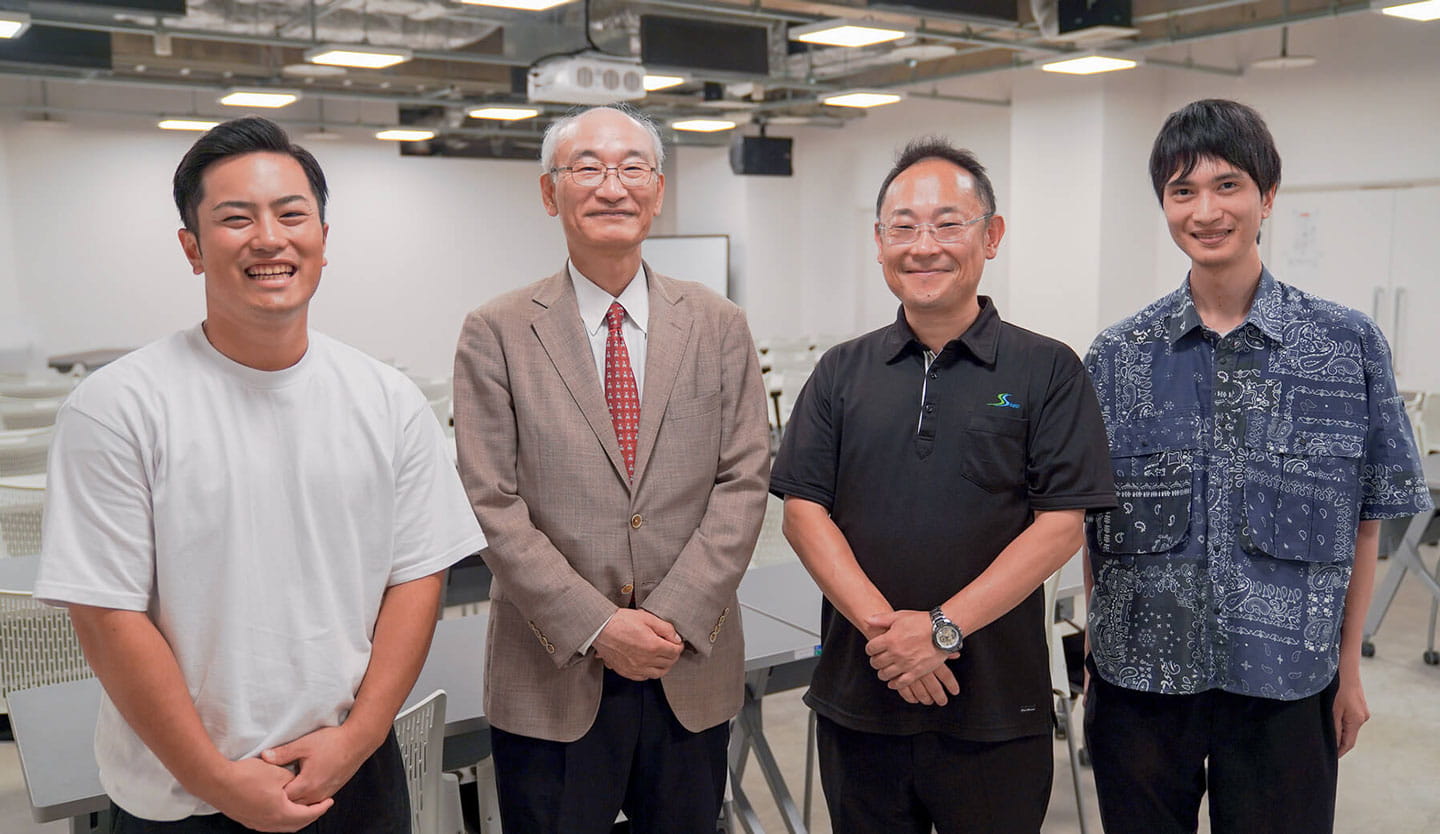 (from left) Mr. Higa, Professor Izui, President Natsuume, Mr. Hayagaki


