
2026.03.13
Within 6 Centimeters: Business Opportunities Born from High-Precision Positioning
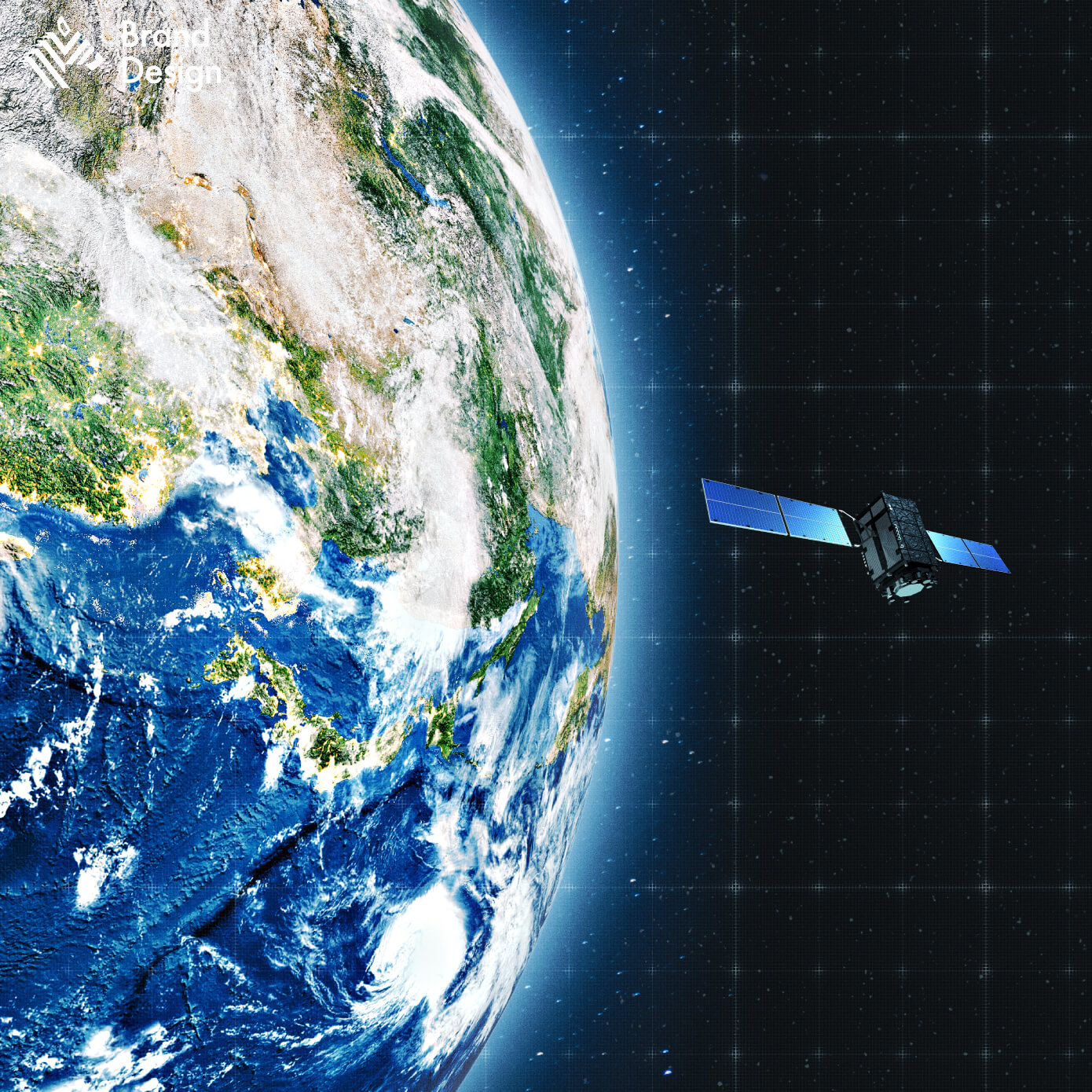
These days, we can casually look up a location in a map, or pop our destination into a car navigation system and get where we’re going with ease. It’s all thanks to the information provided by positioning satellites.
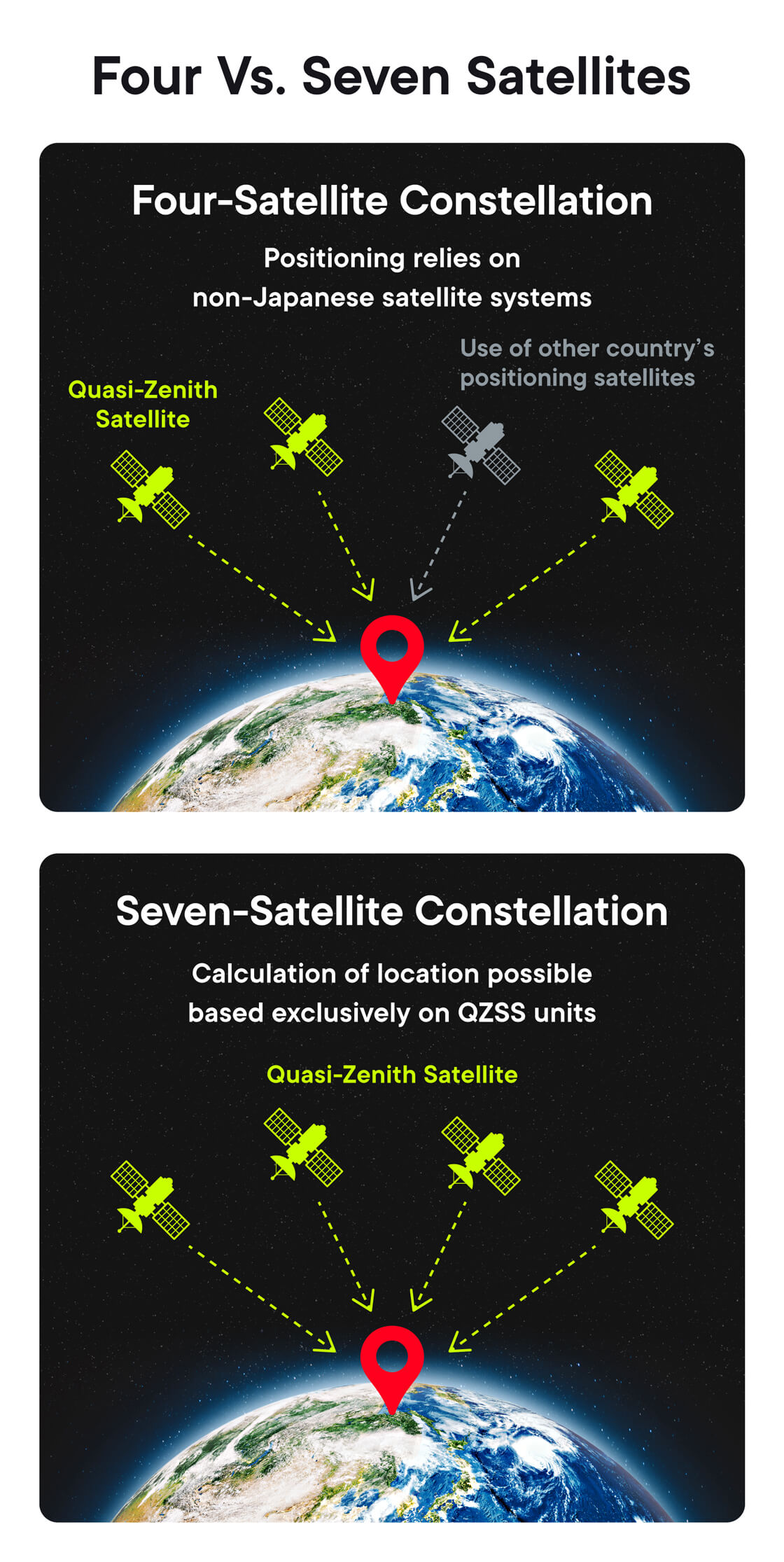
Now a Japanese project to expand coverage from domestically-produced positioning satellites is currently underway, with efforts set to expand the number of satellites supporting the “Michibiki” Quasi-Zenith Satellite System (QZSS) from four to seven.
Why build positioning satellites domestically and build up the Michibiki system? What new business opportunities and social changes might arise from this project?
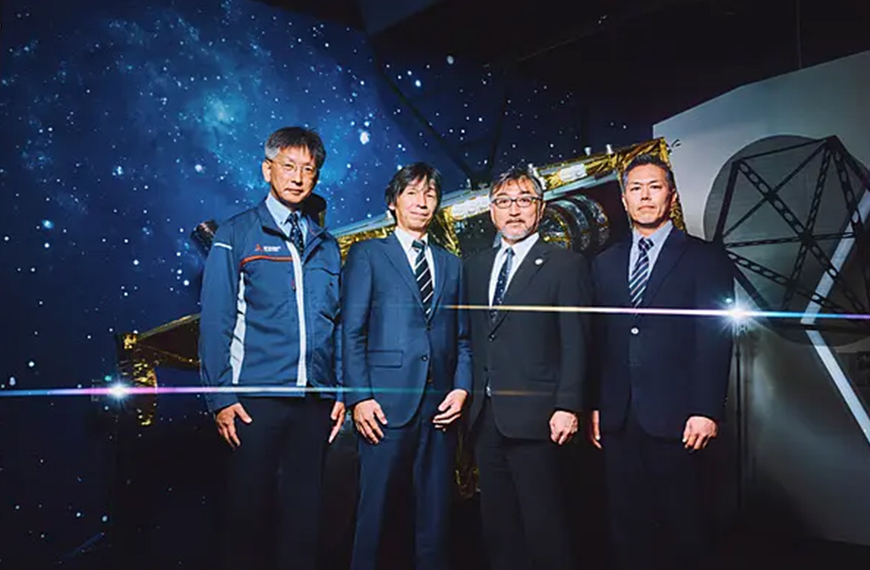
To tackle these questions, four individuals deeply involved in the system’s development and operation—officials from the Cabinet Office, the Japan Aerospace Exploration Agency (JAXA), and Mitsubishi Electric—gathered to discuss Michibiki’s potential and its future impact.
Contents
Where Does GPS Fall Short?
- When discussing positioning satellites and location information in general, most people think of “GPS.” What does the Japanese Michibiki system do?
Mikami: Starting with the basics, positioning satellites provide the location information used for things like car navigation systems and map apps. You could say these satellite systems are the closest ties between our daily lives and space-based services.
 Joined the Ministry of International Trade and Industry (MITI) in 1996. He has since held positions related to technology, R&D, and innovation policy work at government and affiliated agencies including the Ministry of Defense (MOD); Ministry of Economy, Trade and Industry (METI); the Cabinet Office; and JETRO. Following his role as Director-General for the Planning Department and the Industry & Labor Department of Nagasaki Prefecture, Mikami was appointed to his current position in July 2023.
GPS is the most recognizable system powered by positioning satellites, familiar to nearly everyone. Short for Global Positioning System, it relies on US satellites. Michibiki offers a uniquely Japanese version of this system.
- With GPS already available, why develop a system based on domestically-produced satellites?
Mikami: Location-based services are used for a wide variety of applications, from everyday life, to business operations, and even for disaster prevention. They function as a crucial part of society’s infrastructure, so we need them operating 24/7, 365 days a year.
As GPS is ultimately operated and maintained by the US government, there’s no telling when policies governing the system might change. Simply put, there’s a non-zero chance that the system may suddenly become unavailable at some point in the future.
In order to ensure the stable provision of location information, Japan decided in the early 2000s that it would establish its own positioning system based on a constellation of domestically-produced satellites, leading to the launch of the first Michibiki satellite in 2010. Since 2018, the resulting Quasi-Zenith Satellite System (QZSS), known as Michibiki, has been operating with four satellites. Plans are in place to launch three additional satellites by FY2025, bringing the total to seven.
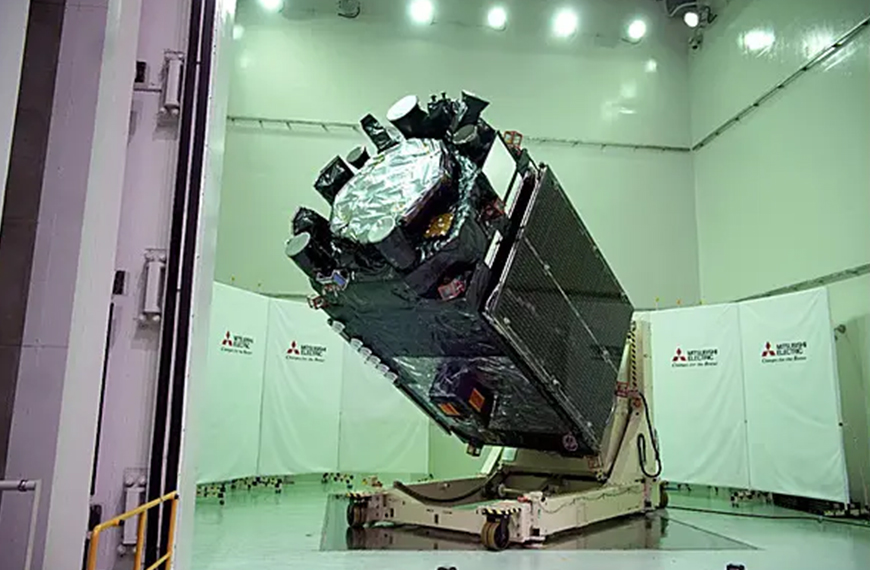 Photograph of the Michibiki No. 6 satellite (Photo Credit: Mitsubishi Electric)
- What is the benefit of increasing the number of satellites to seven?
Matsumoto: In order to use satellites for positioning purposes, four satellites must be visible constantly.
 Joined the National Space Development Agency of Japan (NASDA) in 1996. Following involvement in the development of the “Daichi” Advanced Land Observing Satellite (ALOS), he has overseen operations focused on satellite development. Matsumoto has been involved in the development of all quasi-zenith satellites since the first model (eight in total), via both JAXA and the Cabinet Office. He was appointed to his current position in April 2019.
However, with only four Michibiki satellites currently in orbit, there are times when we can’t see all four units at the same time. By bringing the total number of Michibiki satellites to seven via the scheduled additions of three new units, we’ll be able to ensure that four satellites are always visible from Japan. In other words, Michibiki will be a fully independent system for positioning purposes. Since the system was specifically developed for Japan, domestic use will provide greater accuracy compared to GPS in the US.
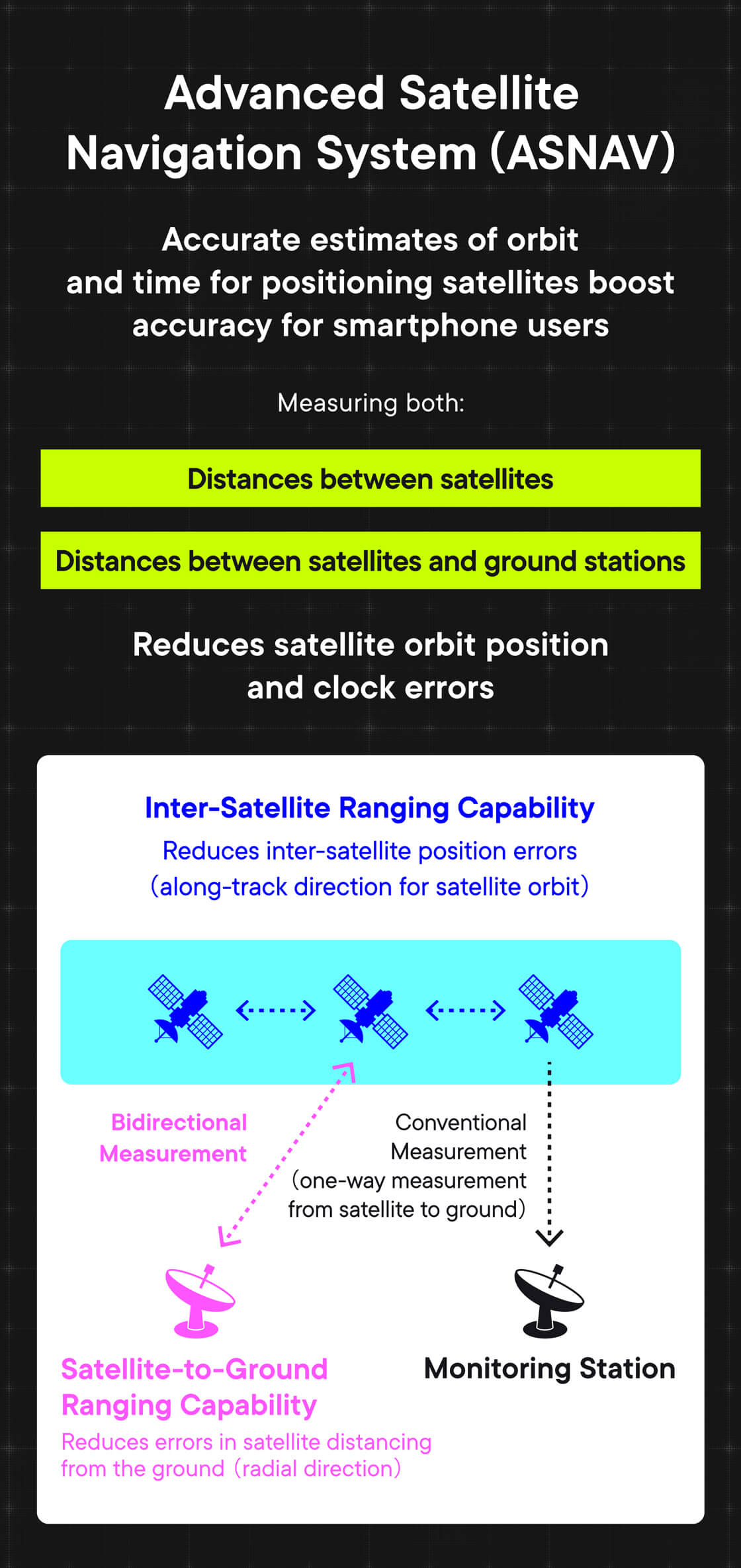
The three new Michibiki satellites are equipped with technology that differs significantly from the first four units, designed to greatly enhance the accuracy of positioning information for smartphones and other standard receivers.
Users of location-based services determine their position by calculating their distance from satellites based on position and time. As a result, measurements reflect the accuracy of the information transmitted by satellites.
In conventional measurements, ground-based monitoring stations assess position and time information for satellites orbiting overhead. However, inconsistencies in positioning as seen from satellites relative to monitoring stations make it difficult to improve location accuracy beyond a certain degree, ultimately limiting the accuracy of information for standard receivers to around 5–10 meters, similar to GPS.
To address these limitations, Michibiki satellites Nos. 5 through 7 will be equipped with two new ranging functions—one to measure the relative distance between satellite units, and another to measure distances between satellites in orbit and ground stations. These ranging functions will allow for improved tracking of position and time information, simultaneously boosting accuracy by minimizing discrepancies related to positioning. With these additions, JAXA intends to demonstrate the viability of its longer-term goal of achieving one-meter positioning accuracy for users of smartphones and other standard receivers.
Errors Limited to a Matter of Centimeters
- Considering business applications that leverage positioning information, further reduction of errors is likely to be key.
Futagi: You touched on how these three new Michibiki satellites (Nos. 5–7) will reduce positioning errors, but I think it’s worth mentioning that errors have already been reduced to just a few centimeters with the use of specialized receivers.
Positioning satellites inevitably produce a certain degree of error in location data. A few factors go into this, the most significant being the ionosphere—the layer of the earth’s atmosphere that extends approximately 100–1,000 kilometers above the earth’s surface. Radio signals from the Michibiki satellites pass through the ionosphere when traveling from space to the earth, with atmospheric interactions delaying signals and causing measurement errors.
To mitigate those errors, Mitsubishi Electric has leveraged proprietary technology and a nationwide network of over 1,300 reference stations operated by the Geospatial Information Authority (GSI) to generate correction data for positioning information. This ultimately improves positioning accuracy, using Centimeter Level Augmentation Service (CLAS) augmentation signals transmitted over the Michibiki system. Using a specialized, Michibiki-compatible receiver that can receive CLAS signals, positioning accuracy can reach the centimeter level.
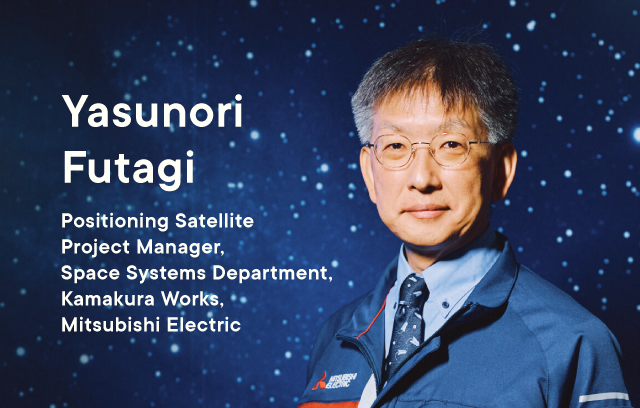 Joined Mitsubishi Electric in 1993. Involved in thermal design work for the “Kodama” Data Relay Test Satellite (DRTS), followed by system design work for various commercial satellites. Futagi was appointed as project manager for Michibiki units Nos. 2 through 4 before overseeing all subsequent projects involving the Michibiki QZSS satellites. He has been in his current position since April 2024.
Mikami: GPS-based positioning typically has an accuracy margin of 5–10 meters. However, by using a specialized receiver to process CLAS signals from Michibiki satellites, we can bring that down to just 6 centimeters. Put simply, GPS alone results in errors of up to half the length of a tennis court, while errors for Michibiki signals are effectively limited to the size of a single tennis ball.
- Very easy to visualize. With errors limited to a few centimeters as the Michibiki system grows to a seven-satellite configuration, what kinds of new business applications might we expect to see?
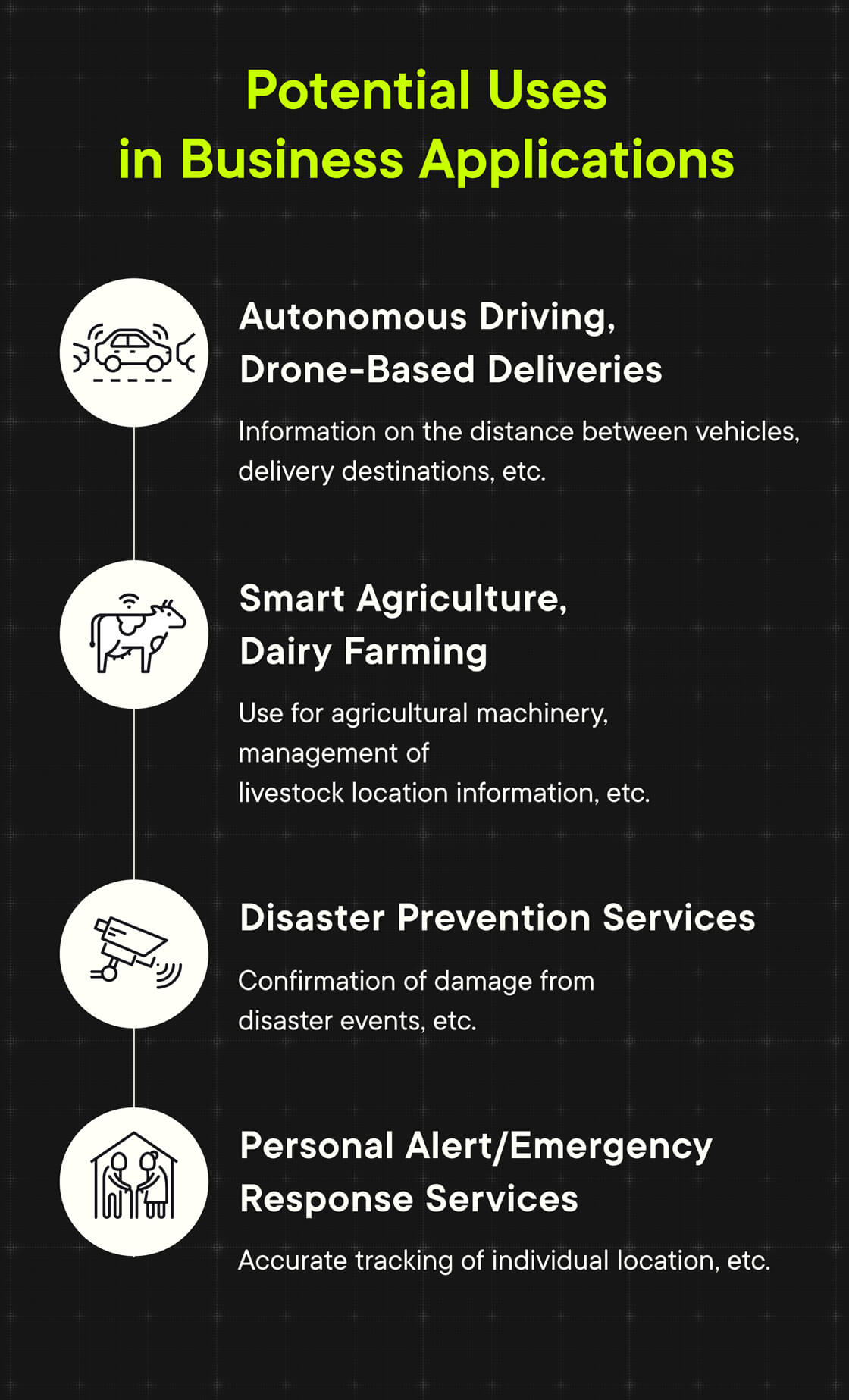
Ichikawa: There are tons of potential applications. One prime example is the use of this technology to support autonomous driving systems, where a stable supply of highly accurate location data makes core operations possible, like making sure that a vehicle stays in the correct lane, and maintaining a safe following distance. Michibiki addresses these exact needs, giving precise positioning calculations and uninterrupted coverage through a seven-satellite configuration. In fact, some commercial vehicles on the market today are already taking advantage of this high-precision satellite positioning technology.
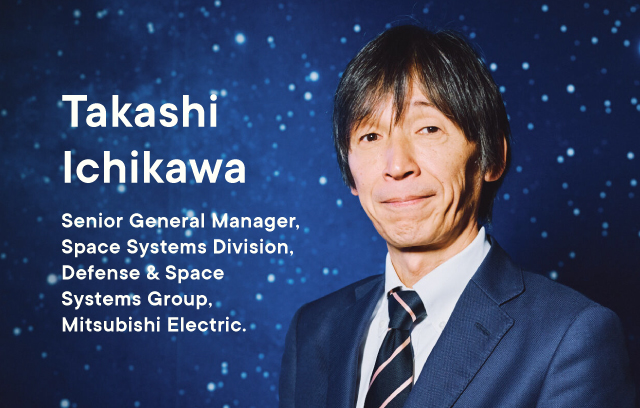 Joined Mitsubishi Electric in 1991. Active in sales operations for satellite onboard equipment (for satellite manufacturers in Europe and the US), communications satellite systems (for international telecommunications operators), and both earth observation satellite systems and meteorological satellite system (for government and related organizations). Ichikawa was then appointed to the space business planning department before assuming his current position in April 2023.
Mikami: Michibiki also plays a crucial role in disaster prevention, mitigation, and management.
We can determine where exactly a landslide has occurred and which roads are blocked as a result. Accurate location information like this is indispensable for assessing damage and supporting relief efforts. To prepare for the unpredictable, a stable satellite configuration is absolutely essential.
Matsumoto: It’s not just location data that’s more accurate with the Michibiki system, but time as well. This means the system can be used for applications that use both time and location, like digital transactions, electricity transmission, and distribution networks.
It can even help us track weather patterns, surprisingly. Measuring delays for radio waves emitted by satellites helps us estimate precipitable water*, which is an important development, since we’re seeing more heavy rainfall caused by linear precipitation belts.
The global satellite industry is currently valued at approximately JPY 40 trillion, with positioning and other satellite services accounting for around 40% of that number (Source: SIA, 2024 State of the Satellite Industry Report). As satellite-related applications continue to grow, we expect to see even more innovative business use cases in the future.
- Precipitable water is the total amount of water vapor measured in the atmosphere, converted into liquid water units. This figure contributes to accuracy improvements applicable to forecasts for precipitation and extreme weather events.
Space Doesn’t Allow for Repairs
- Mitsubishi Electric oversaw the design of core functions and assembly of Michibiki satellites. That must have required very specific manufacturing expertise.
Ichikawa: Definitely. Space is a particularly harsh environment. Temperatures in the sunlight reach over 100 degrees Celsius, while areas untouched by the sun’s rays can drop towards -200 degrees Celsius. That’s why we needed to build spacecraft capable of functioning well under those conditions.

What’s more, we can’t repair a satellite once it’s launched. The lifespan of a satellite is around 15 years, so we have to build units that can continue working without failure over that period. That’s why we built an area within our manufacturing facility where we can reproduce those environments. Through rigorous testing under extreme conditions, we’ve made sure that Michibiki has had no accidents or malfunctions to date.
Futagi: Beyond the steps taken to ensure unit quality, we’ve also challenged ourselves in terms of boosting overall development speed. It used to take around 10 years to build a single satellite, but global competition and business demand have pushed the window for development down to 5 years or less.

Shortening development and launch time that drastically was a big hurdle. But it led us to develop the DS2000 platform, a geostationary satellite bus that streamlines satellite production based on shared body and structural components . By standardizing some of the core components used for many of the basic functions in geostationary satellites, DS2000 lets us incorporate those design elements in advance of production.
When we get a new satellite order, we adapt unit-specific parts to the standard DS2000 platform, and that helps us cut unit production time, shortening the whole development window, including manufacturing. Mitsubishi Electric ran Michibiki satellites Two, Three and Four through an unprecedented development cycle of just under five years with three consecutive launches spaced two months apart. We got it done thanks to the insights and processes established through the development of the DS2000 platform and the cooperation of everyone involved. That experience and the results of those efforts have also underpinned the development of Michibiki satellites Five, Six and Seven.
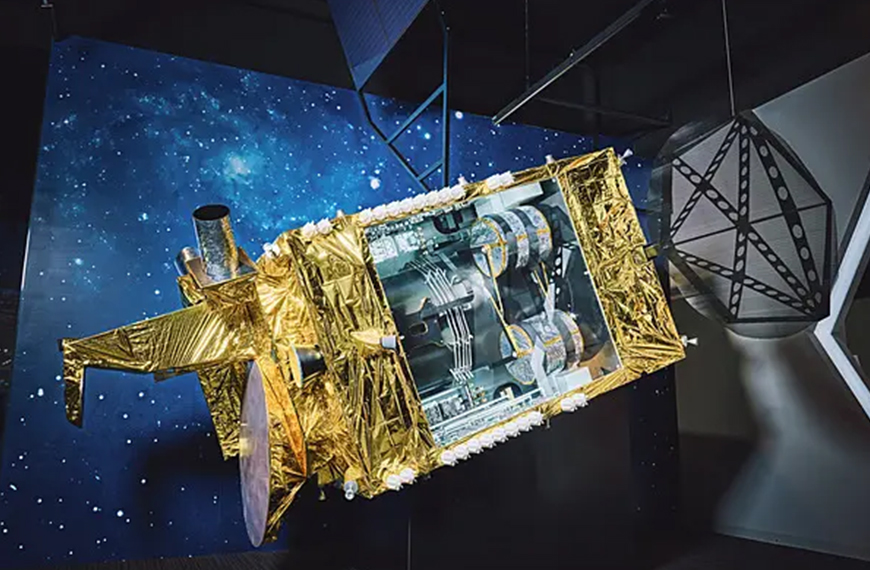 Satellite platform on display at Mitsubishi Electric’s Kamakura Works
- That’s quite a leap forward in the development process!
Futagi: Trust and cooperation among collaborators is essential to the process of putting together satellites in such a short period of time, especially with such technically dense units developed for extremely reliable operation.
The most valuable part of this project for me has been the relationships I’ve built with the Cabinet Office, JAXA, and everyone else. I plan on maintaining and expanding on these relationships of trust as we put together a seven-satellite constellation soon. I have no doubt that Michibiki will continue to be an extremely accurate and useful positioning satellite service, and I hope it will be used by as many people as possible, with user feedback helping to shape further value additions and enhance the competitiveness of this remarkable system.
Mikami: It’s extremely encouraging to know there are companies like Mitsubishi Electric capable of handling the manufacture of satellites entirely in-house. They’re going to make great strides in the future, not only in Japan’s satellite industry but also in the global market. From the government’s perspective, we’re committed to providing location services accessible 24 hours a day, 365 days a year, and we hope that everyone will look back and be proud of what we’ve achieved with Michibiki.
Layout: Rumi Yokoyama
Photography: Yuki Ohashi
Graphic Design: Kumi Kotani
Editor: Asuka Kanai


