
2024.08.26
Japan Soars into the Space Race JAXA and Mitsubishi Electric’s Stellar Performance
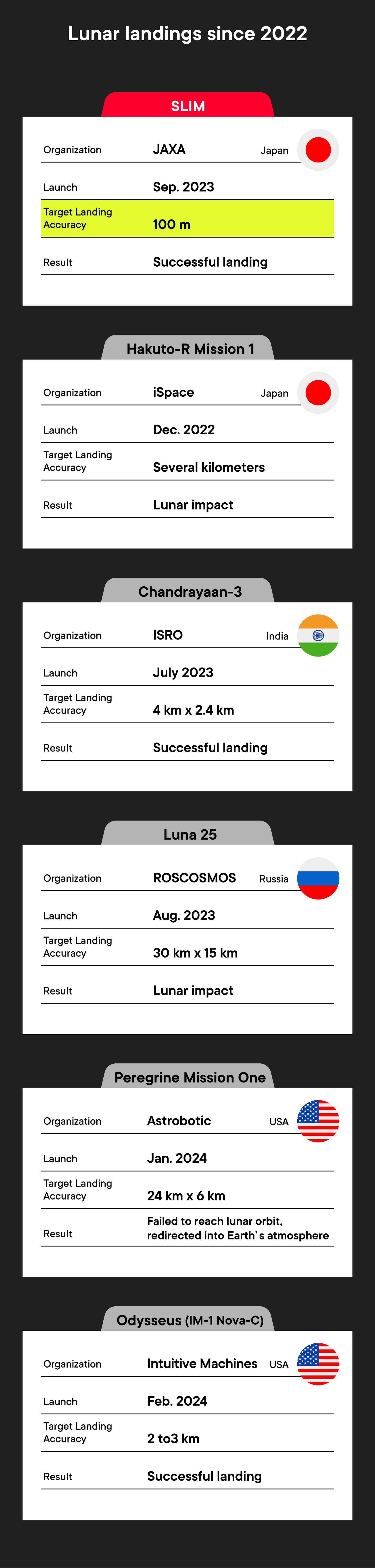
After the Apollo program closed in 1972, it wasn’t until the 2000s that we saw renewed interest in moon landings, as Japan, the United States, China, India, Russia, and others launched lander after lander. Now, after twenty years of trial and error, Japan has at last advanced the possibility of a multifaceted lunar exploration through unmanned probes on the lunar surface.
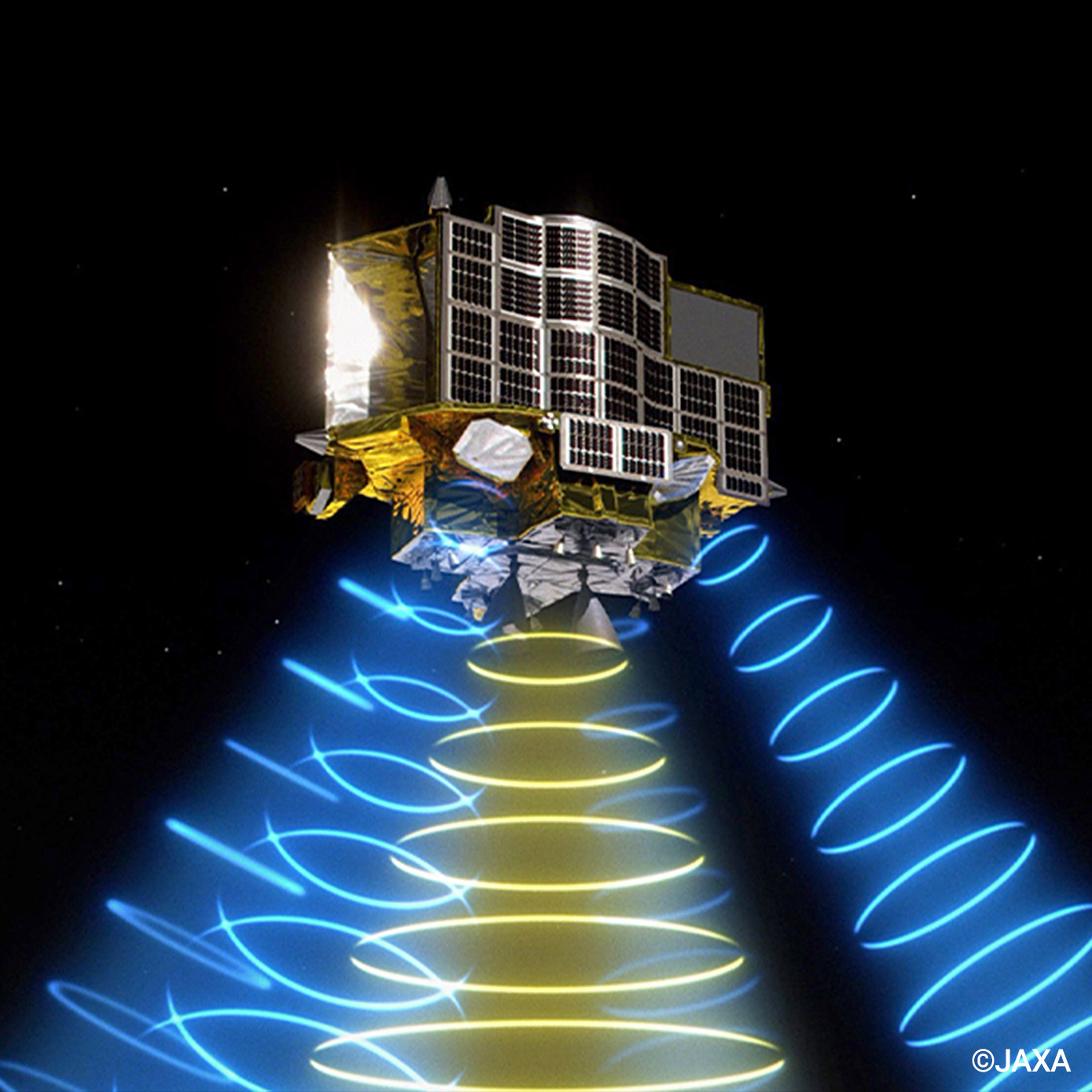
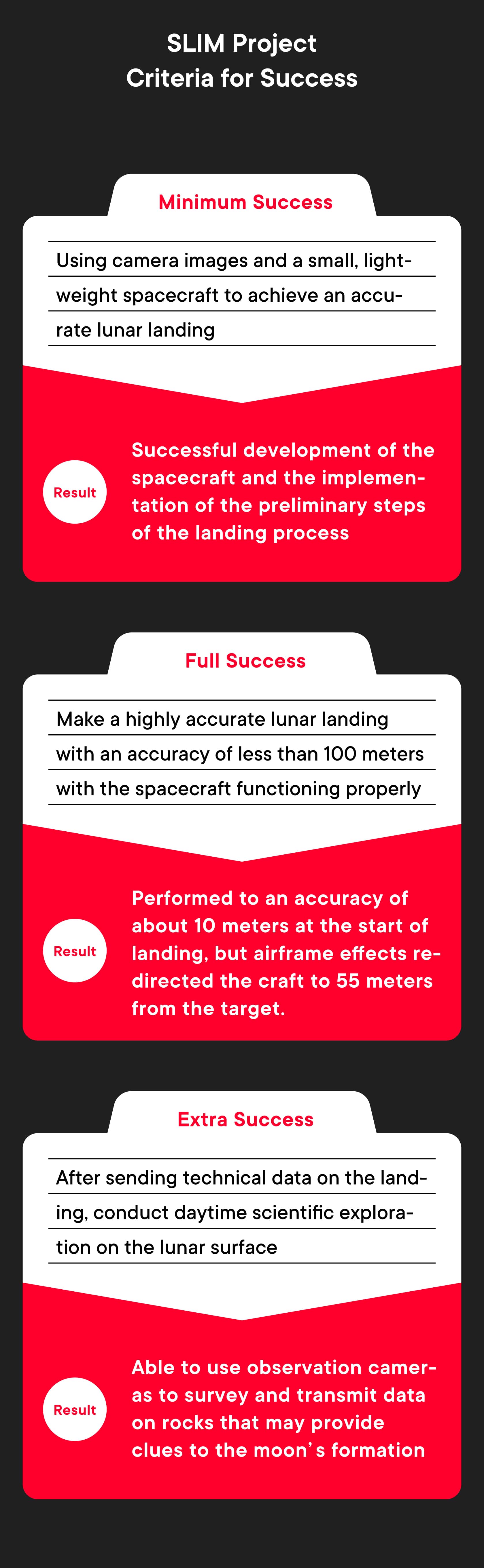
On January 20th, 2024, the small-scale exploration lander SLIM (Smart Lander for Investigating Moon) successfully landed on the moon within 100 meters.
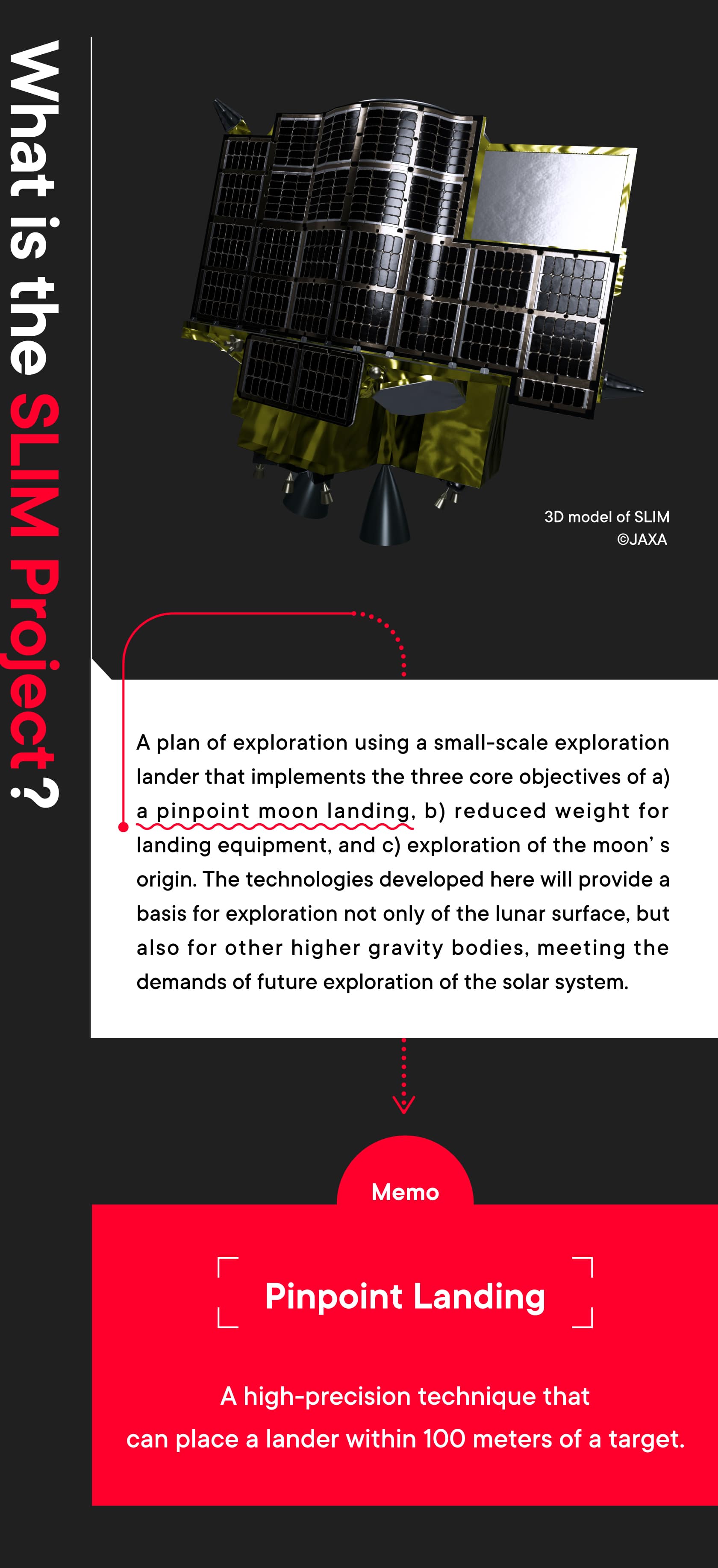
A pinpoint lunar landing is a goal which JAXA has long pursued, and the achievement of that goal using a lunar probe with systems developed by Mitsubishi Electric was widely reported as a world-first accomplishment. The success of the SLIM project has attracted both domestic and international attention. What is the next stage in Japan’s space program?
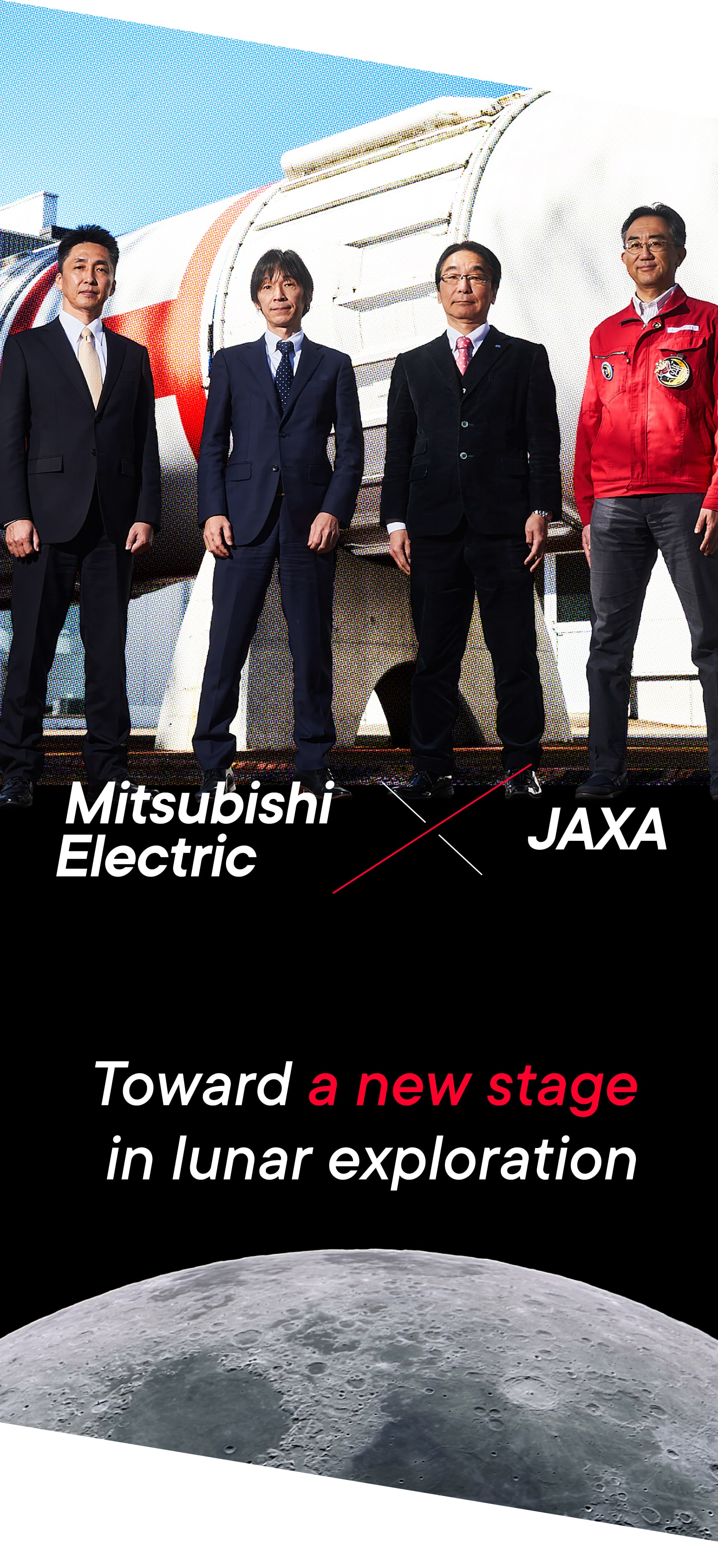
To learn more about the behind the scenes aspects of this project and plans for the future, we spoke with Hitoshi Kuninaka, Director General of the Institute of Space and Astronautical Science at the Japan Aerospace Exploration Agency (ISAS/JAXA); Shinichiro Sakai, SLIM Project Manager; Takashi Ichikawa, General Manager of Mitsubishi Electric Space Systems, a partner in the probe’s development; and Yūichi Ogura, Slim Project Manager.
(Top Image : ©JAXA)
Contents
Breaking through barriers, expanding on experience
Early in the morning on January 20th, 2024, the SLIM made history with Japan’s first successful lunar landing. Its solar panels were not exposed to sunlight at first, but after an afternoon spent waiting on the lunar surface, it was able to charge up and begin taking observations with its camera.
Japan is now the fifth nation to achieve a lunar landing. The lander’s onboard computer was able to select a landing site within 100 meters of the target, making Japan the first nation to achieve a pinpoint landing.
Understanding the moon’s origins is a goal shared across the world, but the rock samples needed to move forward toward that goal are thought to be located on treacherous, sloped surfaces. In order to make precise observations from up close, it is essential to develop techniques for landing just where scientists want to land.
This is why SLIM’s pinpoint landing is so significant: it paves the way for lunar explorations that were once considered too difficult to achieve.
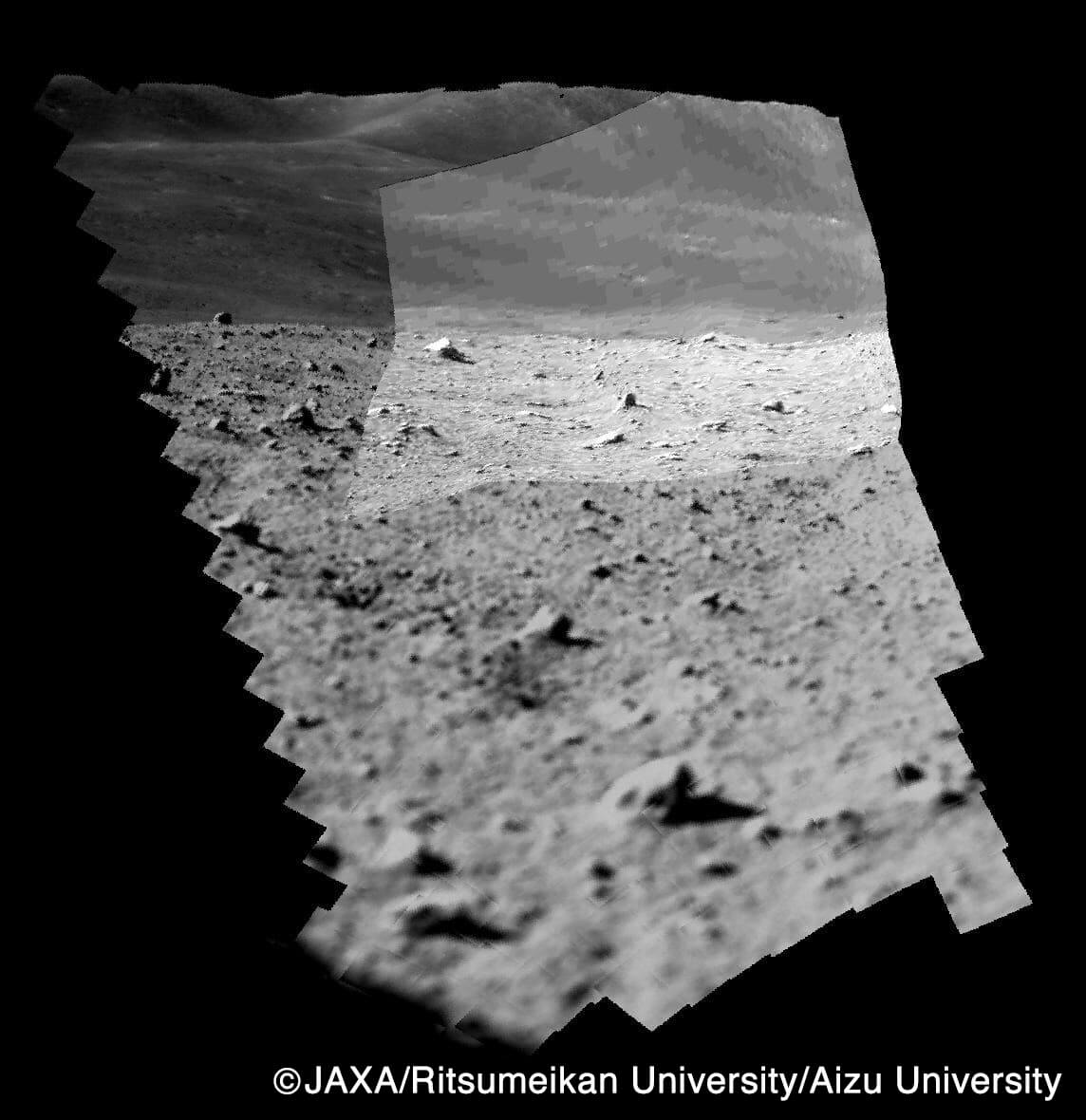
Photograph taken by the small-scale exploration lander SLIM (Courtesy of JAXA/Ritsumeikan University/Aizu University)
- What was your reaction when SLIM made its landing?
Sakai: On the day of the landing, we were so focused on dealing with the situation right in front of us that it was hard to get that emotional about it. It wasn’t until we got power restored and started taking in data from the spectrographic cameras that we were finally able to rejoice in the accomplishment.
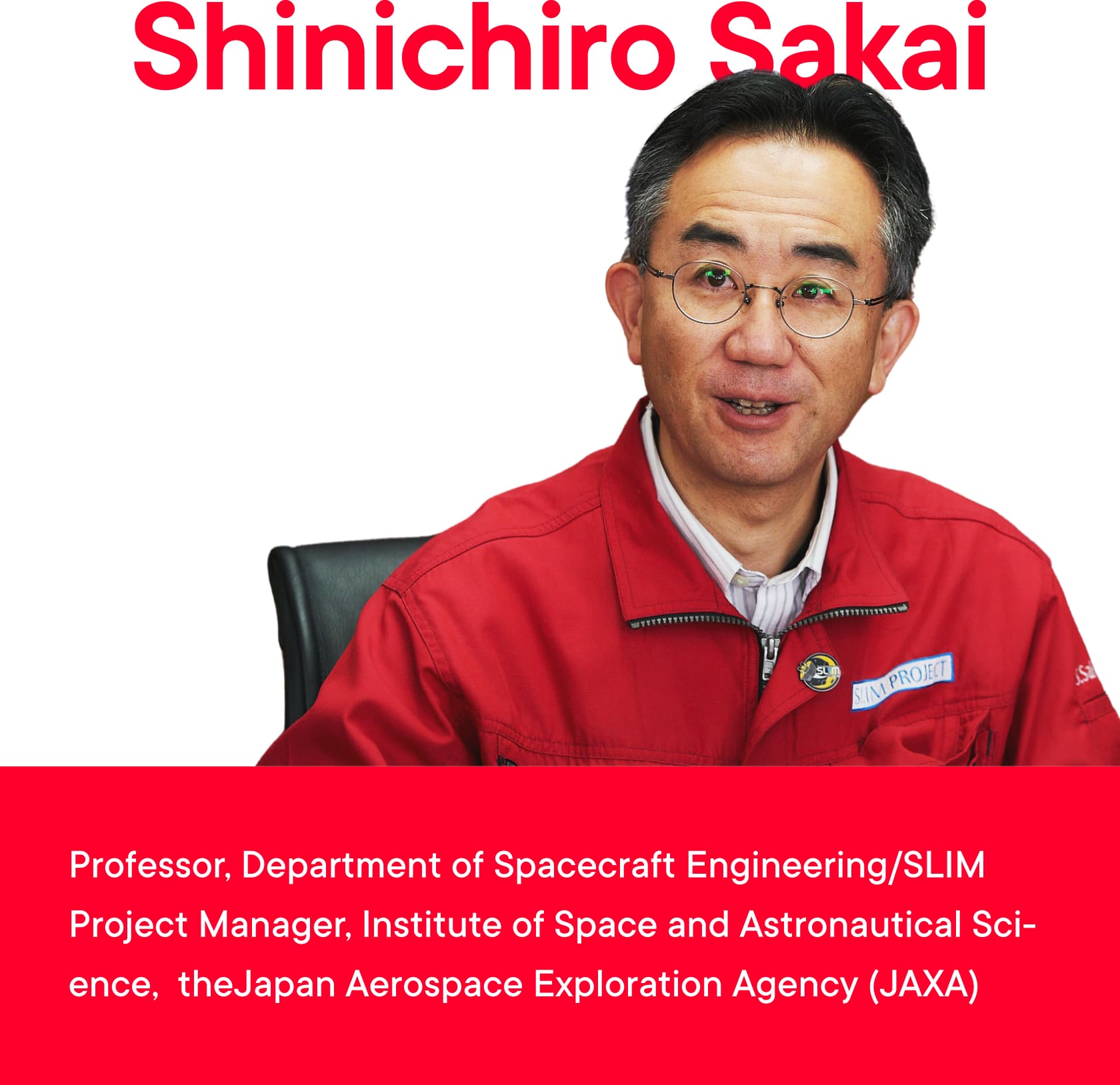 Born in Tokyo, 1973. Awarded a doctorate in electrical engineering from the University of Tokyo. An associate professor at ISAS since 2001 and a full professor since 2019, he has been a SLIM project manager since 2016.
Kuninaka: I’ll be honest, I was optimistic in a lot of ways. Teams from all over the world were competing to land on the moon, and SLIM was garnering a lot of attention. I had full confidence in Mitsubishi’s technology, and full confidence in our JAXA members, so I was pretty sure we’d get it done.
 Awarded a doctorate in Engineering from the University of Tokyo in 1988 and appointed the same year as a research associate at ISAS at the Ministry of Education, Culture, Sports, Science and Technology (MEXT). Developed the ion engine for the Hayabusa asteroid probe in 2003. Full professor at ISAS from 2005, project manager for Hayabusa 2 from 2012, and appointed to his current position in April of 2018. A specialist in electric propulsion and plasma engineering, he was awarded the purple ribbon Medal of Honor in 2021 and become an honorary member of the American Institute of Aeronautics and Astronautics in 2024.
Ogura: Actually, I was quite confident that we’d make the landing since we had almost no problems during the operation. It’s not the sort of thing you can rehearse, so you don’t know what will happen, right up to the very end. We were so tense on the day, just watching and waiting with a feeling that was a bit like praying.
It was such a relief when we confirmed that SLIM had landed. When we got that pinpoint landing, I was so glad to see that all that hard work paid off, not just for our company’s team, but for everyone else involved, included JAXA.
 Joined Mitsubishi Electric in 2001. As a system development engineer, he has developed numerous satellites for the government and related organizations and has also been involved in improving the quality of designs in the Quality Assurance Department. Participated in the SLIM project through the Advanced Satellite Systems Department, taking up his current position in November of 2022.
Ichikawa: I was extremely delighted when I heard JAXA President Hiroshi Yamanaka announced at the press conference that they had confirmed a landing. All the struggles that our engineers worked through were rewarded at last, and at the same we were all able to contribute to another hallmark in Japan’s history.
 Joined Mitsubishi Electric in 1991 and has been involved in the business development of satellite equipment for both European and U.S. satellite manufacturers, telecommunication satellite systems for international satellite operators, and earth observation and meteorological satellite systems for government and related organizations. After working in the space business planning division, he took up his current post in April of 2023.
- Could you tell us again how the SLIM project started, and the background behind Mitsubishi Electric’s involvement?
Sakai: Around 2003, we started thinking about a lander as our next project after the lunar orbiter Kaguya. At the time, we were planning on building quite a large lander with a rover on board, and to demonstrate a pinpoint landing at the same time.
Lunar exploration these days is setting more precise targets, like, "Let’s go look at that rock next to that crater." To get to that level, we need to be able to land as close to the target as possible.
As we moved forward with discussions, we decided to go with a smaller spacecraft and focus on demonstrating the core technology of a pinpoint landing, and Mitsubishi Electric agreed to work on the development.

Ogura: In the process of putting together the KOUNOTORI (HTV) to deliver supplies to the International Space Station, we developed a lot of key technologies for automatically approaching targets here at Mitsubishi Electric, such as guidance navigation and control technology*. We were hoping to be able to expand the scope of international cooperation we’re involved in, applying the technologies we had developed for various satellites to deep space exploration as well.
- These technologies include sensors like cameras and radars, a computer, and onboard software, which work together to estimate the position and orientation of the spacecraft and correct its flight trajectory and orientation autonomously.
- Tell us more about the difficulties and challenges you faced in developing the technologies that allowed SLIM to "land just where you want it to land."
Sakai: Landing sites are determined by looking through moon images from a database, but there’s actually a fair amount of difference between the image data we have and the real conditions on the lunar surface. From here on earth, it’s hard to direct a craft to perform a pinpoint landing the way SLIM does.
That being the case, SLIM itself needs to do flyovers looking at craters and compare them against the crater map it already has in order to determine its precise location. We call this "image-matching navigation".
Knowing its position, SLIM then needs to perform the calculations on its own, flying while correcting its trajectory, in order to reach the target landing site. This "autonomous navigation guidance" system is another important technology.
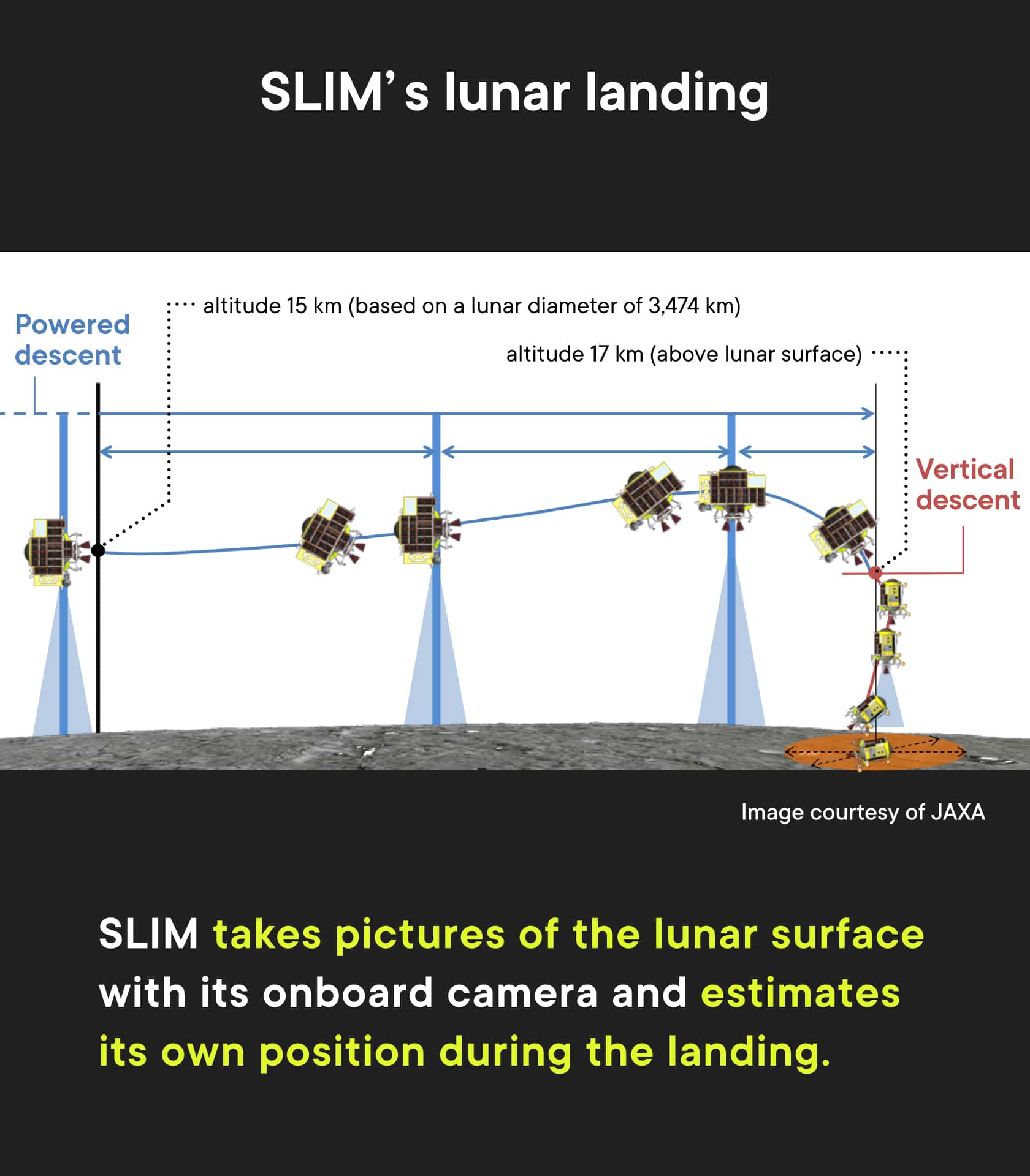
Ogura: We took charge of building a system that would implement JAXA’s image-matching navigation algorithm, building in a camera to snap pictures of the lunar surface, radar for surveying the landing site, and a laser rangefinder — all the essential sensors needed for a pinpoint landing. We needed to combine sensors that we were used to using in previous satellites with a totally new system and make it all come together in short twenty-minute landing sequence. It was our first time designing a system like that, and it was quite a challenge.
Among the landing sensors, Mitsubishi Electric was responsible for developing the landing radar. We’ve developed a wide range of radar technologies, not just for satellites, but for ground-based systems as well. That experience was extremely useful.
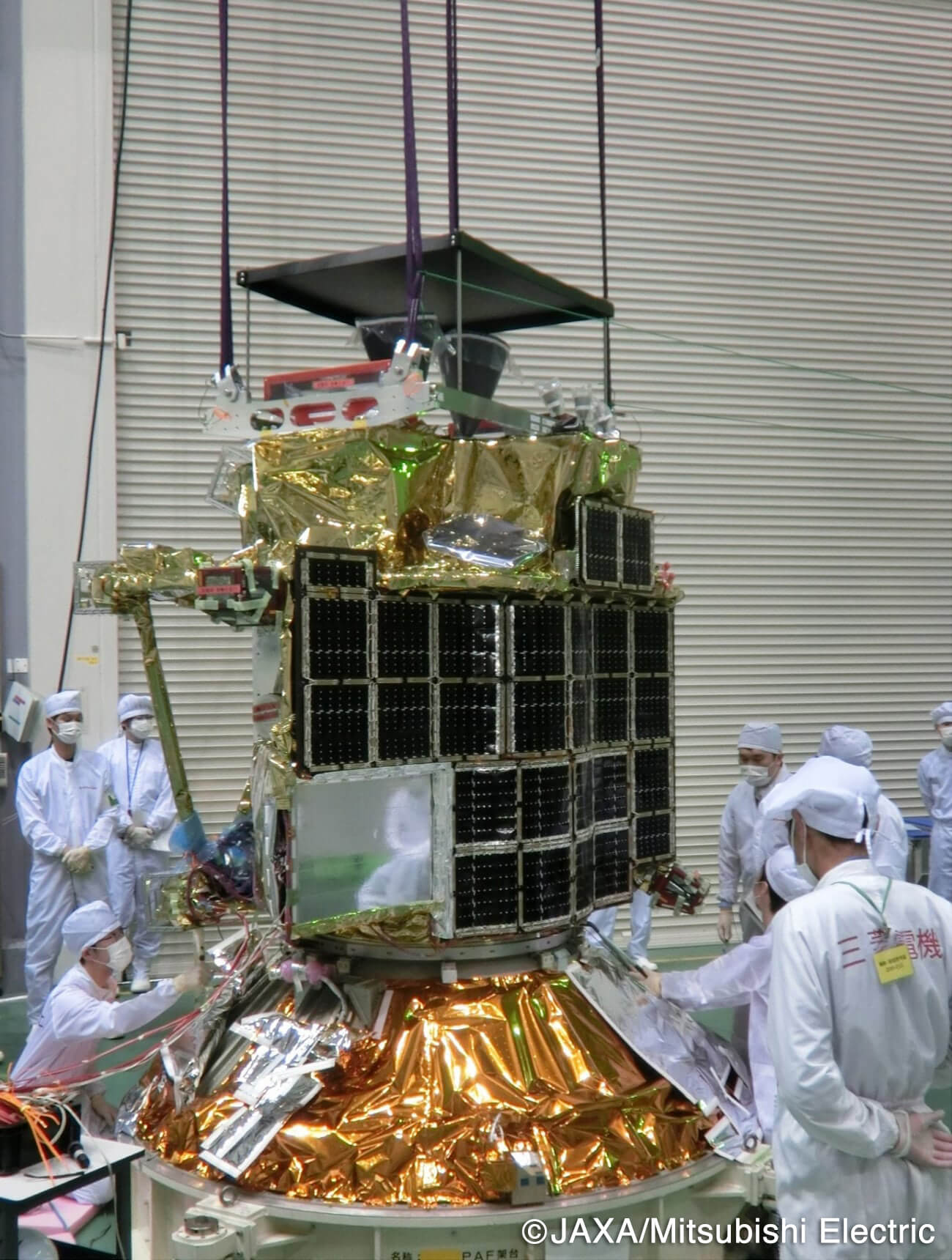 SLIM system test, June 2022 (Courtesy of JAXA/Mitsubishi Electric)
In the process of moving to the smaller craft, we needed to integrate the computers mounted on the SLIM as well as reduce the number of devices and make them more compact. That was another area where our long years of experience in satellite development came in handy. This project is really the culmination of many different technologies.
- On January 20th, SLIM completed the landing sequence and made a pinpoint landing just 55 meters from the target. It’s estimated that it would have achieved an accuracy of about 10 meters if it hadn’t lost one of the two main engines during the landing. Why do you think this first demonstration was such a great success?
Ogura: I’d say it’s a result of the successful operation of the autonomous guidance navigation and control system. During SLIM’s development, we designed software to find a safer location for SLIM to land within a 100-meter target.
We also designed SLIM to be able to self-correct even in the event of an anomaly in one of its several sensors, or a greater-than-expected deviation between the target data and real conditions. Any orders we’d send from Earth would arrive too late.
It was a real task to design and verify the logic to switch to a safer mode when it gets into trouble, and to make sure that the system could withstand multiple overlapping adverse conditions, but we kept analyzing it over and over until we got it working. Actually, we were still fine-tuning the software even after SLIM shipped off to the Tanegashima Space Center, and there was a strong feeling of dedication to the project, working with JAXA right up to the landing.

Sakai: The relationship was that Mitsubishi Electric incorporated JAXA’s basic algorithm into its software. JAXA looked over the software independently and asked for several adjustments, saying things like, "There are some pesky elements in the lunar environment, so we need you to tweak this bit."
I feel like the success of this project relied on the great relationship we have with Mitsubishi Electric and the constant efforts we made communicating back and forth.
Stellar performance renewing Japan’s sense of presence
- What kinds of possibilities does the success of this pinpoint lunar landing open up for the future?
Kuninaka: If we continue developing the technology behind pinpoint landings, we could increase the size of the lander and start a service delivering supplies up to the lunar surface. That’s an area where the private sector, rather than JAXA, could take a leading role.
- A private U.S. company has been constantly in the news after they landed on the moon in February of this year. How do you think this pinpoint landing will affect Japan’s global presence?
Kuninaka: The scope of what any single organization can accomplish alone is extremely limited, so as humanity’s space activities expand, large-scale, international cooperation is becoming an integral trend. Without any sort of special area of expertise or technology, however, it’s hard to get the sort of international respect that makes people say, "Let’s leave this bit up to Japan."
By building the probe entirely independently in Japan, JAXA’s unique expertise has made an impression both at home and abroad. In that sense, it opens up opportunities for future international collaborations.
Ishikawa: For a few years now, the mainstream of space exploration has been the Artemis program, an international joint exploration project led by the United States. Countries have been working together in all sorts of ways to explore the Moon and Mars.
The first step is to achieve a pinpoint landing on the lunar surface and explore the area exactly the way you want. Then we can establish bases for exploration, both manned and unmanned. Once we’ve established a manned station, we’re hoping that human beings will be able to stay up there for longer periods, and many kinds of economic activities can be created and progressed.
The technology behind SLIM allows us to go where we want to go, and that’s an essential foundation in building a series of steps in international cooperation that will lead us to lunar surface exploration and the establishment of a base. Mitsubishi Electric is proud to have contributed to a significant advance in space exploration.
- After the moon, Mars is next, with the Martian Moons eXploration (MMX) project set to explore the Martian moon of Phobos scheduled to launch in 2026. Mitsubishi Electric will be responsible for developing a space probe that’s a follow-up to SLIM.
Kuninaka: We don’t have concrete plans in place yet, but the next phase coming after a lunar transport service may well be a Mars transport service.
MMX is going to be an important foothold in bringing about future human activity on Mars. Very much "Japan’s own Artemis." I believe we’ll be exploring that path together with Mitsubishi Electric.
Ishikawa: It’s quite a challenge for us as well.
We believe that there’s nothing more important than focusing on the success of every single mission like SLIM and MMX, which are challenging, and building solid heritage and trust in technologies as well as capabilities for space exploration under the current international cooperations as we go.
Seeing this through will not only contribute to the autonomy and competitiveness of Japan’s space exploration activities, but such challenges will also lead to further advancements in the technologies for satellite systems orbiting earth and to the expansion of our own business overall in space.
We will continue exerting every effort possible to make such a future a reality.


