
2026.02.16
Building in China, for China—How MEITC is driving product development through “speed, deep localization, and co-creation”
On June 30, 2025, the headquarters of Mitsubishi Electric Intelligent Manufacturing Technology (China) Co., Ltd. (MEITC) was officially opened in Suzhou . This opening marks a first step in advancing Mitsubishi Electric’s FA business in China toward “autonomous management” and “integration of production, sales, and R&D”– and it serves as a key base for a system that starts with market needs in China, enables local decision-making, and creates value locally.
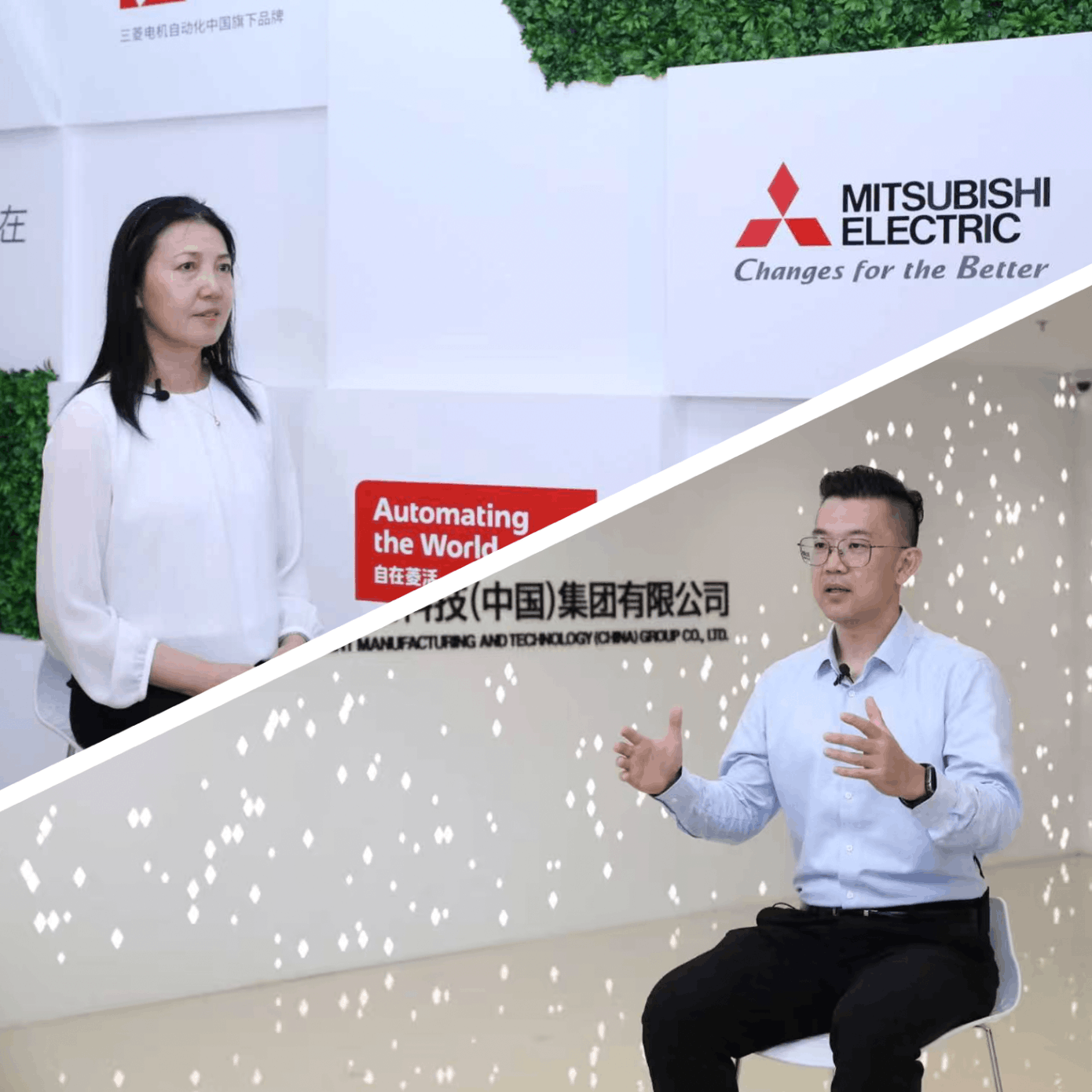
Against the backdrop of the new headquarters’ launch, locally led manufacturing is evolving rapidly at the forefront of product development. In this feature, we spoke with two key leaders at MEITC who are at the cutting edge of product development: Wang Tianyi, Deputy Section Chief, Product Planning Section, Product Development Department, and Dong Lixia, Section Chief, Quality Assurance Section in the same department, to learn about how they put China-rooted product development into practice.
- Wang Tianyi | Deputy Section Chief, Product Planning Section, Product Development Department (12 years with the company)
- Dong Lixia | Section Chief, Quality Assurance Section, Product Development Department (dedicated to establishing localized quality standards)
Every day, they visit customers together with sales teams, refine design drawings with engineers, and stand on production lines with suppliers to identify issues firsthand. This reveals the “real story” behind product development in China—where speed meets on-the-ground realities of this dynamic environment.
Contents
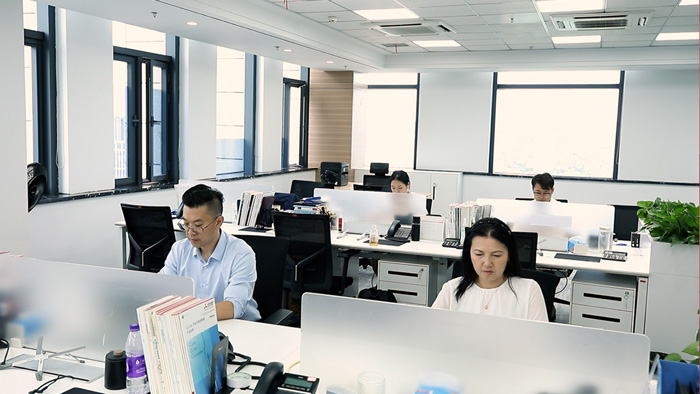
Building bridges, not just writing proposals. Building trust, not just setting standards.
Q1 | What does your work look like day to day?
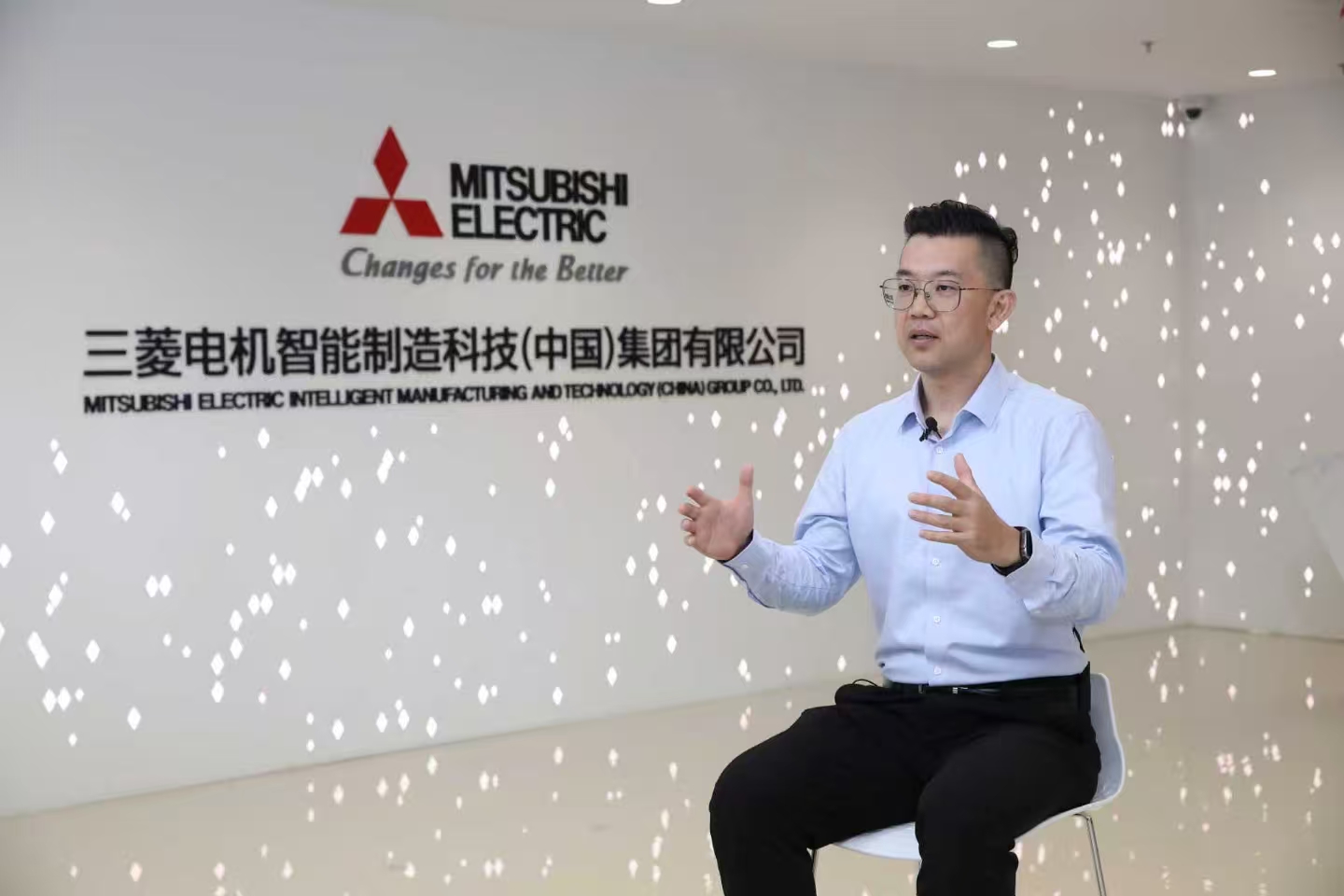
Wang Tianyi:
“The biggest change I feel is moving from supporting sales to leading alongside them.” In the past, my main role was to receive requests from the sales team and implement them from a technical standpoint. Now, I proactively visit customers’ production lines and factory sites, work directly with sales representatives to verify issues on the ground and delve deeply into the underlying causes and specific conditions behind them. I then translate what we find into product specifications. The market, R&D, and the supply chain each operate from different perspectives and use different “languages.” My role is to stand between them as both an “interpreter” and “bridge,” translating customer challenges into concrete product requirements.
Dong Lixia:
We don’t see ourselves as mere “carriers of standards”; we aspire to be “co-creators of quality.” While building on Japanese standards, we also consider how Chinese customers actually use our products and what the local supply chain can realistically deliver. Based on that, we take the lead in defining quality standards and evaluation methods that truly work in the local practice—feasible to implement, acceptable for customers, and trusted by factories. The key is involving suppliers from the earliest design stages: getting them on board early, co-defining requirements and validating solutions together. The highest quality isn’t something you “discover” in final inspection—it’s something you “build” from the very beginning.
True localization is not about “changing the package”; it’s about “changing the operating system.”
Q2 | Why did you establish an FA operating company in China?
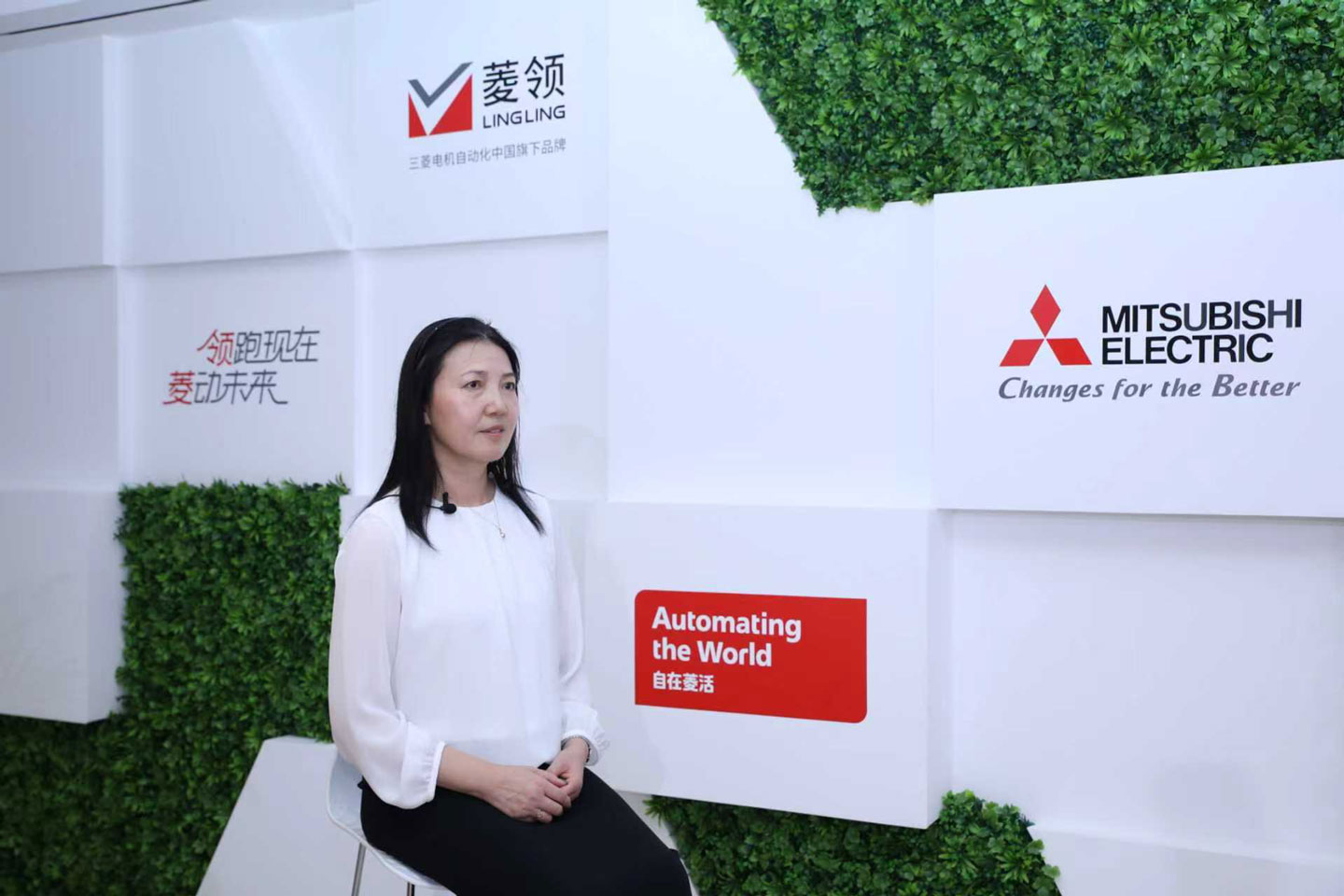
Wang Tianyi:
In April 2025, Mitsubishi Electric established Mitsubishi Electric Intelligent Manufacturing Technology (China) Co., Ltd. (MEITC) in China, which is responsible to oversee its FA business. In June, its headquarters was officially inaugurated in Shanghai. This was not simply about creating a new entity under a new name—it represents a fundamental shift in how the business is run and how decisions are made.
We transitioned from the traditional model where “Japan plans and China executes” to a new one where “China defines the needs, leads development, and rapidly ramps up mass production in China.” Decision-making style has also shifted from “waiting for headquarters approval” to “empowering local teams to make thier own decisions, iterate quickly through trial and error, and drive agile improvements.”
This transformation can be summarized with three key concepts. First, Market-In: Instead of asking, “What technologies do we have?”, we start by asking, “What challenges are our customers facing?” Second, China-Speed: Not about forcibly shortening timelines, but eliminating waste, aligning stakeholders across all stages, and making rapid progress in small, incremental steps. Third is Deep Local: Understanding policies and industry practices in China, and developing the capability to work effectively with local partners.
Dong Lixia:
We used to say we “manufacture in accordance with Japanese standards.” Now we say we “manufacture in the way Chinese customers recognize and accept.” At “China speed,” we truly feel that we are contributing to smart manufacturing in China.
This transformation has brought three key missions to the quality assurance department.
First, we must establish local quality standards that “truly work in practice.” Rather than simply replicating Japanese standards, we focus on developing quality standards grounded in Chinese customers’ actual usage scenarios, acceptance practices, and industry requirements—standards that are accepted by customers, can be implemented on the shop floor, and are objectively verifiable.
Second, we need to build a quality management network that “covers the entire value chain.” We are creating a system that seamlessly links all processes—from R&D and procurement to manufacturing and after-sales service—ensuring that quality management is applied consistently throughout the entire product lifecycle. By identifying and addressing potential issues early in the design phase and continuing to drive improvements even after delivery, we are forming an end-to-end closed-loop system.
Third, we must cultivate “reliable” local supplier partners. Audits and oversight alone are not enough; building deep, collaborative relationships with suppliers is essential. By jointly developing audit processes and standards, and by supporting suppliers in strengthening their capabilities, we aim to grow together with our core partners—sharing quality, enhancing mutual capabilities, and co-creating value.
The most challenging part was not technology– it was rebuilding trust.
Q3 | What was the most challenging thing you faced? How did you overcome it?
Dong Lixia:
One of the major challenges was building a reliable and sustainable local supply chain. We had been heavily reliant on Japan-based systems, and we faced gaps in technical capability, management practices, and quality maturity among local suppliers. We addressed this through three systematic efforts:
Establishing component evaluation criteria tailored to China’s specific conditions and conducting rigorous localization verification.
Embedding quality requirements into procurement through joint reviews between supply chain management (SCM) and quality assurance (QA).
Co-developing quality improvement plans with core suppliers—building robust quality together through process audits, defect prevention, and continuous improvement.
As MEITC moved into full-scale operation, we faced many challenges: heavy workload, fast pace, and complex coordination across many functions and departments. Yet what I strongly realized is this: quality is not something you sort out through inspection; it is something you build through system design. What we need is not ad-hoc responses, but an end-to-end quality value chain designed consistently from the source, based on systems engineering principles.
“We are not looking for ‘qualified suppliers’ but ‘partners who grow together with us.’” — Dong Lixia said with a smile.
Wang Tianyi:
In a fast-evolving market like China, the key to success lies in continuously aligning product development with rapidly changing needs. To achieve this, we are building a localized R&D and operating model characterized by short cycles, agility, and co-creation.
Cumulative efforts on the ground drive technological advancement.
What it means to pursue “manufacturing rooted in the China” is to translate the headquarters’ strategies into language customers can easily understand—and to turn engineers’ precision into improvements that can be executed effectively on the production floor. It also means nurturing “global technology” so that it grows into a tree taking unique root in the soil of China.
Like the clouds and light reflected in the glass curtain wall of the new MEITC headquarters building, true “intelligent manufacturing” emerges from countless site visits and the steady accumulation of specifications refined through repeated iterations. The finest technology is always nurtured in the fertile soil of real needs. The words of Wang and Dong —who will shape MEITC’s future—make that message unmistakably clear.


