
2024.11.11
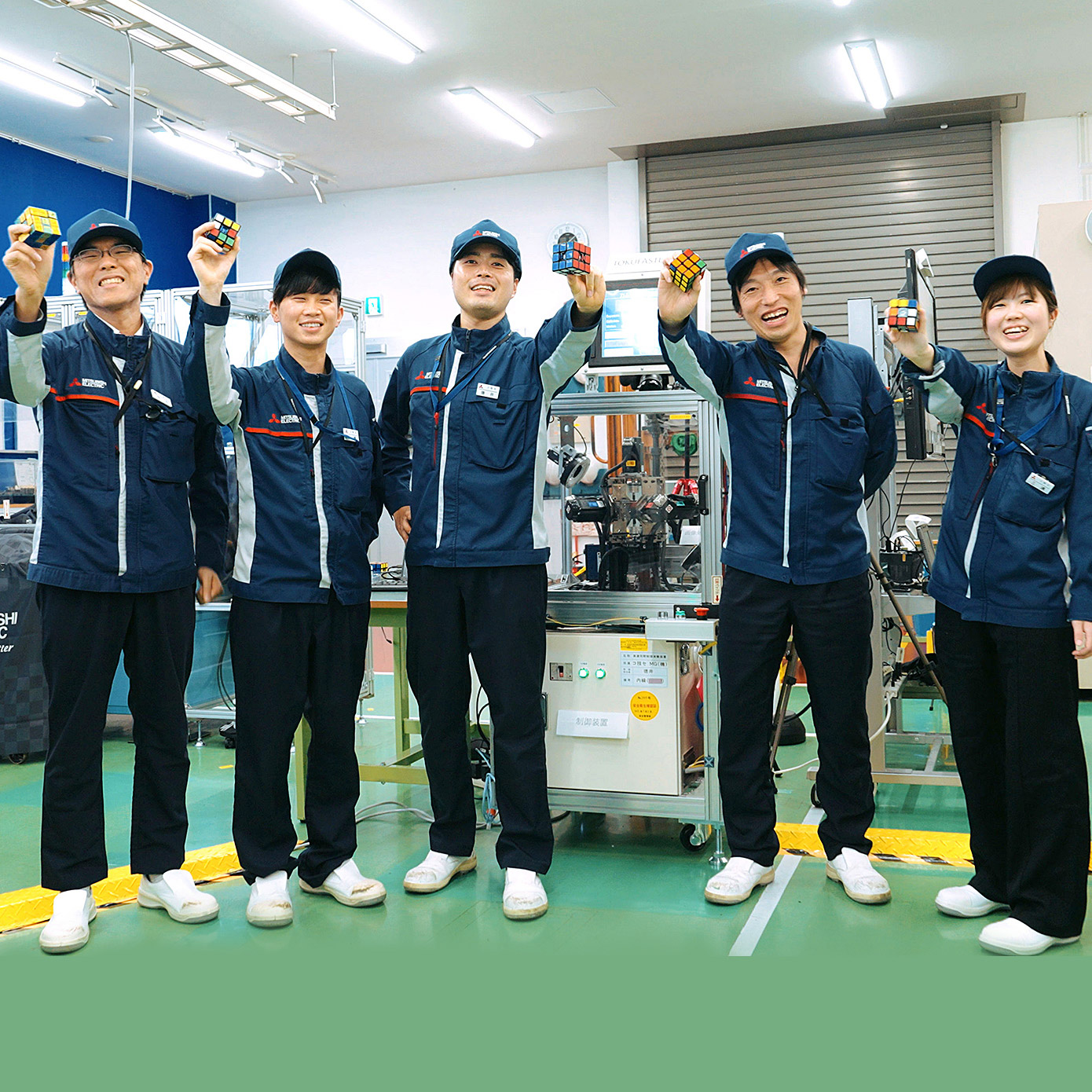
Half the world is made from motors. A GUINNESS WORLD RECORDS™ achieved through the spirit of challenge.
In May 2024, Mitsubishi Electric challenged the GUINNESS WORLD RECORDS™ for the world’s best performance in: "Fastest Robot to Solve a Puzzle Cube" using its Component Production Engineering Center in Hyogo, accomplishing the world’s fastest time of 0.305 seconds. It was certified as a Guinness World Record™ and the footages went viral. In this issue, we’ll report on our interviews with the project’s members, prompting them to look back upon their time during the challenge reflecting on their permanence, especially bringing light to the unexpected responses they received regarding the project.
Contents
One GUINNESS WORLD RECORDS™ video was the beginning.
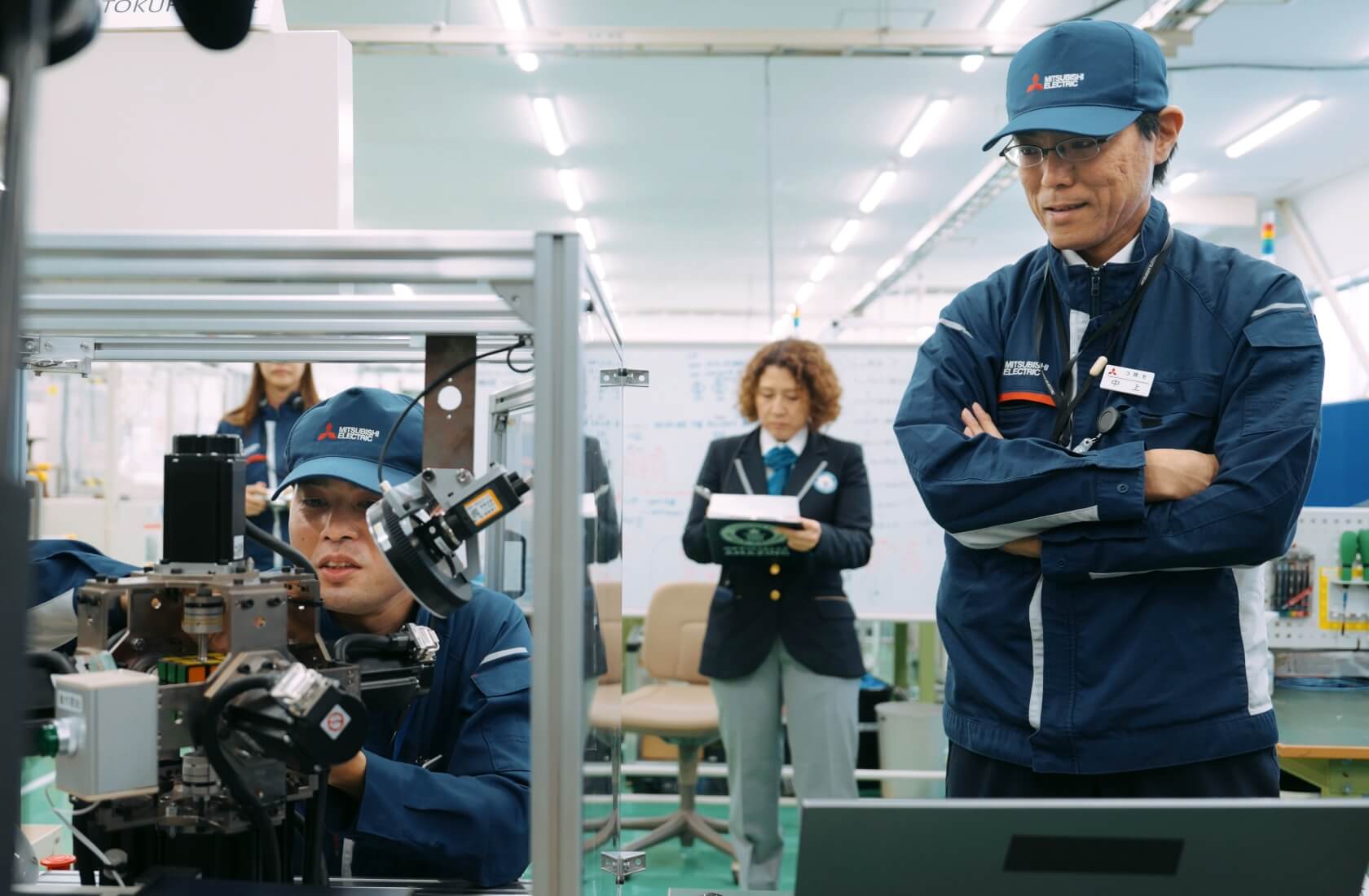
- Congratulations on your achievement of setting a new Guinness World Record™! Please share with us your honest thoughts following your success.
Tokui: Half of me is relieved and the other half, I knew it coming that the motor’s performance was exactly how I believed it would be.
Itose: I couldn’t have been more relieved. I was happy too, of course, but I also questioned whether we could make it after the many failures we encountered in the end of the project.
Miura: The same goes for me. The GUINNESS WORLD RECORDS™ allows up to three attempts, and since a part broke on our first attempt causing us to fail, I was so relieved after succeeding on the second attempt.
Nakaue: I was quite sure that we could make it, so I am relieved in a way that we did what we were supposed to be able to. It’s similar to the feeling when I turn in the products to clients in my usual job.
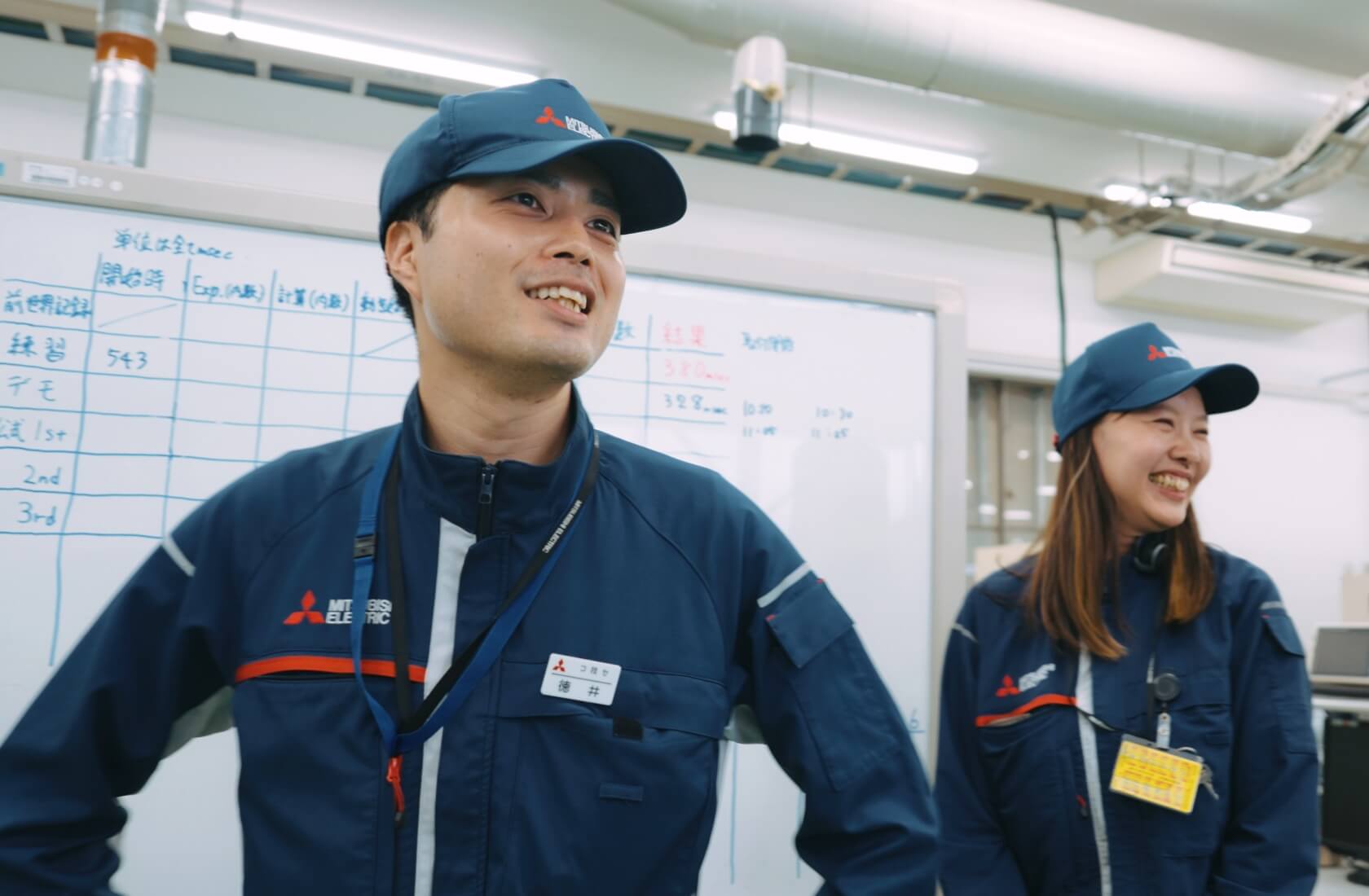 Mr. Taiki Tokui (left), who has played a core role in the project since its launch.
- I suppose everyone meant different "relieved". How did you come up with the idea of using a puzzle cube to challenge GUINNESS WORLD RECORDS™?
Tokui: The equipment called a winding machine is very important to manufacture the "fast and accurate motors". It winds the coils of the motor and is essential to the motor’s performance. I knew that Mitsubishi Electric’s winding machines were the best the world had to offer, but it was always difficult to explain just how amazing they were to the masses. I wanted to do something that made this fact apparent and indisputable. As I was developing these thoughts, I found a video of a Guinness World Record™ challenge featuring Mr. Sakaue, my superior at the time, and the Massachusetts Institute of Technology (MIT). Upon closer inspection, I found that the puzzle cube in the video had rotated too far and went back a little. In other words– it was not fully efficient, which sparked a thought: "We can do it better."
Sakaue: I immediately calculated the operation time and figured out that it should be possible to break the record! I urgently spoke with my boss at the time about this challenge.
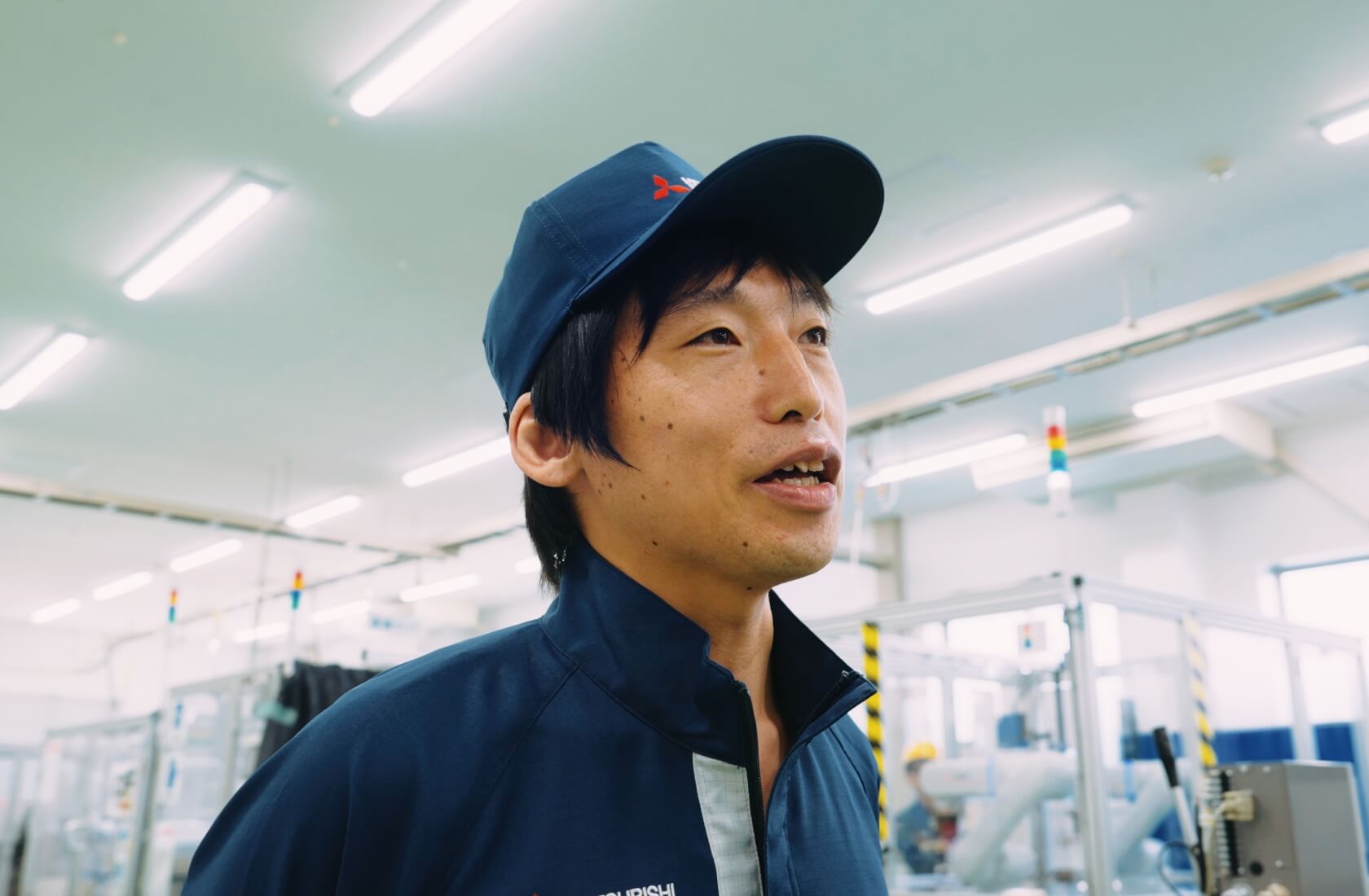 Atsushi Sakaue, who launched the project with Tokui.
- What made the project successful?
Tokui: 90% of it is due to the motor’s performance. Our motors are incredibly fast and yet, they stop with perfect accuracy and precision. I could fall in love with it (laughs), it really is a beautiful movement. It’s made possible by our exceptional control technology. The second biggest factor is serendipity (unexpected fortune). The idea to illustrate the motor’s admiral performance by solving a puzzle cube faster than the world has ever seen, coincidentally brought us the good fortune of having a group of talented people to collaborate with us.
A total challenge as a team
- What were your thoughts when Mr. Sakaue and Mr. Tokui started the project?
Sakaue: I was excited to work with various members on this project because it would motivate them and improve their skills, and therefore help Mitsubishi Electric as a whole to promote its products. Additionally I thought that I myself had never been the world’s best at anything before.
Tokui: The initial reason I gave it a try was because it seemed interesting.
- What areas did the three of you who joined in middle of the project take charge of?
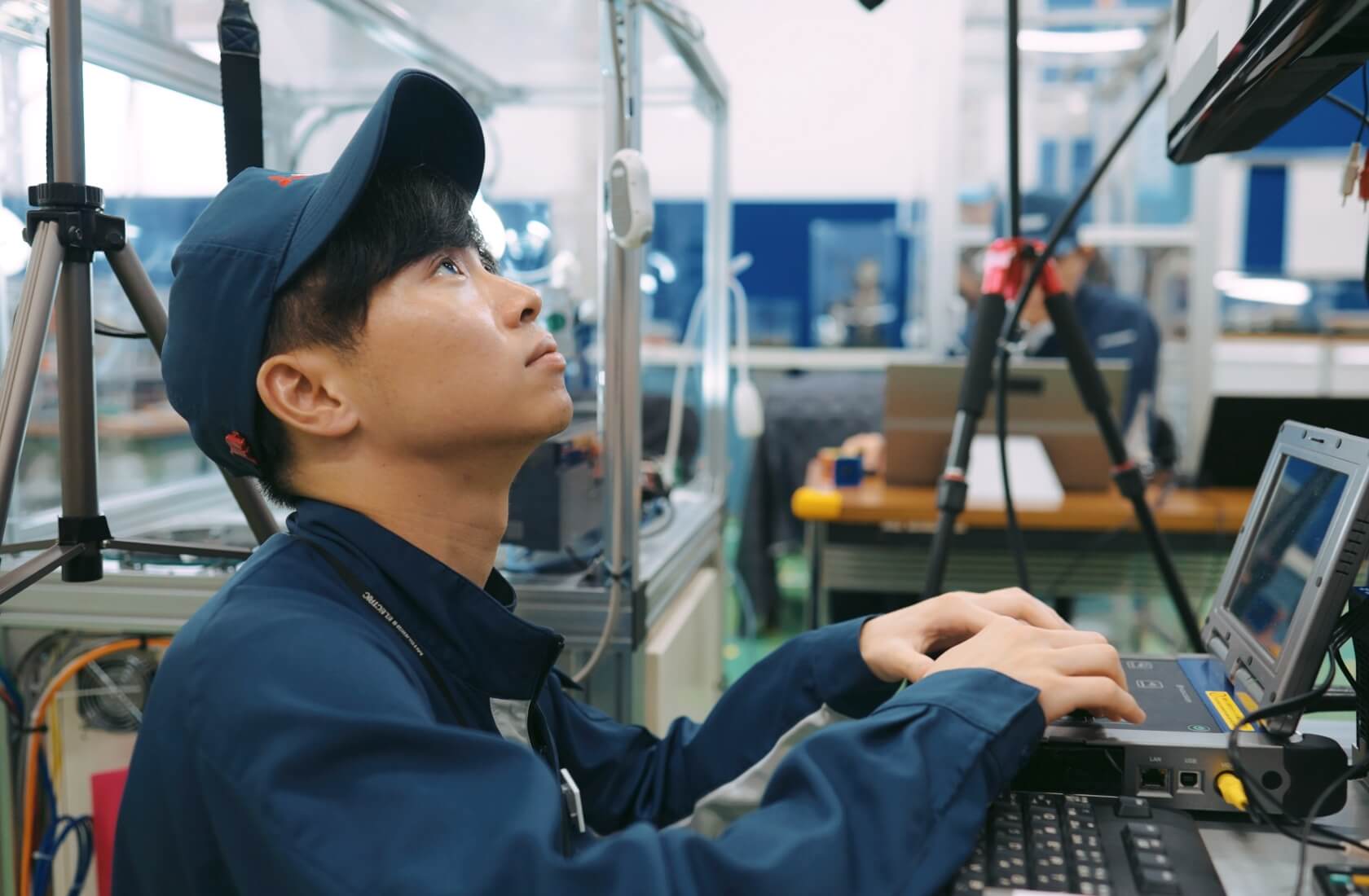 Tomoya Itose, who was in charge of the robot’s eye function.
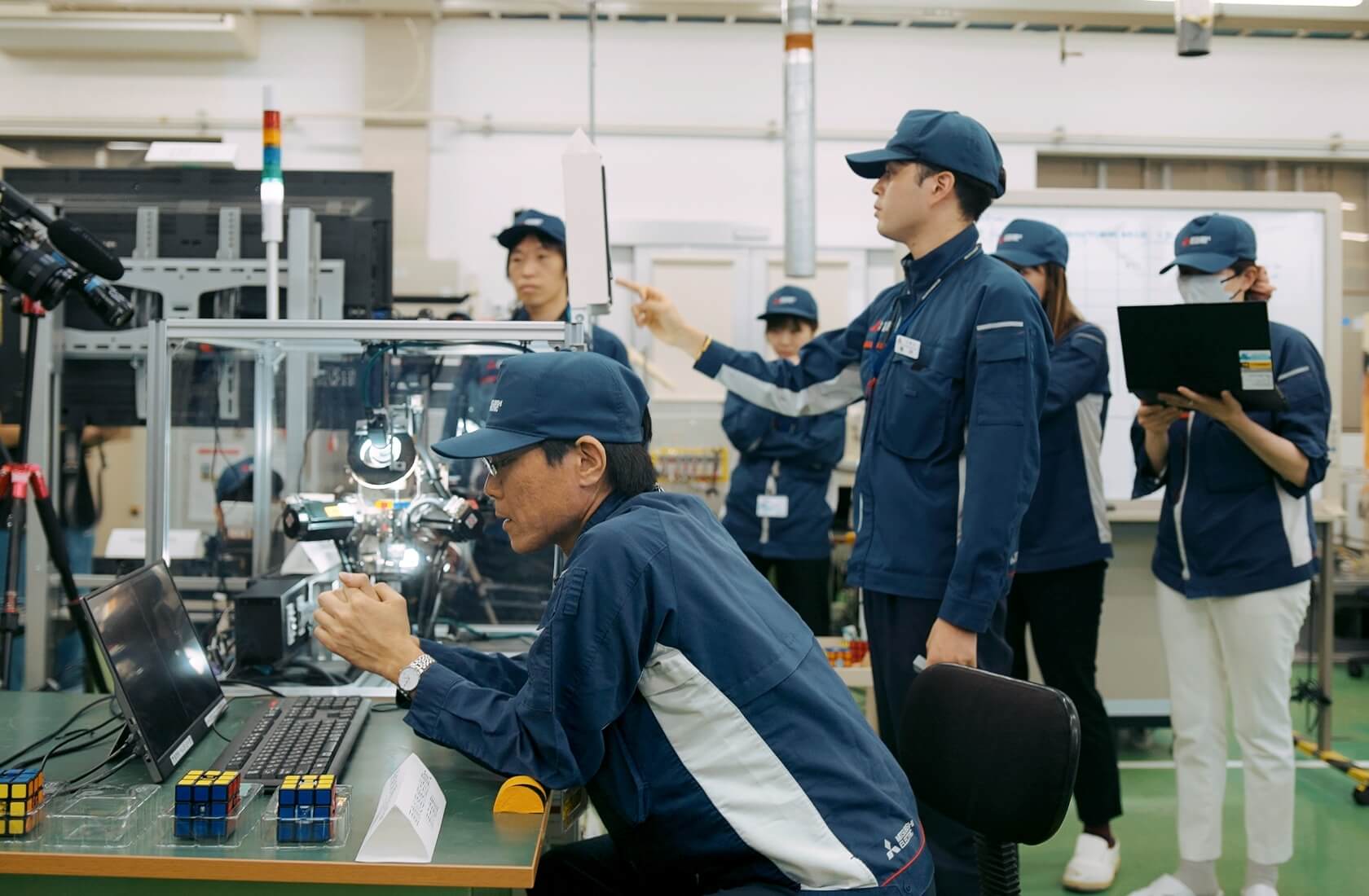
Itose: I worked on the camera, the robot’s eyes. For accurate image recognition, I also adjusted the environmental lighting so that the various colors of the puzzle cube would not be misrecognized due to unwanted light reflection.
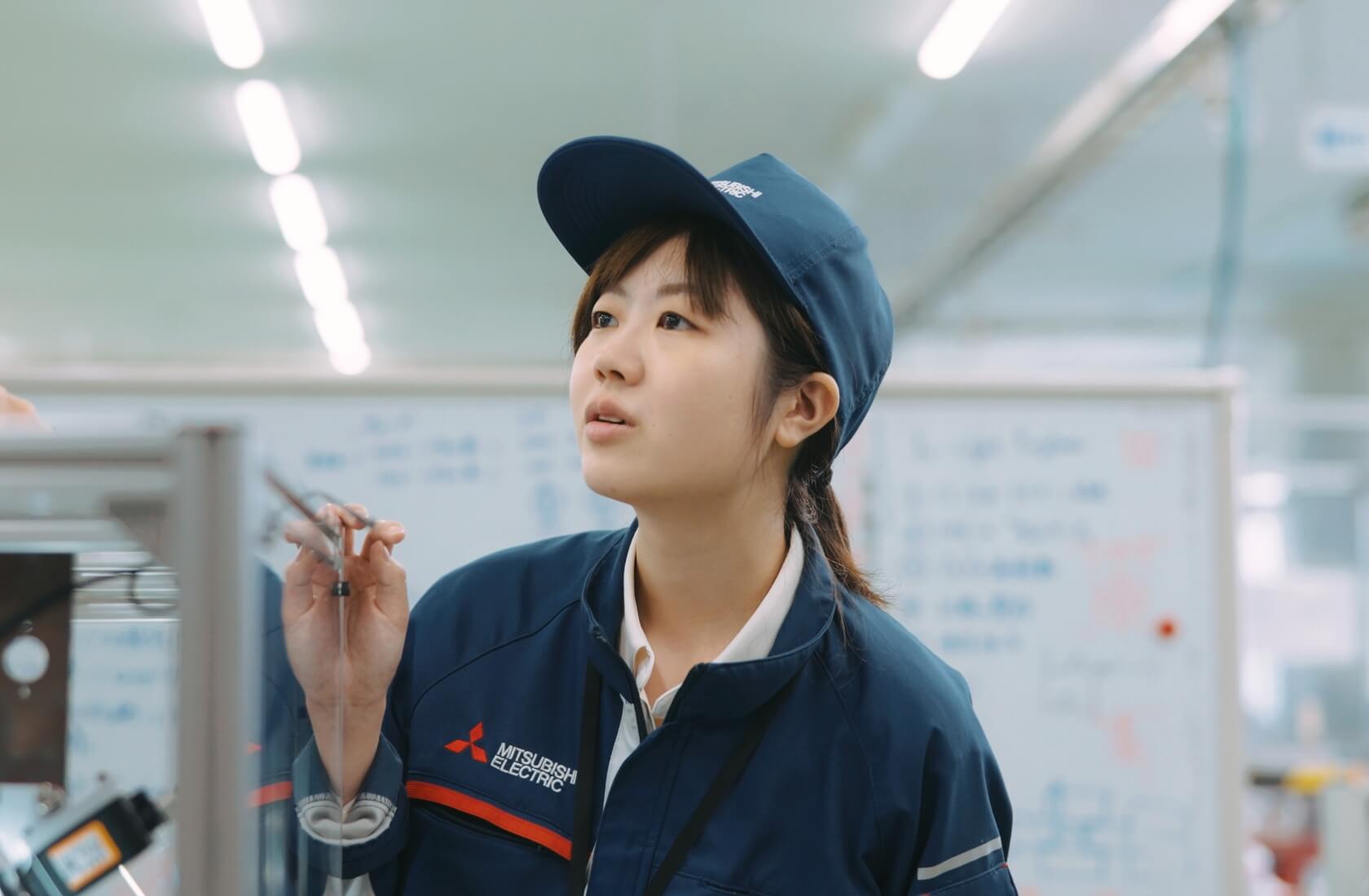 Natsuki Miura, who was in charge of the robot’s hand and finger functions.
Miura: I was in charge of the part that connects the motor and the puzzle cube, which can be said as the hands and fingers of the robot.
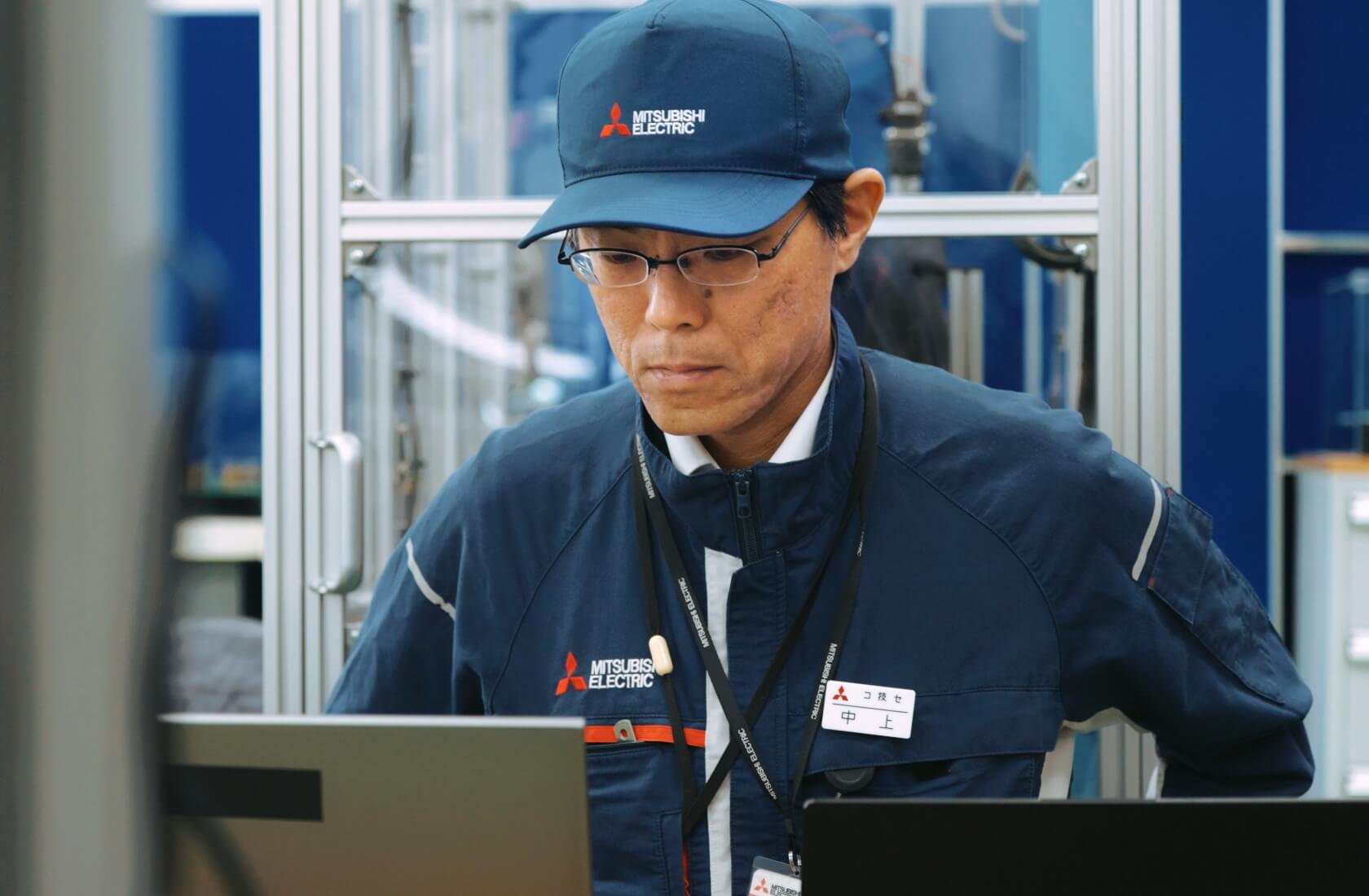 Takumi Nakaue, who took over the project’s overall management from Mr. Sakaue, who was transferred to a new position.
Nakaue: My works started with the programming used for solving the puzzle cube, then gradually expanded to establishing a means of communication between the program and the robot. After Mr. Sakaue’s transfer, I also took over the position of general manager.
- I understand that all the key elements required for higher speeds, from production to assembly, were manufactured in-house.
Tokui: The capability to manufacture on our own is one of our prime strengths. Recently, some manufacturers without factories have emerged in order to make more profit, and they outsource everything. However, we wouldn’t gain the technology and knowledge that way.
No matter how high the wall is, there is always something left that you can do.
- What were some of the difficulties you faced on this project and how did you overcome them? Also, you worked on this project outside of normal business hours, so I would like to know how it affected your usual work.
Itose: What I strongly felt was that I didn’t have enough knowledge. I’m not usually involved in telecommunications, so when keywords relating to such topics came up during team discussions, I struggled to understand everything clearly and had to do additional research on my own. The motivation that helped me accomplish was my interest in technology. Thanks to that, even in my main job of developing motors, when there is something I don’t know, I feel no hesitant to search and learn.
Miura: When I joined this project they were in the midst of pushing to change and test minor details. It was difficult to make directed changes within a one or two day timeframe, and it was challenging to implement them swiftly. However, thanks to everyone’s accurate feedback, I was able to complete the adjustments successfully and smoothly. Throughout this experience, I learned to make things quickly and efficiently honing the skills of my main job.
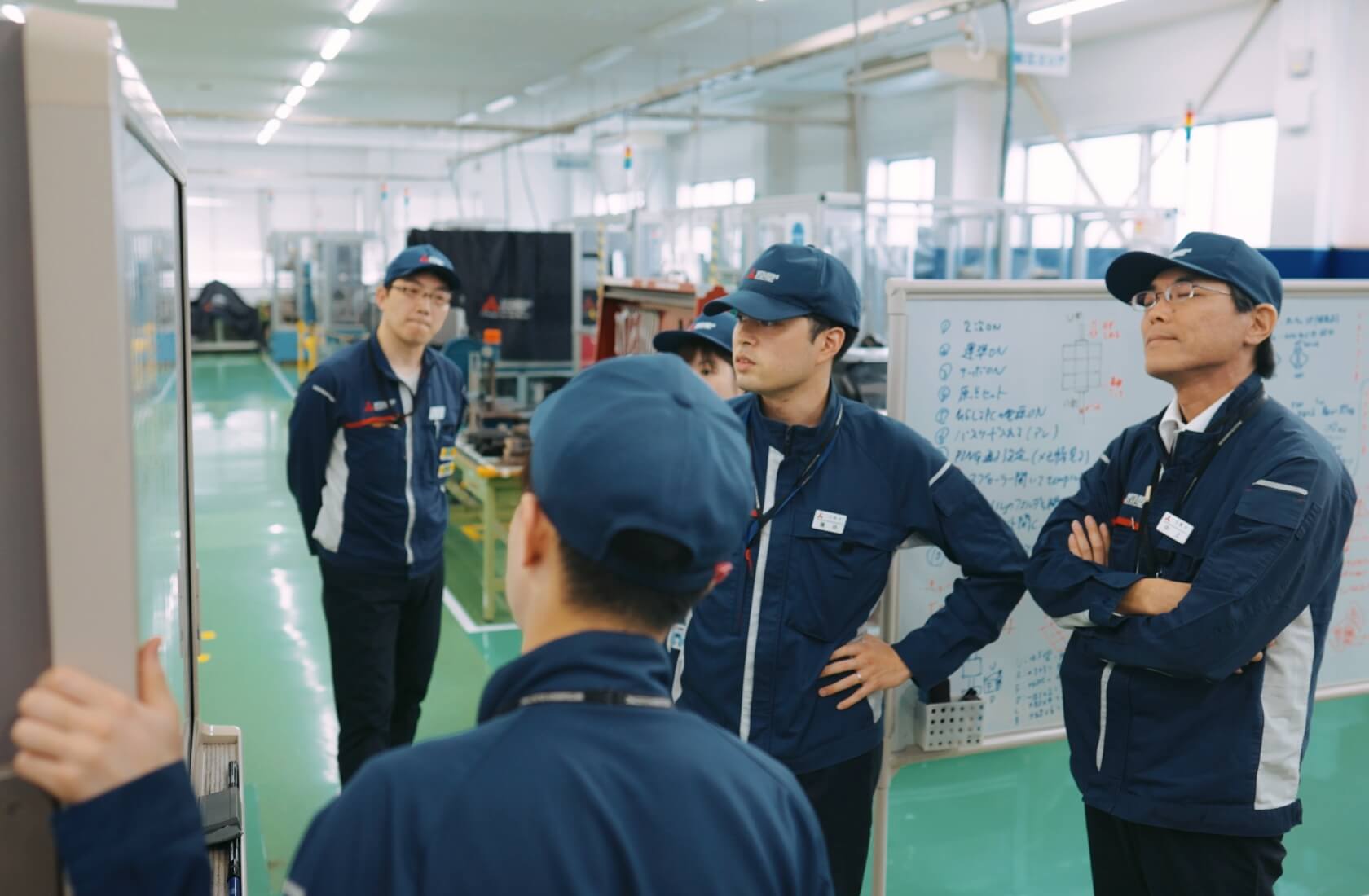
Nakaue: It was quite tough to come up with the way to ensure success while maintaining the team’s time constraints, especially as the deadline for the challenge was drawing near. We approached the situation by applying what we believed to be the best method, based on our past experience. The influence on our normal operations was two: first, we were able to see the growth of our young team members, which made us want to let them handle more jobs. Second, I have been approached by various departments within the company as a result of this project; I am very pleased to have had the opportunity to communicate with departments that I didn’t have much connect with.
Tokui: In my case, of course there were difficulties, but I was so thrilled about overcoming the challenge to become number one in the world that I honestly don’t feel like I had any difficulties. I was able to move forward with positive thinking, trusting that ‘I know I can do it.’ Even if you hit a wall, there is always something you can do. What it took was love. It all comes down to a love and passion for motors. As for the influence on my motor development work, I think now I am a better schedule planner and manager.
Half the world is made from motors.
- Did you have a chance to feel the Mitsubishi Electric Group’s commitment to "Changes for the Better" during the one-and-a-half-year project period?
Tokui: That’s a good phrase, and I have felt it ever since I joined the company. As with everything in the world and in my work, the only way is to keep repeating the process of trial and error for improvements in order to get things going in the right direction.
- In the Component Production Engineering Center, where you belong, how do you see the importance of "improving society" and taking challenges?
Tokui: We are experiencing industrial changes, all kinds of technologies are evolving fast. I feel that the society is losing motivation because many cannot keep up with this speed. In such an environment, challenges are mandatory, and this will encourage everyone and motivate the company as a whole. I believe that this will lead to the development of a wide variety of products and the creation of products that can see many social issues resolved.
- I see. How do you see the connection between your daily work and this challenge to "make this society better"?
Itose: Mr. Nakaue once said, "This achievement is not only our credit, but also of the engineers who had kept making products." I would like to become an engineer who can pass the technology to the next generation.
Miura: Motors are used in a variety of products and in the production of those products, so I thought that improving this technology would eventually be returned to society.
Nakaue: I believe that providing products that make life easier and more convenient for everyone in the world will make a better society. Then people could care more and be kinder to those around them. I believe that making people’s lives better little by little will ultimately lead to world peace.
Tokui: I believe that the quickest path to a better tomorrow is to join a company and contribute to society. A company is defined as an organization that contributes to society in the first place, so the world will become a better place through what companies do. It is said that motors consume 50% of the electricity of the world, which means that half of the world is made from motors. In other words, we believe that by making more efficient and smaller motors, the world will naturally become a better place. Recently, the news reports how Japan is declining, and I felt that this challenge might have given a bit of courage and vitalize the society as a whole.
- Japan is said to have advanced technology, but does not have a good way to show it. I felt that this project was one such solution to remedy that problem.
Tokui: That’s exactly the idea. For example, Mr. Sakaue and Mr. Nakaue are great engineers. There are many other excellent engineers in our company. However, there are times when I feel as though they are not very good at making appeals, so I think it would be great if we could assign someone like me who likes to make appeals (laughs) and continue to make more and more appeals.


