2024.08.26
Finding the Positive Side of Difference toward Research Helping Society
The Mitsubishi Electric Group has employees around the world in different cultures and environments. We asked them, "What’s on your mind as you work to make changes for the better?"
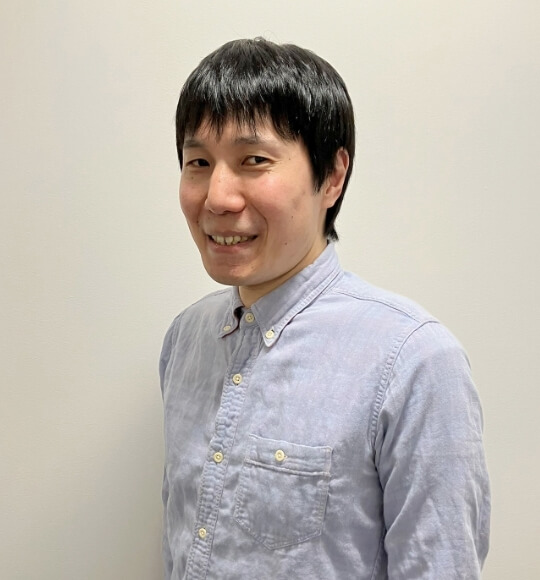
In this article we ask Ryo Hase, who took part in the OJT Global Trainee Program with a placement in the United States.
Here’s what he said, in his own words, about his year-long placement and his plans for the future.
Contents
Everyday life in a work culture unlike Japan’s
Back in Japan, my research dealt with development techniques for information systems infrastructure (computers, networks, and so on). To be specific, I researched techniques for automating the process of precisely and rapidly constructing the information systems infrastructure that is essential for a range of fields, including social infrastructure like electricity and rail.
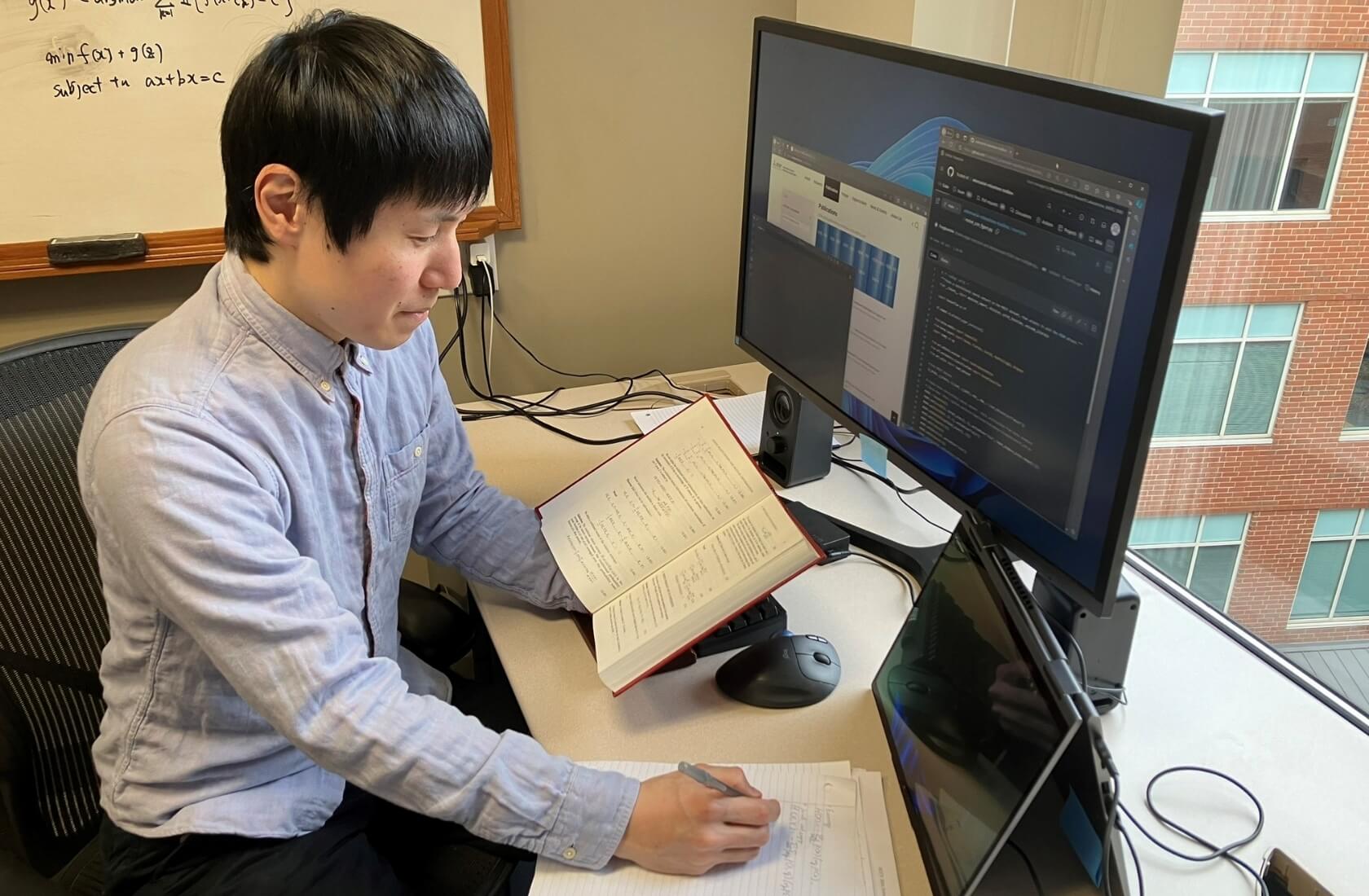
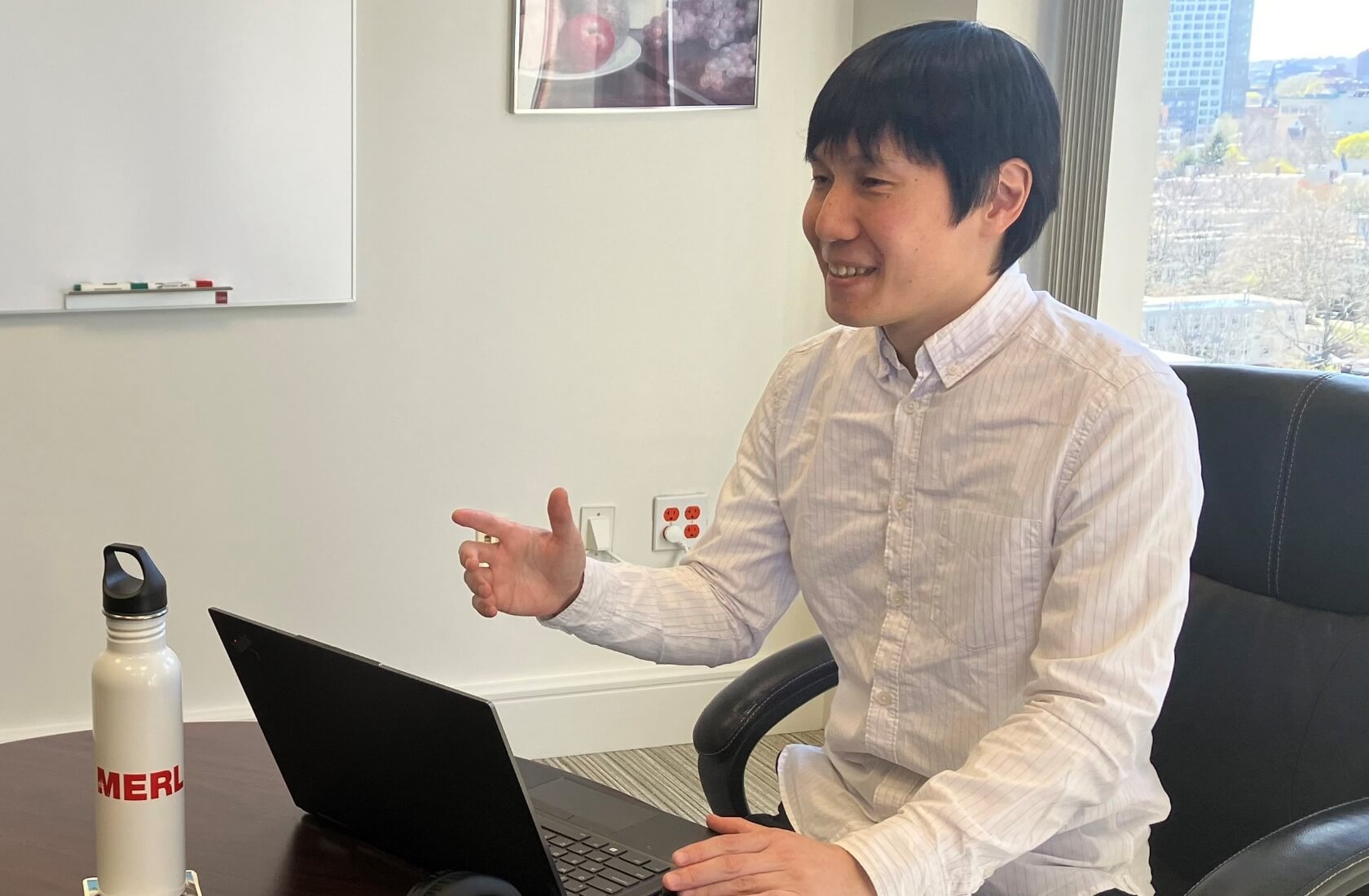
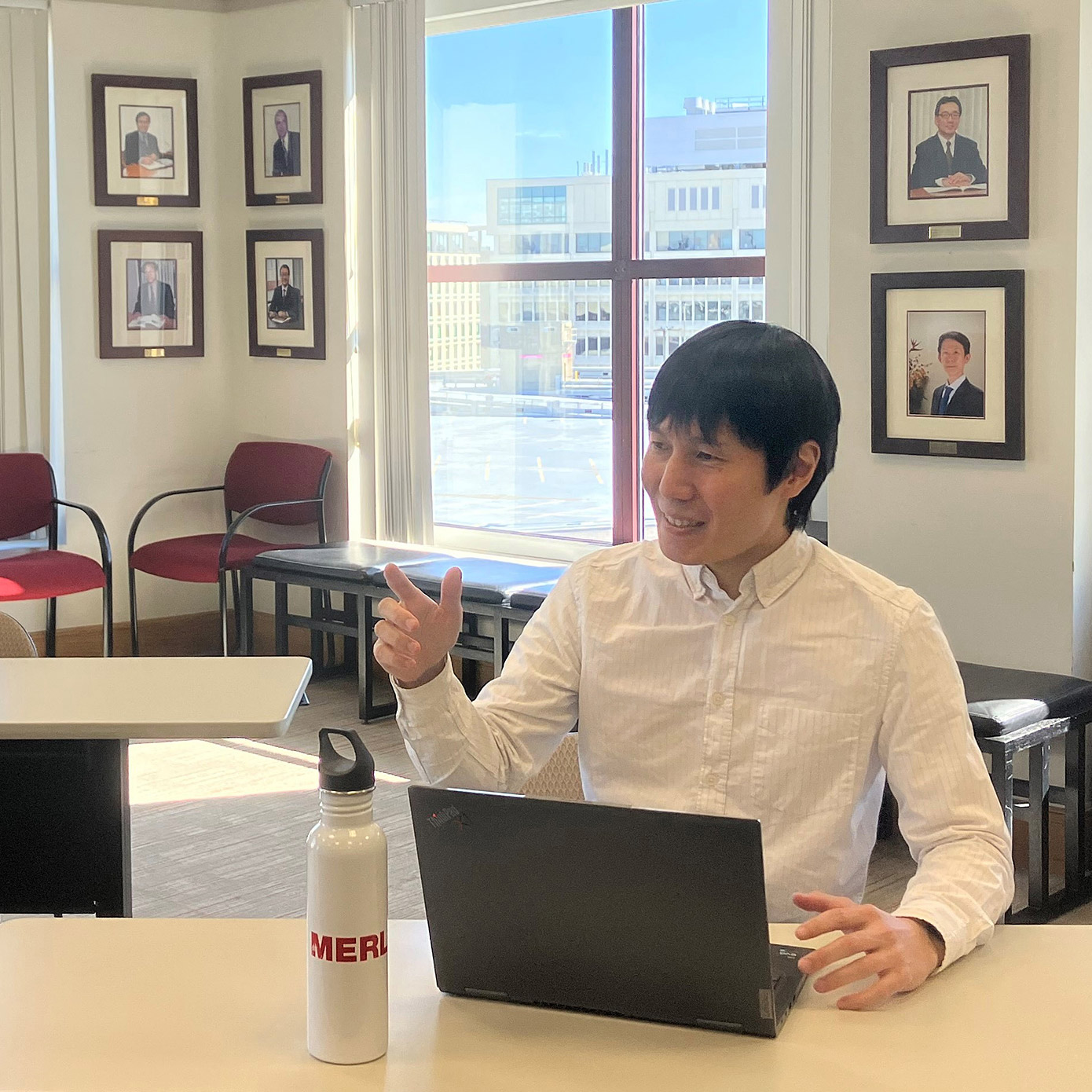
Here at Mitsubishi Electric Research Laboratories (MERL), my focus is on machine learning security R&D. Machine learning’s applications in fields like image classification and text generation have attracted notice, but there are attacks that can degrade the accuracy of that classification or generation. At MERL, I research ways to defend against these attacks. You might be thinking, Isn’t that completely different from what you did before? And the answer is . . . Yes, it is! The On-the-Job Training (OJT) Global Trainee Program isn’t just about working overseas—engaging with new kinds of work is part of the point.
My placement is in the United States, where new technology is constantly being developed, so I was curious to see how things differed from a Japanese workplace. And I did discover various differences in approaches to communication and other areas, which led to many new discoveries. In this article, I’d like to introduce a few of those differences and discoveries.
Striving as a team to do better research
MERL’s office is in Cambridge, just outside Boston, Massachusetts. Cambridge is well known as the home of universities like Harvard and MIT. It has a distinctive climate that’s cool in summer and very cold in winter.
MERL itself is equipped with everything a researcher could want. Everyone has their own room where they can concentrate on their own work or, as they often do, invite other researchers in for discussion. When you need a break from work, you can visit the office cafeteria and take five over coffee or tea.
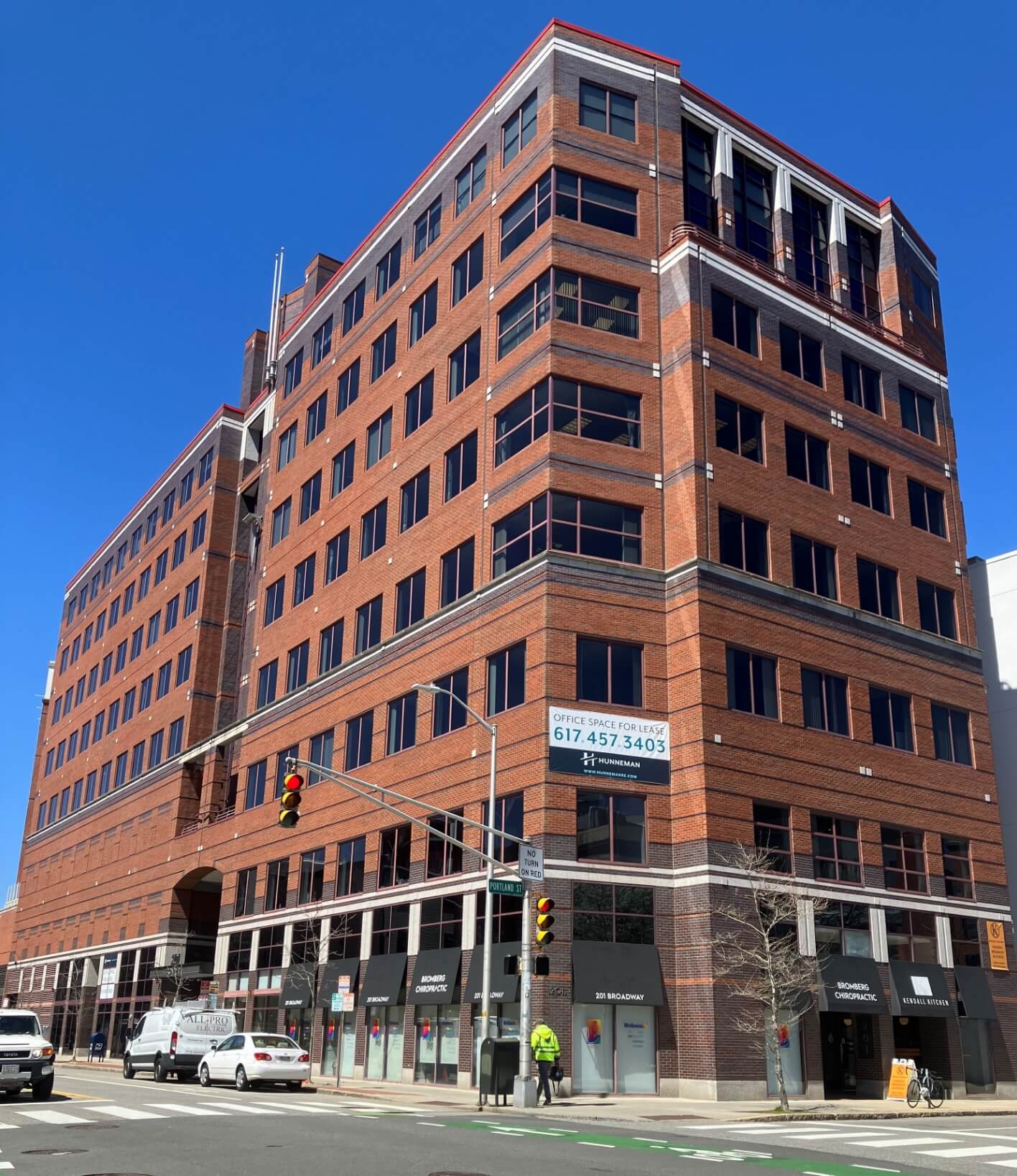 The office building where MERL is located
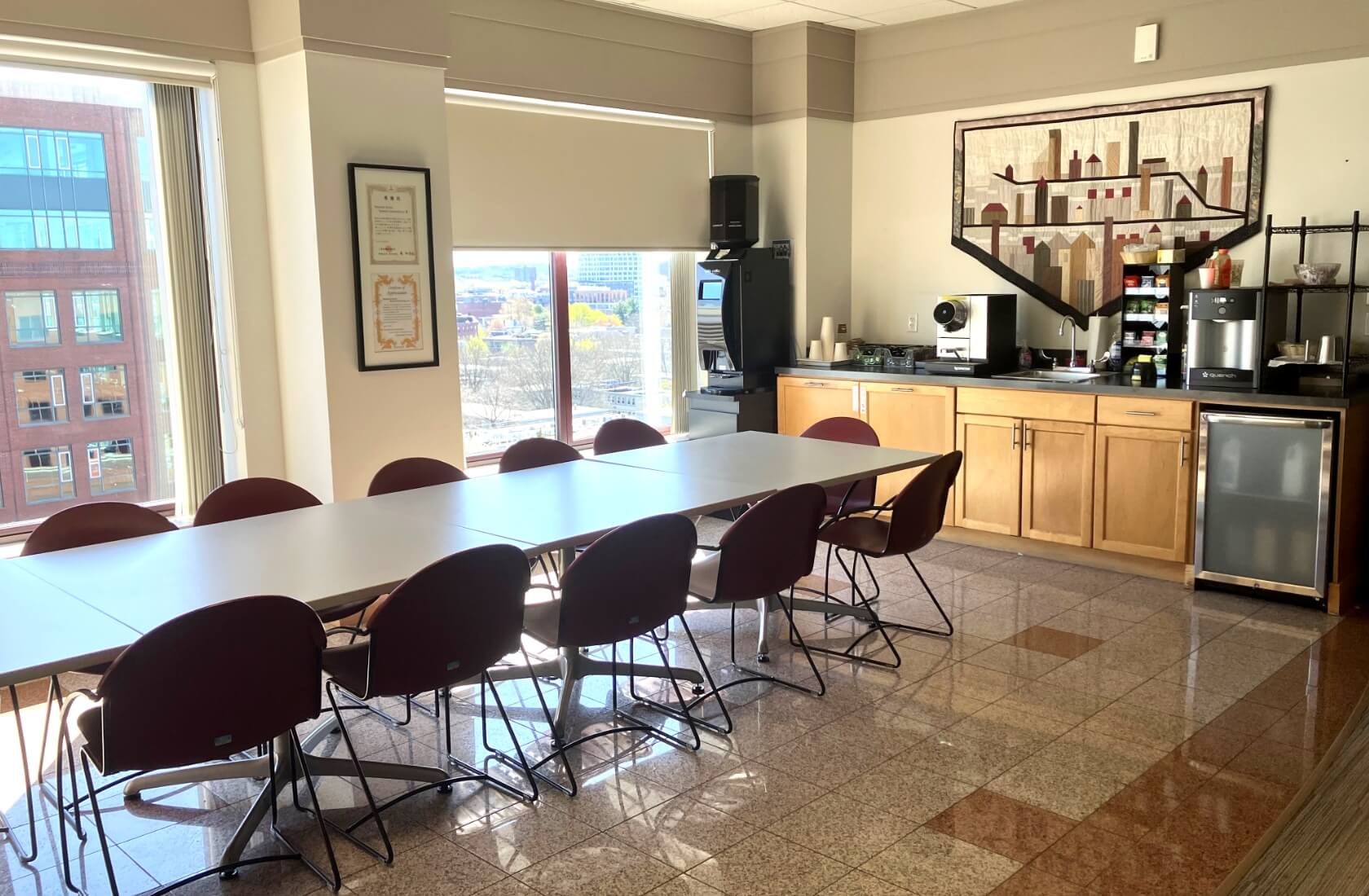 The cafeteria at MERL
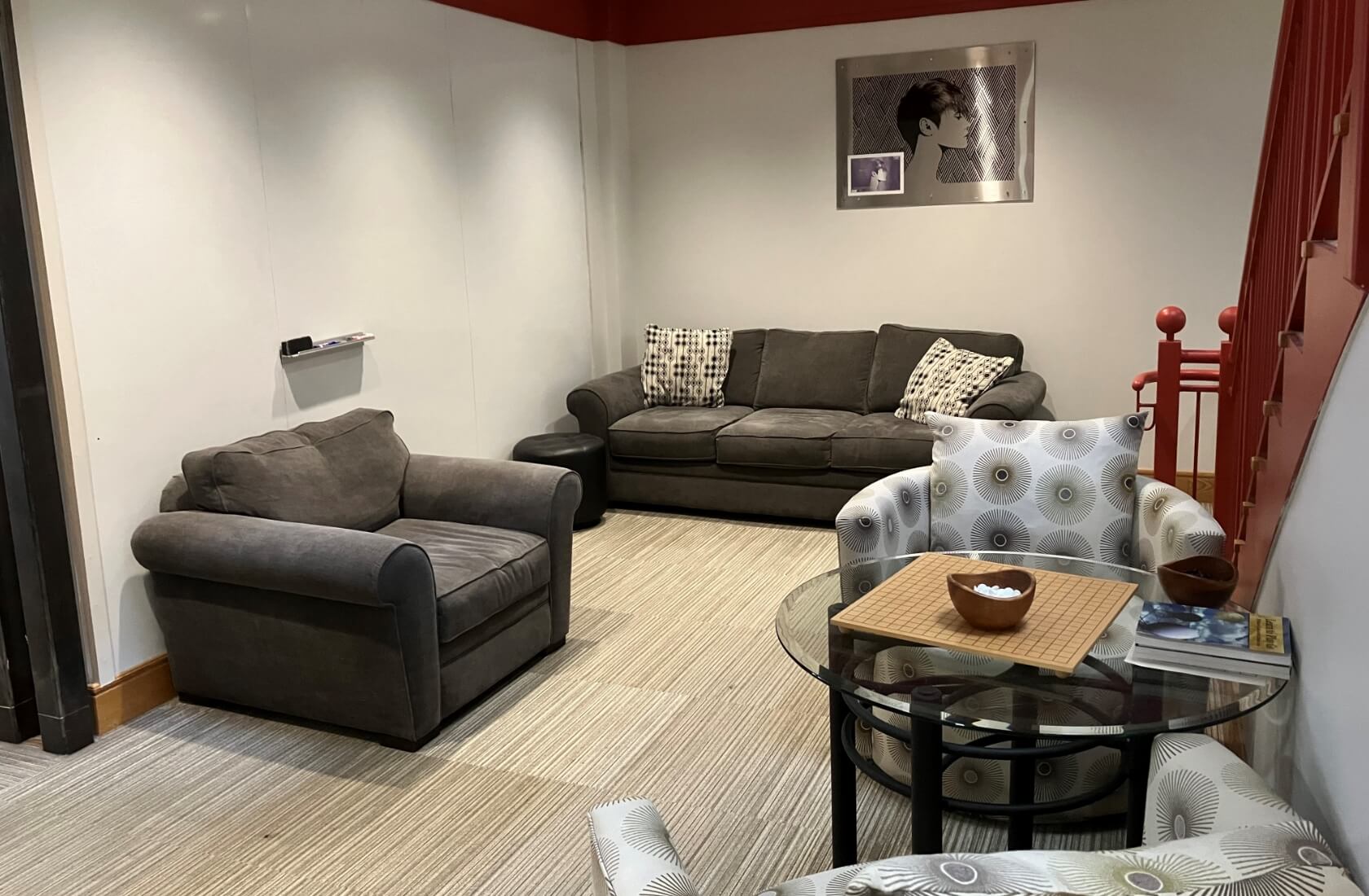 The relaxation area with its sofas
MERL lets researchers work from home, so workstyles are flexible. What surprised me was the recommendation to come into the office three times a week. This highlighted the emphasis MERL places on face-to-face communication. Chatting with colleagues during lunch or a coffee break really can give you ideas for your next research project, which is always interesting.
The atmosphere in the office seems to encourage team members to share their opinions. Members actively trade insights, and overall things are highly conducive to doing better research as a team. Cultural differences in communication are part of the reason for this. Here, people seem to discuss things on an even footing, regardless of matters like position in the hierarchy or seniority. For example, interns at MERL are accepted as team members who offer their opinions as equals.
Daily efforts to enjoy cross-cultural communication
Below is a fairly common weekday schedule for me. As you can see, it involves a lot of individual work, but chat messages and emails are constantly flying back and forth among colleagues, so communication stays lively.
Daily Schedule
7:00 AM
Wake up, eat breakfast, get ready for work
8:30 AM
Commute (via bus)
9:30 AM
Start work, check email
10:00 AM
Visit a colleague’s room to discuss research
10:30 AM
Develop programs for experiments
12:00 noon
Lunch
1:00 PM
Read relevant research papers
2:00 PM
Team meeting
3:00 PM
Run experiments, fine-tune programs, repeat
6:00 PM
Leave work and go home
7:00 PM
Dinner
8:00 PM
Online English lessons and study
9:00 PM
Hobbies, relaxation
11:00 PM
Bedtime
Living here brings opportunities to speak to all kinds of people. If you’re eating an ice cream in the street, a stranger might say, "That ice cream looks tasty. Where did you buy it?" Or someone might strike up a conversation at a bus stop. Also, not everyone who lives here is from the US. There are people from all over the world—including me. From that perspective, too, it feels like the culture encourages communication, regardless of social position and background.
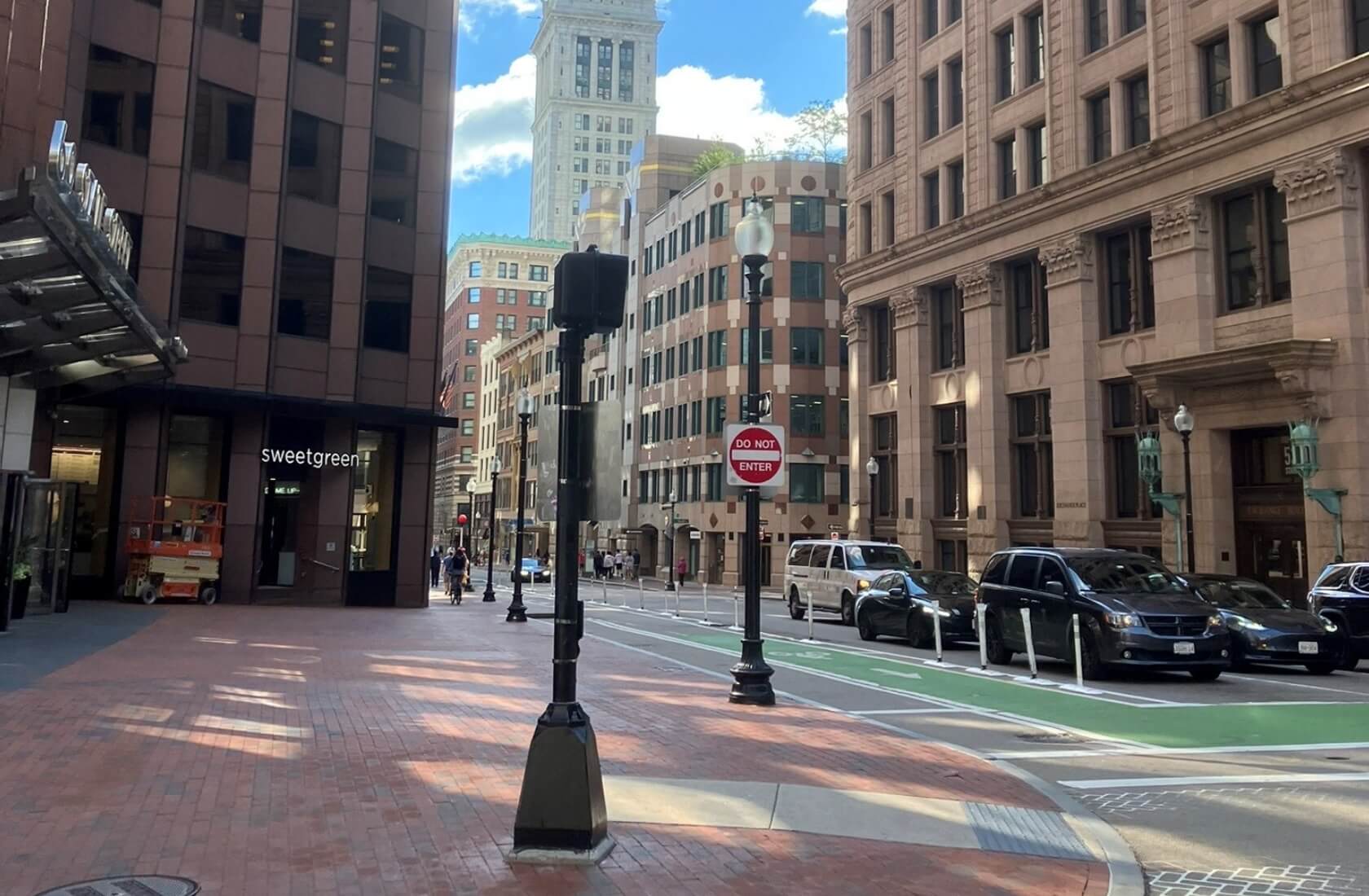 Scenery near Boston
 Delicious ice cream I found in Boston
English study makes me painfully aware of the importance of consistent hard work. I try to incorporate study into my life to an extent, doing listening exercises and studying vocabulary on my commute or between chores at home, and watching anime and movies in English. Back in Japan, I was struggling to improve my score on the TOEFL iBT English test beyond 84 points out of a possible 120, but when I retook the test six months after arriving here, my score had improved to 105. I’m currently taking a course for adult learners at a nearby school on writing effective business documents. I couldn’t keep up with the lessons right after arriving here, but I manage to stay abreast of things now, which is another reminder of the importance of self-improvement through daily effort.
The importance of broadening your connections with others
One thing I have learnt through my research is that when you are in trouble is exactly when it is most important to reach out to the people around you. When I first arrived at MERL, I was unfamiliar with much of the terminology used in my research. I only partly understood my colleagues’ English, and lacked confidence in my own. I realized that those were precisely the times when proactive communication was most vital, to confirm that I was understanding things correctly and get more details on anything that was unclear. Gradually, I got used to communicating in English, and now I confidently participate in discussions. I didn’t know anything about my current research topic before my placement, but now my knowledge has increased and I am able to contribute when people are sharing ideas. I am truly grateful to the colleagues who patiently brought me up to speed.
My experiences at MERL have made me want to connect with people around the world and work collaboratively. Before my placement, most of my work was done with people whose specialties were relatively close to my own. Coming to MERL and seeing researchers in various fields putting their individual knowledge to use as they collaborated to increase the quality of their research made a strong impression on me.
I also feel that living overseas has helped me learn to enjoy differences. When you live overseas, differences in climate, food, and transportation become vividly clear, and can be perplexing. But I decided to think about them positively, asking myself, "What are the positive aspects of these differences?" When I did so, I gained a new appreciation for the good to be found both overseas and in my home country, and became able to embrace differences in a positive spirit.
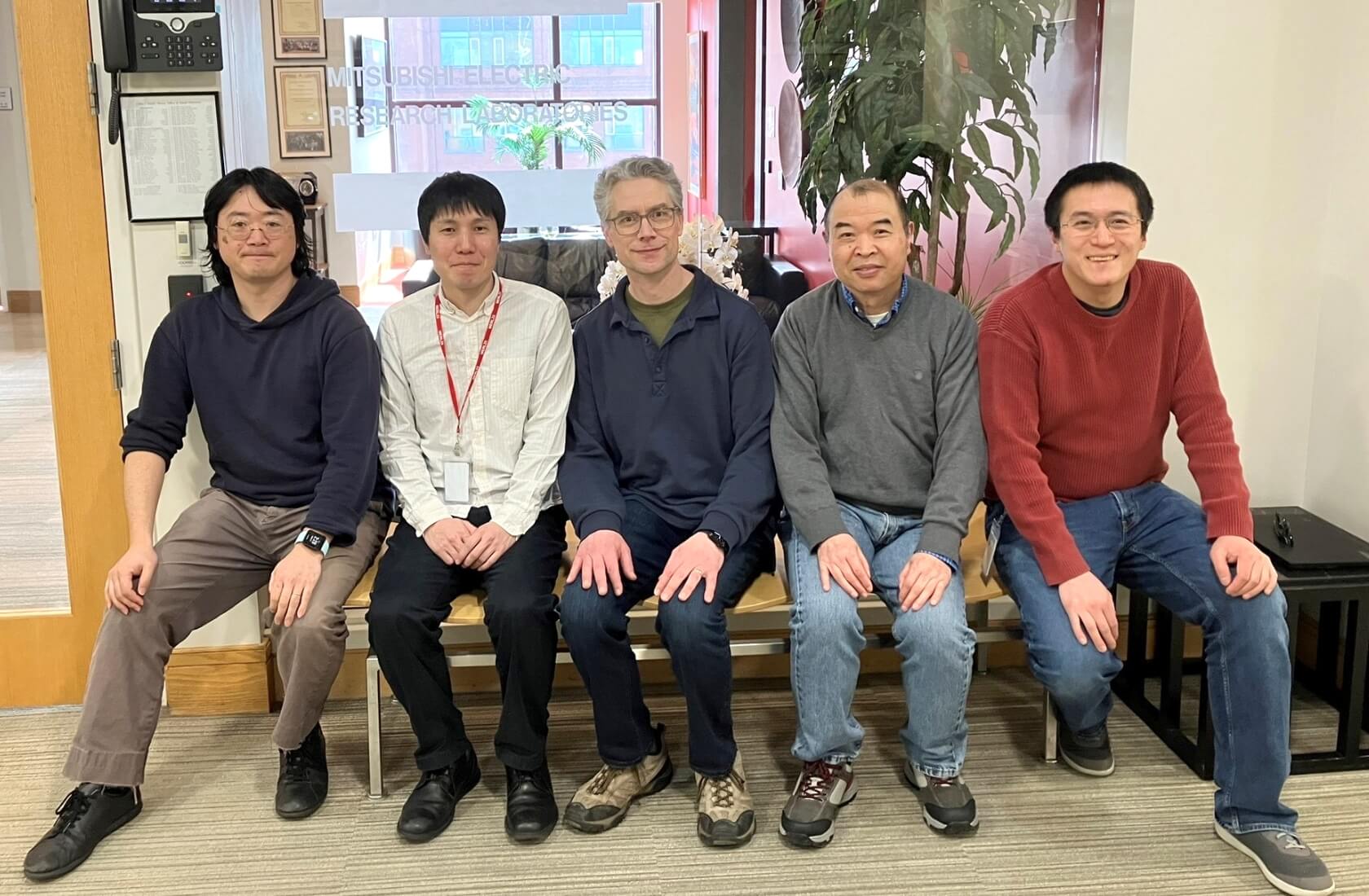 Local team members
As a researcher, I want to do research on technology that is useful to society. After experiencing another culture, I realized anew that whether a certain technology is actually useful depends on the countries and people that use it. While engaging in dialogue with people of all kinds, I will continue my search for socially useful technology.
Working overseas means putting yourself in situations where "common sense" no longer applies, both at work and in your private life, making it a great opportunity to broaden your worldview. The increasing sophistication of online meeting and translation tools makes it easier to work with people overseas even without going there. However, I feel that actually living and working somewhere as part of a team is the best way to understand the finer differences in culture and communication. I’m sure this kind of experience will become a driving force for changing differences into positives when connecting with people around the globe.
That’s all from me. Here’s hoping we meet again somewhere!
PROFILE
Mitsubishi Electric Research Laboratories (MERL)
Ryo Hase, Ph.D.
I work on R&D for machine learning security.
2016
Joined Mitsubishi Electric. Assigned to Reliable System Design Technology Group, Information System Integration Technology Department, Information Technology R&D Center
2021
Assigned to Cloud System Integration Technology Group, IoT System Technology Department, Information Technology R&D Center
2023
Assigned to current role