
2026.03.31
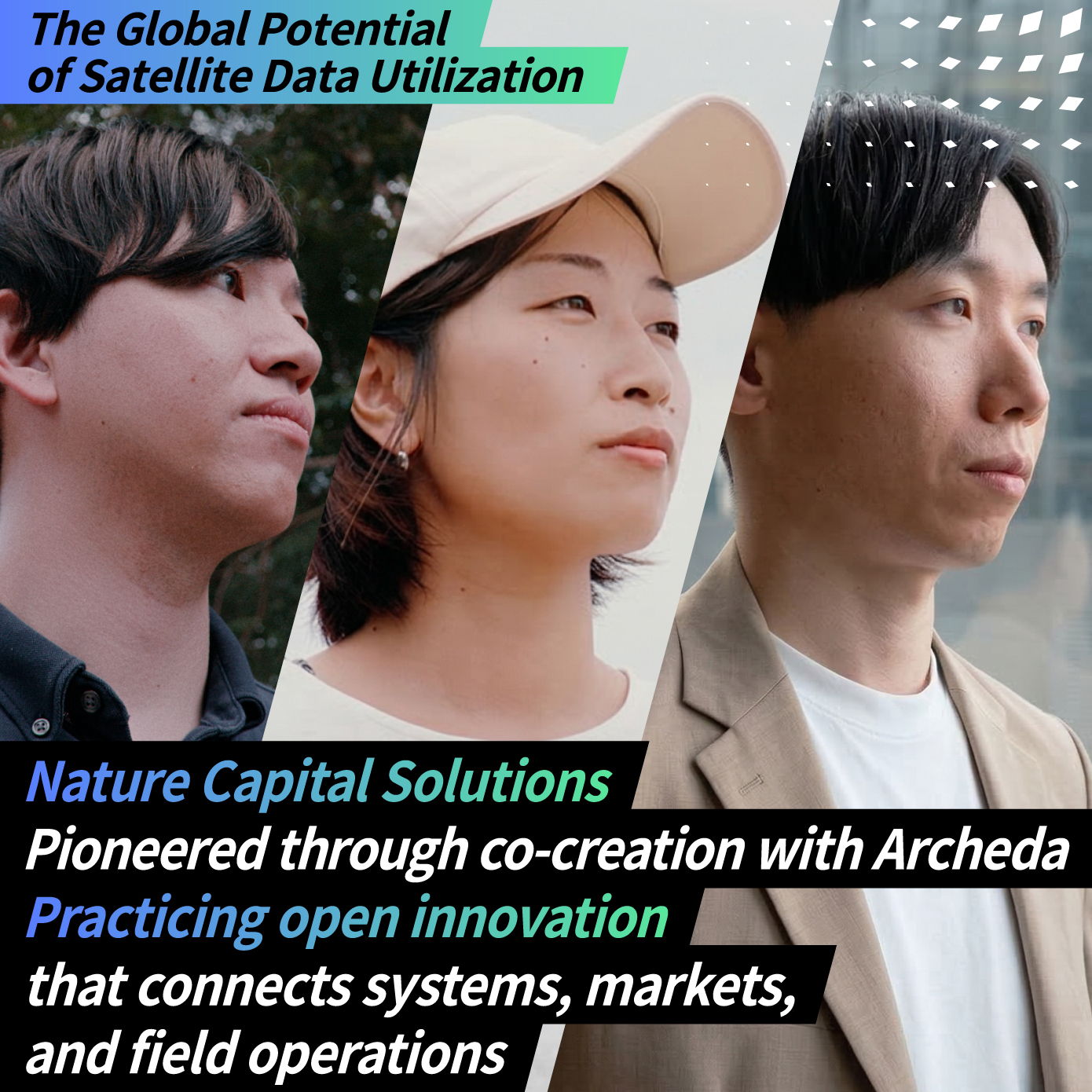
Practicing open innovation that connects systems, markets, and field operations
The Global Potential of Satellite Data Utilization: Nature Capital Solutions
Pioneered through co-creation with Archeda
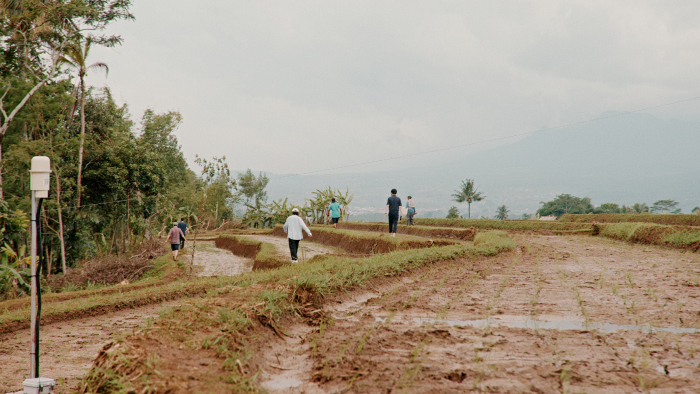
On June 10, 2025, Mitsubishi Electric announced its strategic investment in Archeda Inc. This initiative aims to advance MRV (Measurement, Reporting, Verification) for carbon credits in nature capital sectors like forests and paddy fields, in collaboration with Mitsubishi Electric.
While the market for nature-based credits is expected to expand, credibility cannot be established without objectively demonstrating "how much was actually absorbed or reduced." Farmland, in particular, spans vast areas, making it extremely difficult to understand farming conditions. There are limits to continuously verifying on-site conditions and ensuring trust. L-band SAR satellites, which are less affected by clouds and smoke, are particularly useful in these conditions.
L-band SAR satellites possess observation capabilities that are independent of day/night and weather conditions. This allows for high vegetation penetration and enables millimeter-level detection of ground surface changes through interferometric SAR analysis.
Mr. Kurihara from the Defense & Space Systems Group characterizes this initiative as "a commercialization route connecting satellite technology to systems and markets, rather than leaving it as mere research results." The primary concern is not the accuracy of the analysis itself, but rather its integration into operational processes in a manner that can withstand audit scrutiny. The challenge lies in designing satellite data not merely as an "output," but as a "functioning mechanism within society."
Co-creation that transforms technology into "usable value"
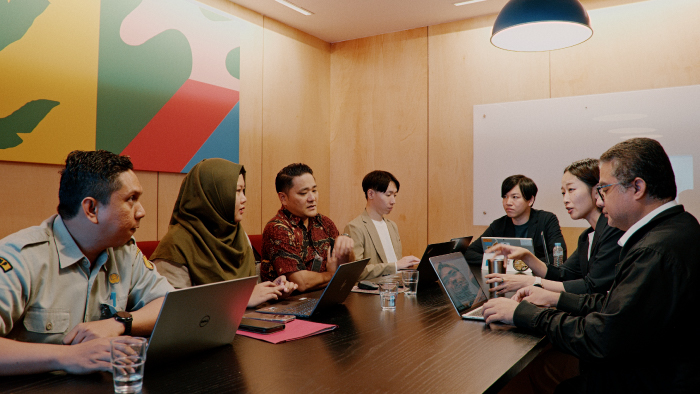
Mitsubishi Electric selected Archeda as a partner due to its proven design capabilities to translate satellite data into audit-compliant evidence. Additionally, its selection was based on Archeda's established connections with regulatory bodies—including certification organizations, government agencies, developers, and local partners—enabling implementation-focused coordination.
For Mitsubishi Electric, the key learning was a more concrete understanding of the reality that technological superiority alone does not guarantee business viability. Who is responsible for making these decisions? Which metrics will resonate with stakeholders? What operational framework is in place to ensure sustainability? Integrating these perspectives at the outset is essential for successful societal implementation.
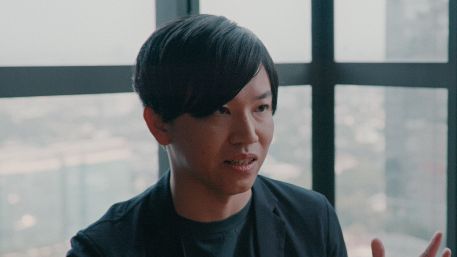
Mr. Monobe from the Business Innovation Division, which operates the CVC, describes this initiative as "an example of concretizing the engine for the social implementation of satellite data." The CVC does not regard investment as an end in itself; rather, it views investment as a means to establish relationships with startups. It is a strategic initiative that aims to deliver the business division's technological assets to market in collaboration with startups, maximizing efficiency and speed to market. By integrating the agility of startups with the technological foundation of the business division, it facilitates the conversion of technology into "value that is actually used."

Conditions for Open Innovation to Function
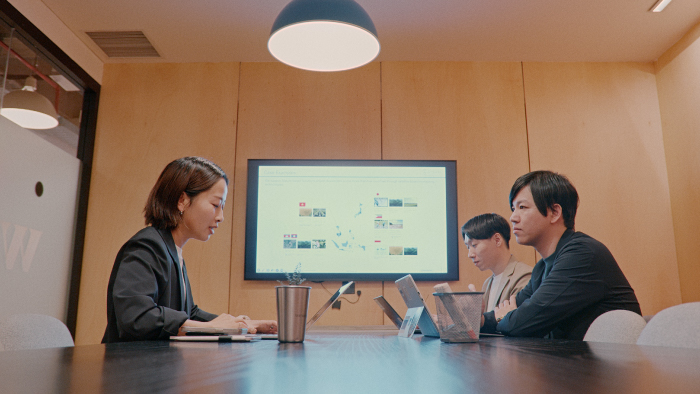
Mr. Monobe emphasizes that open innovation—creating new businesses by collaborating with external entities like startups—is not solely dependent on systems or structures. There are several prerequisites for its effective functioning.
First, the purpose and vision must be shared. In the absence of a shared understanding of the rationale behind this initiative and its intended destination, discussions are prone to stagnation at the consideration stage. It is essential to clearly define the destination at the outset and establish a common language.
Second, aligning "decision-makers" and "executors" within the same framework is essential. Decision-makers and front-line teams must collaborate to achieve success. To ensure that business units' initiatives continue to progress, it is essential to organize stakeholders, establish procedures, and bridge the gap to execution. The Business Innovation Division plays a pivotal role in this regard.
Third, establishing trust. It is essential to clearly communicate prerequisites, constraints, and expectations from the outset, and to engage in open dialogue even when information is incomplete. It is more important to create an environment where discrepancies can be corrected while they are still small than to maintain good relationships.
Mr. Monobe articulates his objectives for this CVC investment and collaboration, stating that he seeks not only tangible outcomes but also a replicable approach. Who should be involved? What must be decided in advance to maintain momentum? What steps must be taken to transform it into a viable service? By amassing this knowledge and refining it into a model applicable across domains, we can stimulate new business creation company-wide.
Towards Globally Expanding Value Creation
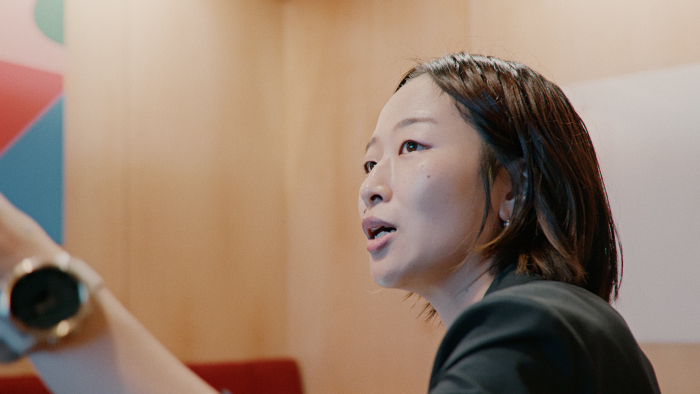
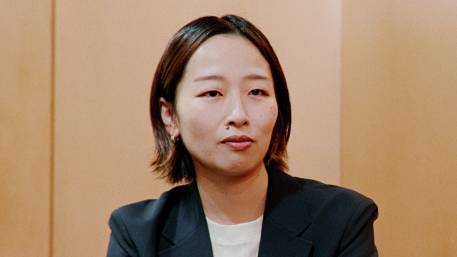
Ms. Kido of Archeda, the co-creation partner in this initiative, emphasizes the importance of the collaboration with Mitsubishi Electric, citing its technical credibility and high global trust. In the field of nature-based credits, it is essential to engage in dialogue with overseas government agencies and international corporations. Partnering with a company that has expanded its business globally is a factor that increases the likelihood of successful implementation.
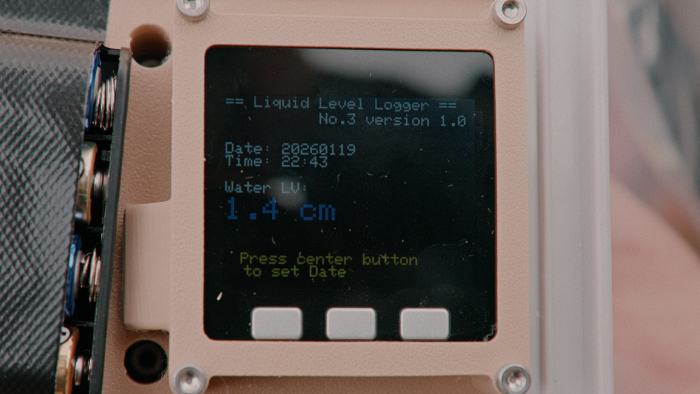
While currently advancing demonstrations such as forest biomass assessment and paddy field water management evaluation, the goal is to establish a model case utilizing domestically produced satellites. Beyond this, the vision includes expansion into other countries, securing credibility for nature-based projects, and market growth.
The transformation of satellite data into a "credibility infrastructure" involves the visualization of the value of natural capital and the establishment of a foundation to support financial and policy decision-making.
As a company operating in diverse business domains around the world, Mitsubishi Electric is committed to exploring ways to integrate technology into society. One aspect of this challenge is represented by the co-creation with Archeda. Efforts to implement technology through open innovation and connect it to new value will continue to unfold across various regions and domains.


*The information on this page is current as of March, 2026.


