2023.10.31

Simple, yet complex. What an inhouse designer discovered beyond his fields.
To design is not just making products look better. A designer pays attention to all of the product's functions, mechanisms, costs, manufacturing processes, etc., and finds a way to solve every issue. And now, the target is not limited to products alone, but it also encompasses the services, experiences, and also “things.” We asked Yusuke Fujigaya, who designs “things” at Mitsubishi Electric, what path he has taken, and what he wants to accomplish in the future.
Contents
The high school time, when he didn’t even know the ‘d’ of design.

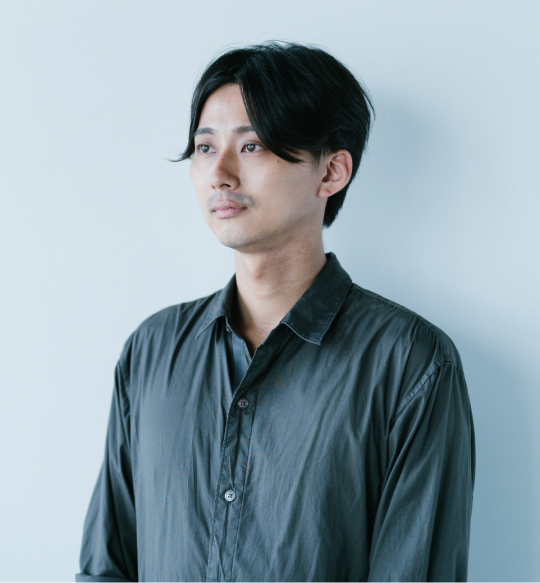
Fujigaya, a member of Mitsubishi Electric's Integrated Design Center, has demonstrated his design abilities by winning the Good Design Award, and the company has high expectations for him. Although he was not planning to be a designer when he was a child, he certainly had the makings for becoming one.
‘A childhood dream? Honestly, I didn’t have one. I didn’t even know there was a job called ‘designer,’ let alone believe that I would one day become one! But I always liked making things, such as when I made mountains in the sandbox - I tweaked them, and made them better. I liked coming up with ideas that can surprise people. I was on the volleyball team at school, but I had to quit and therefore lost something to be passionate about. So I started a part time job, to prepare for when I would find something that I really wanted to do; since money is always a foundational issue, I saved 1 million yen when I was a high schooler.’
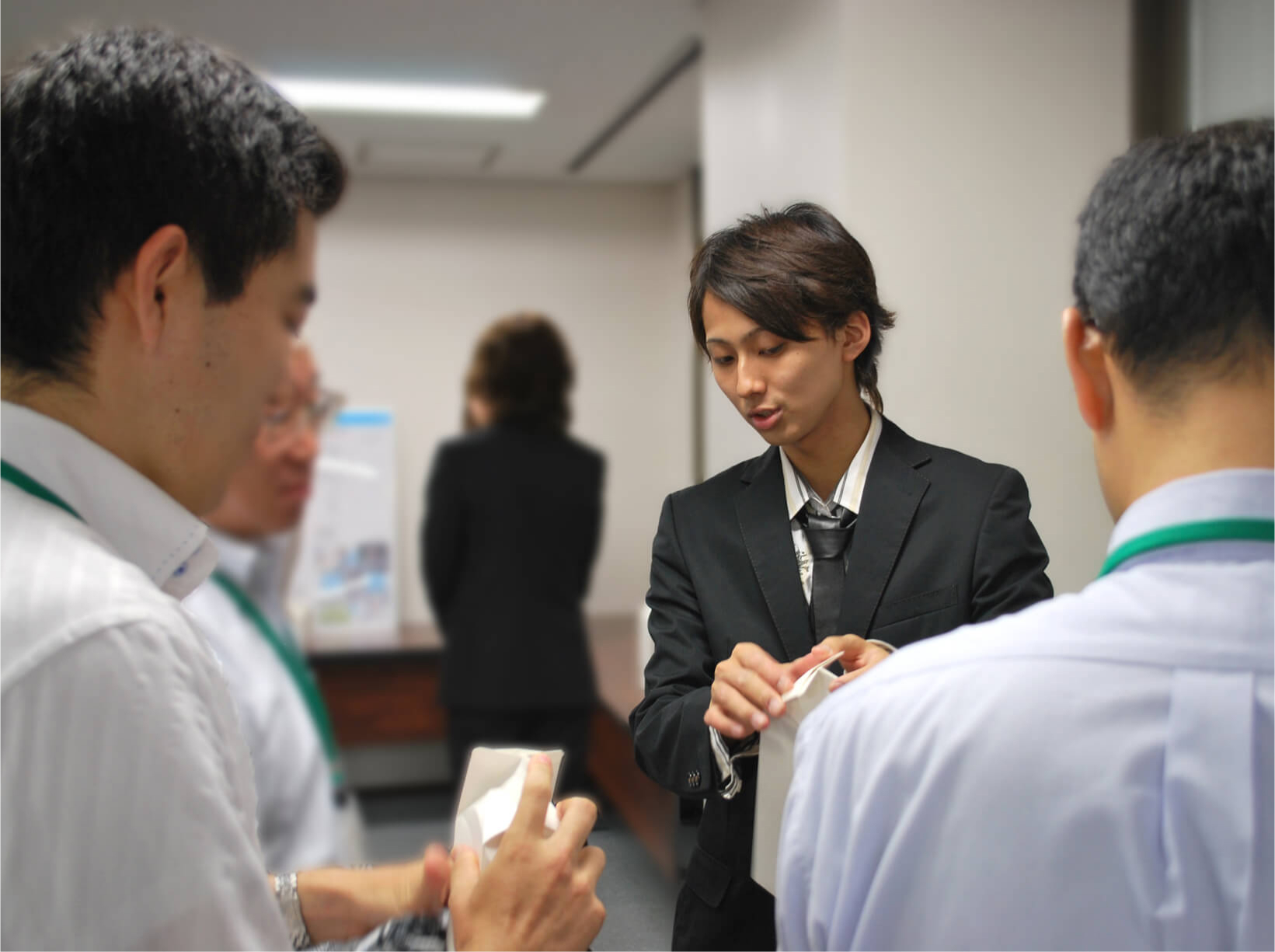 Fujigaya, as an art college student, gives a presentation of his work made of paper cartons.
When Fujigaya was in high school, he probably never imagined that he would become a designer. It was one month before the exam that he even knew that there were colleges to learn art at. In addition, there was not going to be any chance for him to qualify for such a college since students go to art cram schools for years in order to prepare for the exam. But…
‘I didn’t know there was a design course. I went to an open campus and saw sketches that the undergraduates drew - they were so good, and I had only 1 month to prepare. I almost gave up, but I met a student who was going to an art cram school, I asked them to take me to that school, and they helped me make a study plan for the time left. The tuition was so expensive, but you know, I had the money I’d saved. I studied so hard, and I passed the exam.’
To reach others
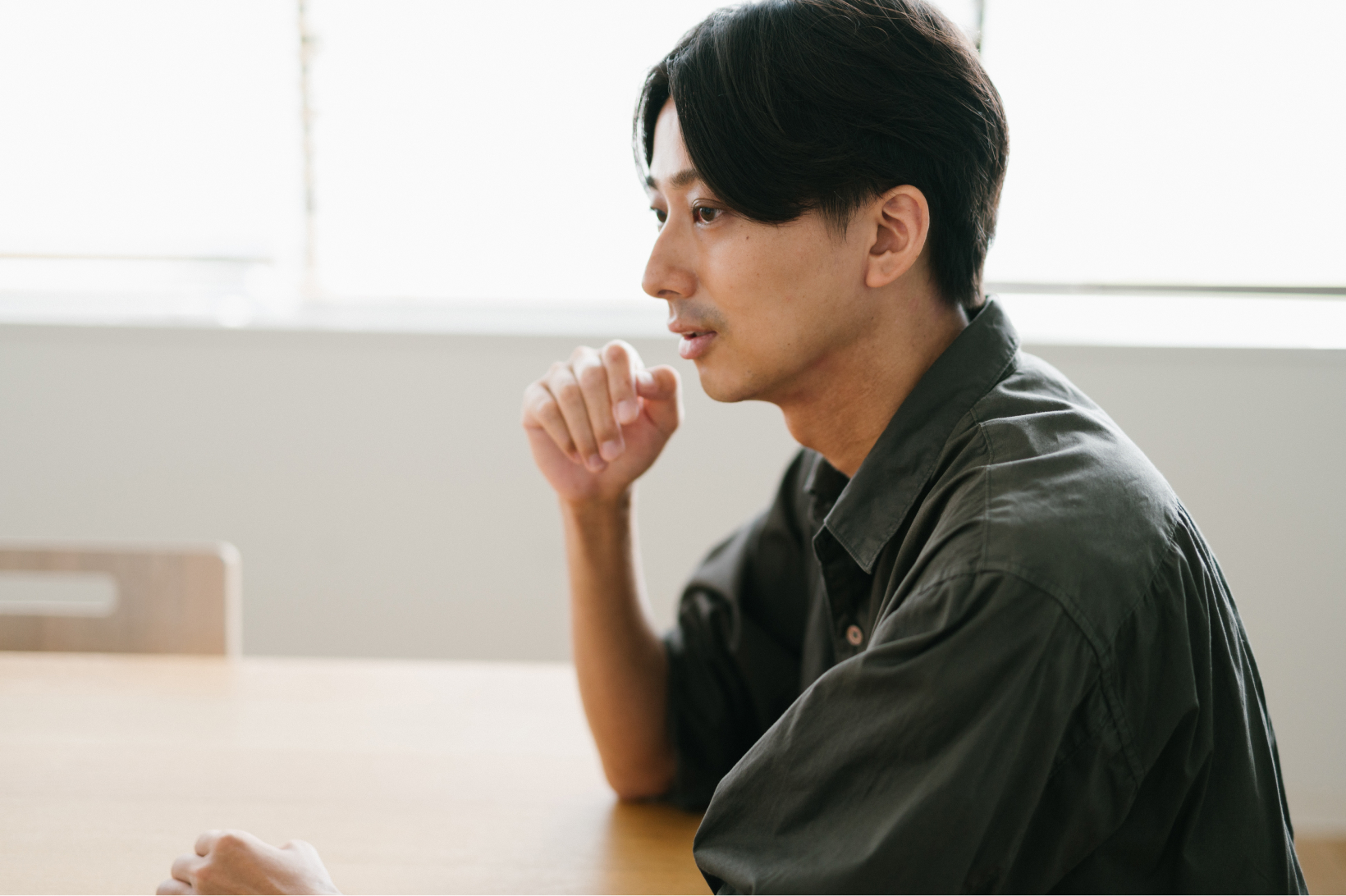
Only a month after learning about the world of design, Fujigaya entered the department of industrial design. But there began the adversities.
‘The classes were so hard. Other students had studied a couple of years before college, but I had only done so for a month. Our skill gap was so obvious and even professors pointed me out as a bad drawer. But I came to school to learn how to draw, so isn’t that what they were supposed to teach? I had many friends who were good at drawing, and I wanted to be like them. So I set an achievable goal of drawing 3 sketches a day, and I continued drawing them.’
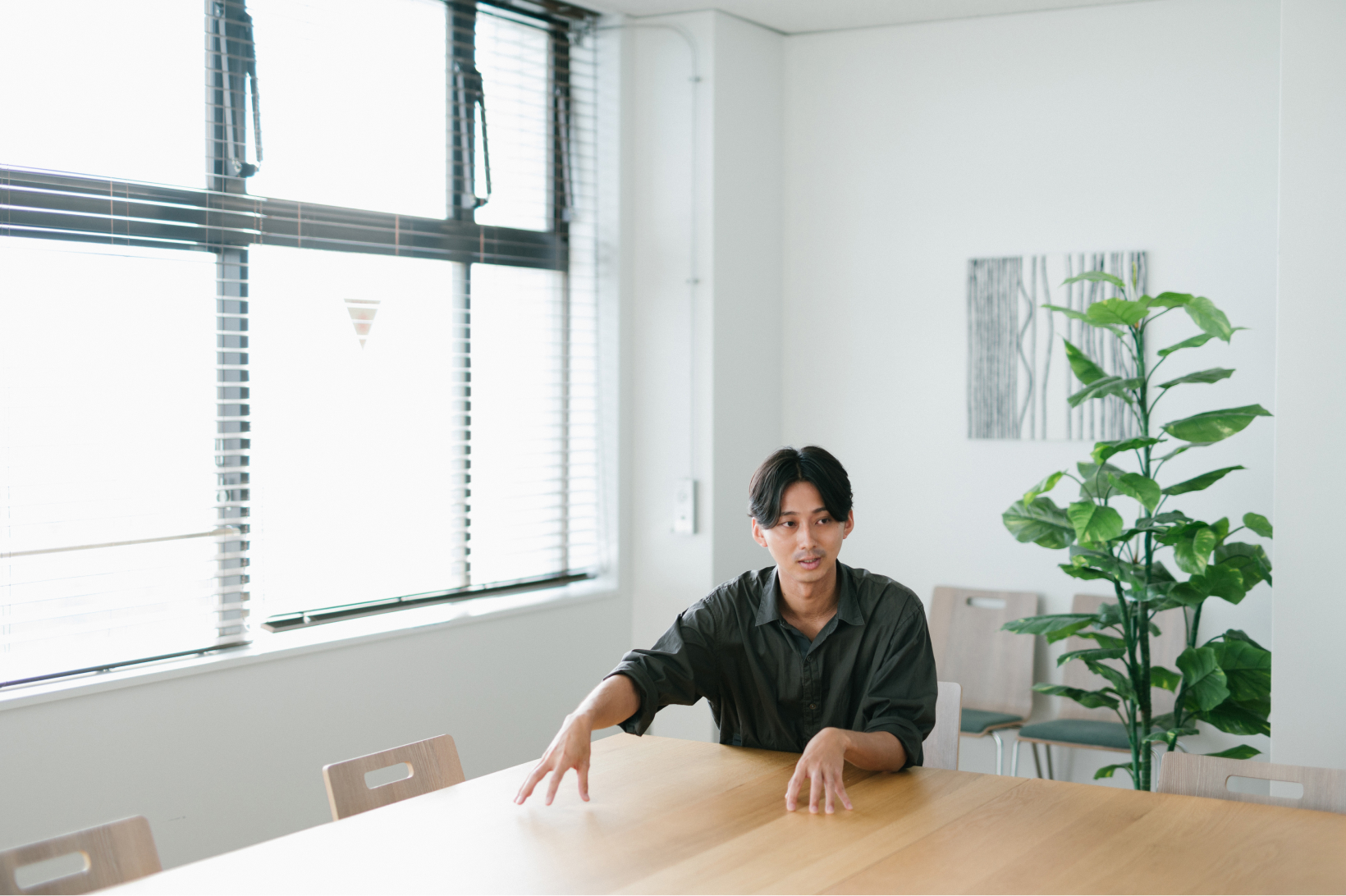
His advantages may be an honest mind to acknowledge his own weak points, and a positive personality to set a goal and begin taking steps.
‘Maybe I think like an athlete because I played volleyball. Well, I didn’t like studying at school very much, but I enjoyed making things. To learn it was not tough at all… it didn’t even feel like studying. The joy of making things, and the fact that I want to make something good, those ideas may be the core motivation when I design.’
Finally joined Mitsubishi Electric, and the setback awaiting him
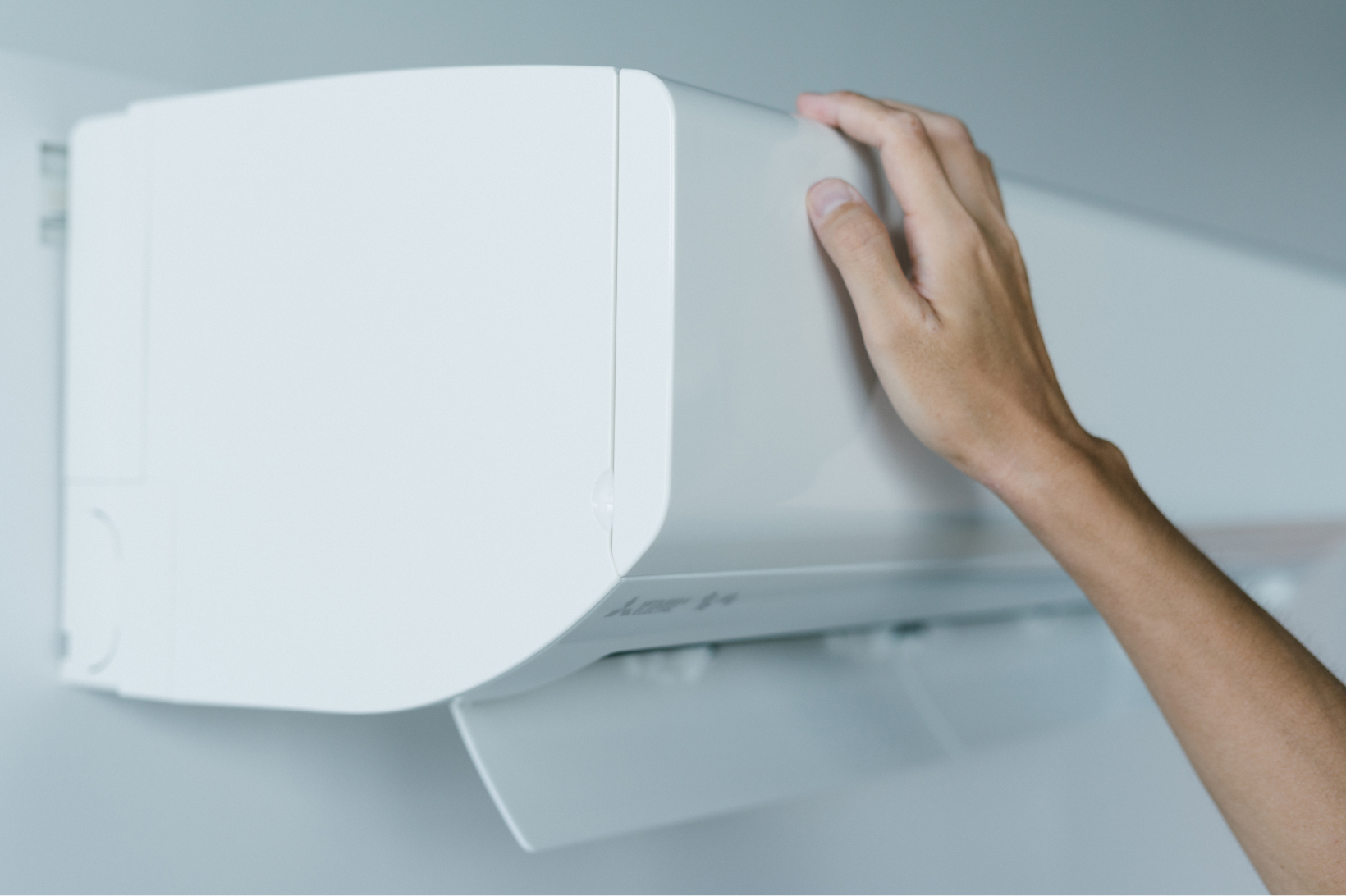
Fujigaya wanted to become an appliance maker after graduation. It’s a dream career for students of product design. He was accepted by Mitsubishi Electric, a company which impressed him as they competed on the strength of their ideas, and used said ideas as weapons. He thought he would be creating new products on day one, but reality proved to be much more difficult for him.
‘As I said, school life was fun and it wasn’t a hard time for me; I had pride that I had learned something in college. When other students had given up, I had kept trying and therefore made a lot of sample works. But compared with the employees of Mitsubishi Electric, I thought I was a nobody, and I realized that there was so much more to learn and do.’
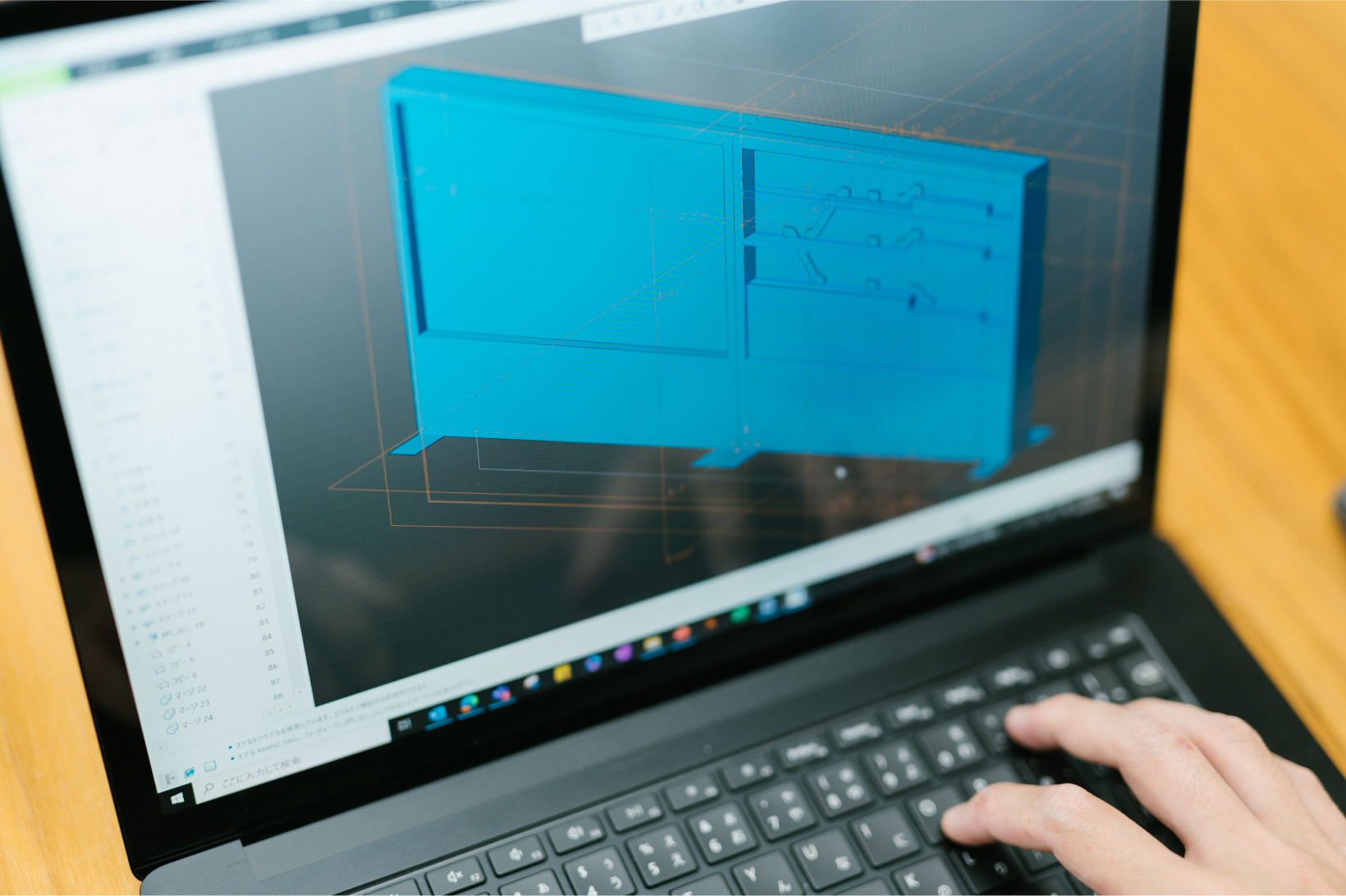
Guided and helped by senior workers, he kept learning and was eventually deployed to work on the team for the flagship product of Mitsubishi Electric, the ‘home air conditioner Kirigamine.’ There he experienced a big setback and learned something very important.
‘There was a project to make air conditioners for Thailand. 4 people drew design sketches and gave a presentation at a factory in Thailand. Because of the size of the place - and the limited size of their board - they needed to remove some sketches. The Thai people didn’t know who drew which sketch, but all the sketches they chose to remove were mine. That was so shocking, and I realized that while I had made designs that I thought were good, I was supposed to have made designs that Thai people thought were good. Of course, designers should propose what they can be proud of, but we also need to make products for the users who are actually going to use them. So I needed to expand my sense of value, and vision, but that was the tough part. It still is. But having made many mistakes, I have been able to realize that.’
Though the object to design changes...
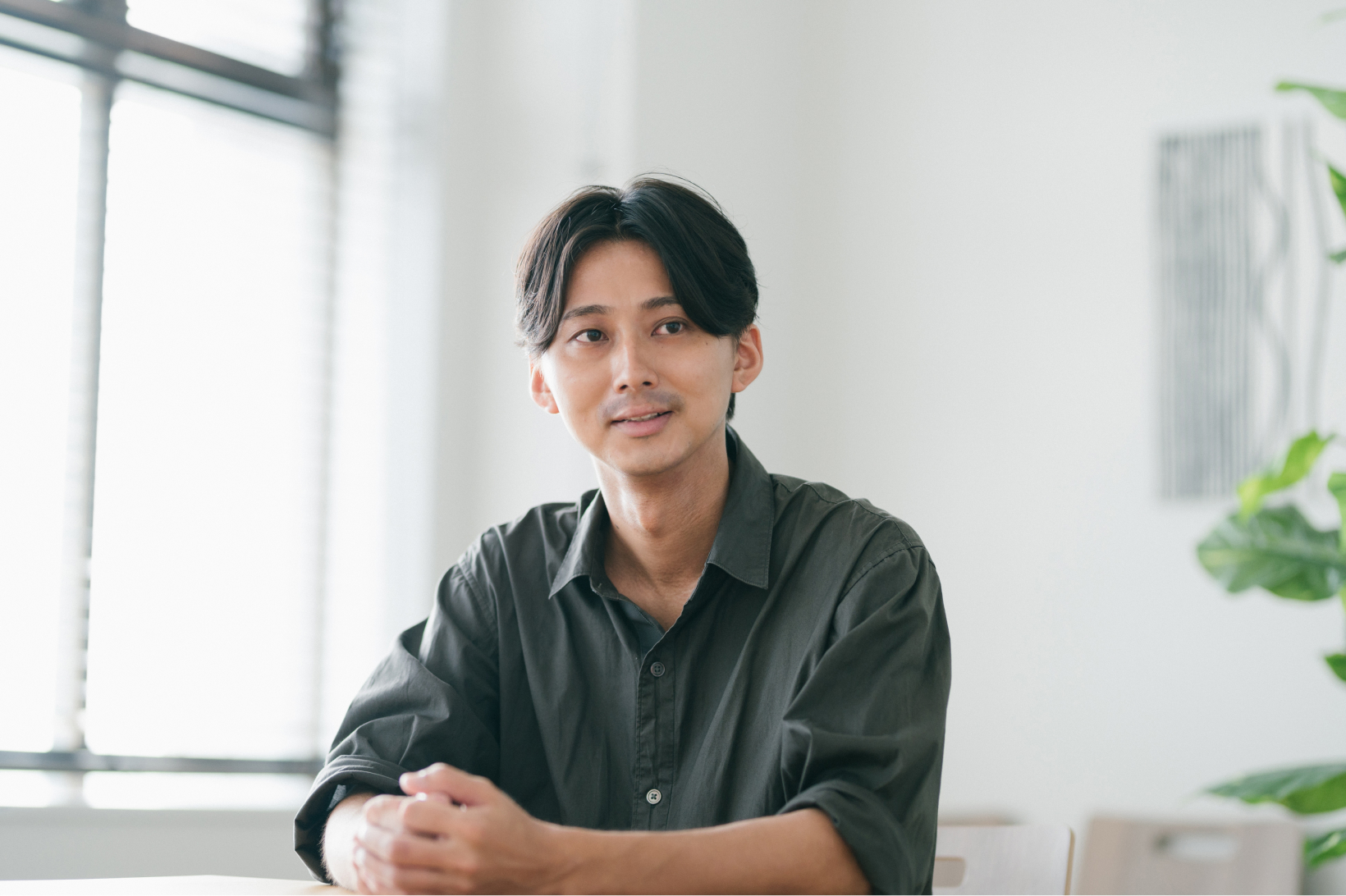
He designed some models of Kirigamine. When he worked on one of them, he changed the layout of intake, and the outline along with it; he solved many issues at once.
‘When I had just started working, I had limited skills and vision - what I could be sure of was quite little. But thanks to the opportunities I was given, and all the mistakes that were made along with them, I was able to expand myself. My college classmate - who currently works for a different company - told me that the air conditioners I designed were so good that he bought every model. I was so happy to hear that! After the Kirigamine project, I really feel that I'm on the users' side to design what I envision and have it be in tandem with their own idea of what is good.’
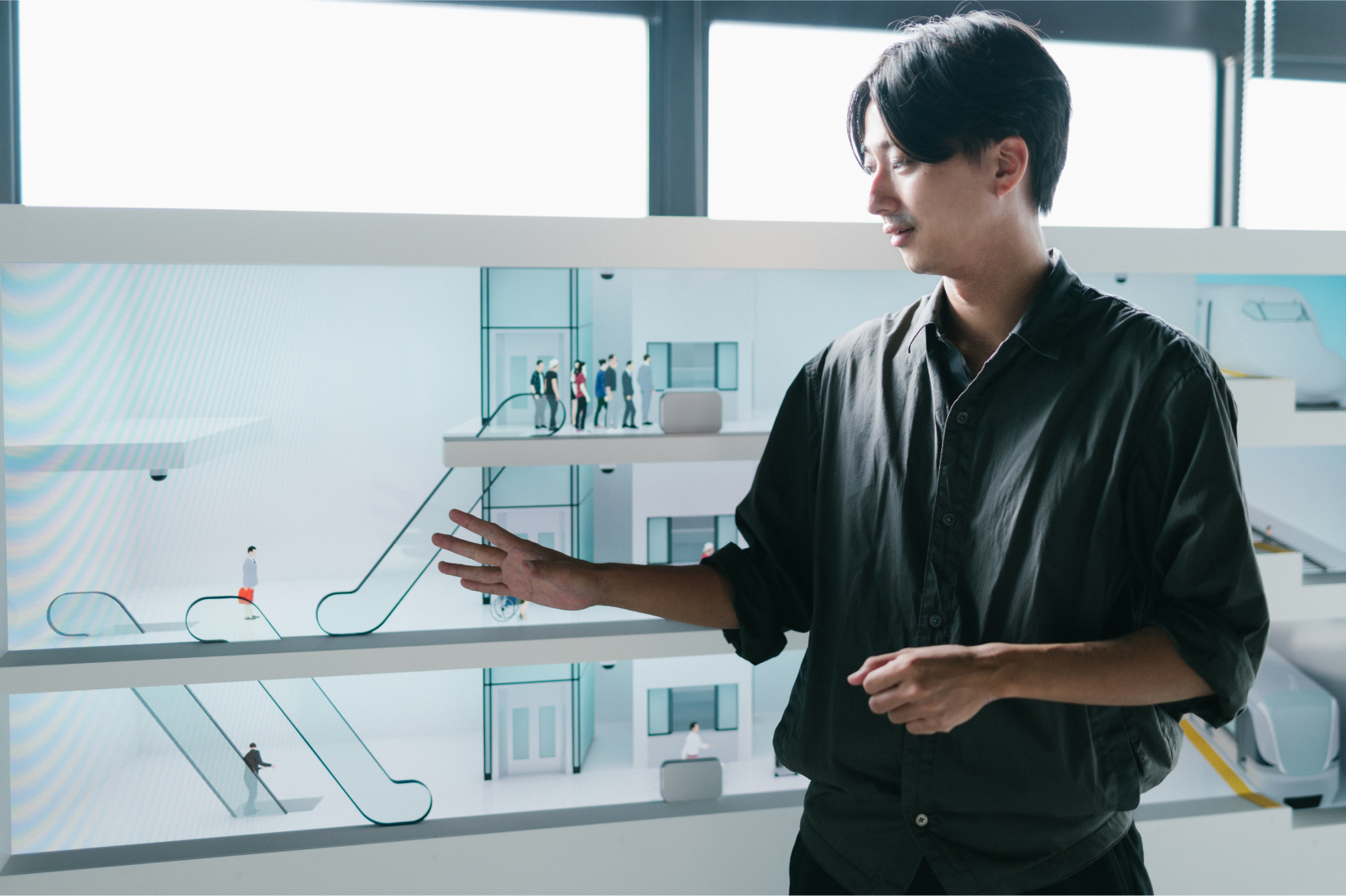
It’s been 13 years since the beginning of Fujigaya’s career, and now he is one of the experienced ones. He currently belongs to a department where he not only designs products, but also manages all the factors that come with them. He continues to reinvent himself and perceive issues with wider and wider vision.
‘For example, I designed a service to solve train stations’ rush hour periods and related products, but now I design on a wider field. My belief though is that the basic process of thinking hasn’t changed, no matter whether the target is ‘items’ or ‘things.’ It’s all about how to break down and reconstruct the issue in order to solve it. One change is that while I used to design single products like air conditioners, I now plan their whole service life with a long view as to how it would ease life, or be safer, or more fun. I hope to make this world even a bit better with the works I design.’
My purpose is to make ourselves and the world happy with our work.

Of course, the size of the project should not determine the quality of the work. But the big scale projects of Mitsubishi Electric do indeed have an impact on society and the world, and this is one of the main motivations for Fujigaya.
‘Designers only think - we can’t make things happen by ourselves. With the work of all of the engineers, sales force, and so on, we can finally produce ideal services and products. Mitsubishi Electric has gathered people with skills from all over the world, and have gained power in various fields. To make good use of that or not is up to me perhaps. But it’s a company that I can always be inspired by.’
Regarding his potential and the expectations others have for him, he will surely handle bigger projects. But as they get bigger, what he actually focuses on is the individual.
‘As a project gets bigger, we start looking only at numbers. Like, “Some percentage of men in their 20s behave like this, so we should do x, y, and z.” Surely data is important, but there are various kinds of people out there, so I want to focus on what people actually think. Recently, I’m more drawn to how I can establish a way of thinking that emotionally sympathizes with each of them, not just trying to employ a logically correct theory. Integrated Design Center of Mitsubishi Electric declares our philosophy to be, ‘design for people’. It took me 10 years to realize that. And I feel that I can’t use my design skills or ideas without the technology and resources of Mitsubishi Electric, which enables me to believe that I can indeed impact society and the world itself.’
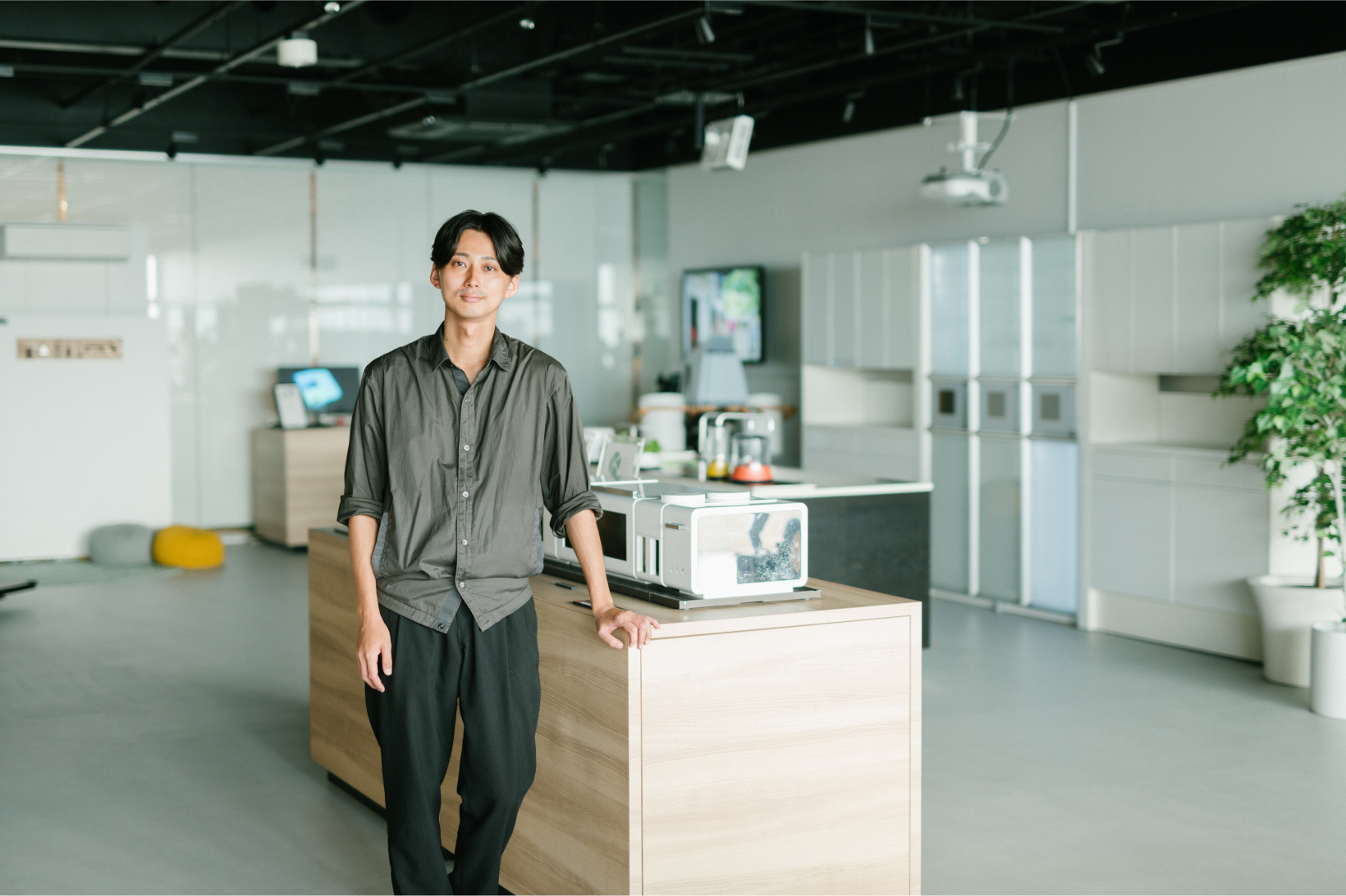
In conclusion, we asked him what he wants to achieve at Mitsubishi Electric - what his ‘Purpose’ is. His answer expresses the responsibility and pride of a designer who helps lead the company he works for.
‘ “It is to make ourselves and the world happy with our work”. That may sound easy or trite, but after all of my experiences, I feel that the word “joy” has deep meaning. I feel that I want to make this world exciting. And we can’t create good stuff without joy. That applies to me, and others, too. I’m not trying to force them, but I want my team to enjoy work, with smiles. Then we can provide good products that make users happy. Such words are simple, perhaps, but that’s my conclusion at the end of the day.’
INTERVIEWEE
Mitsubishi Electric Integrated Design Center
Yusuke Fujigaya
Member of Mitsubishi Electric Integrated Design Center since 2011
Designed Kirigamine and other air conditioners for Thailand, China, and other markets
Now handles whole service project designs, not only single products’
Won the Good Design Award, and others