2024.02.21
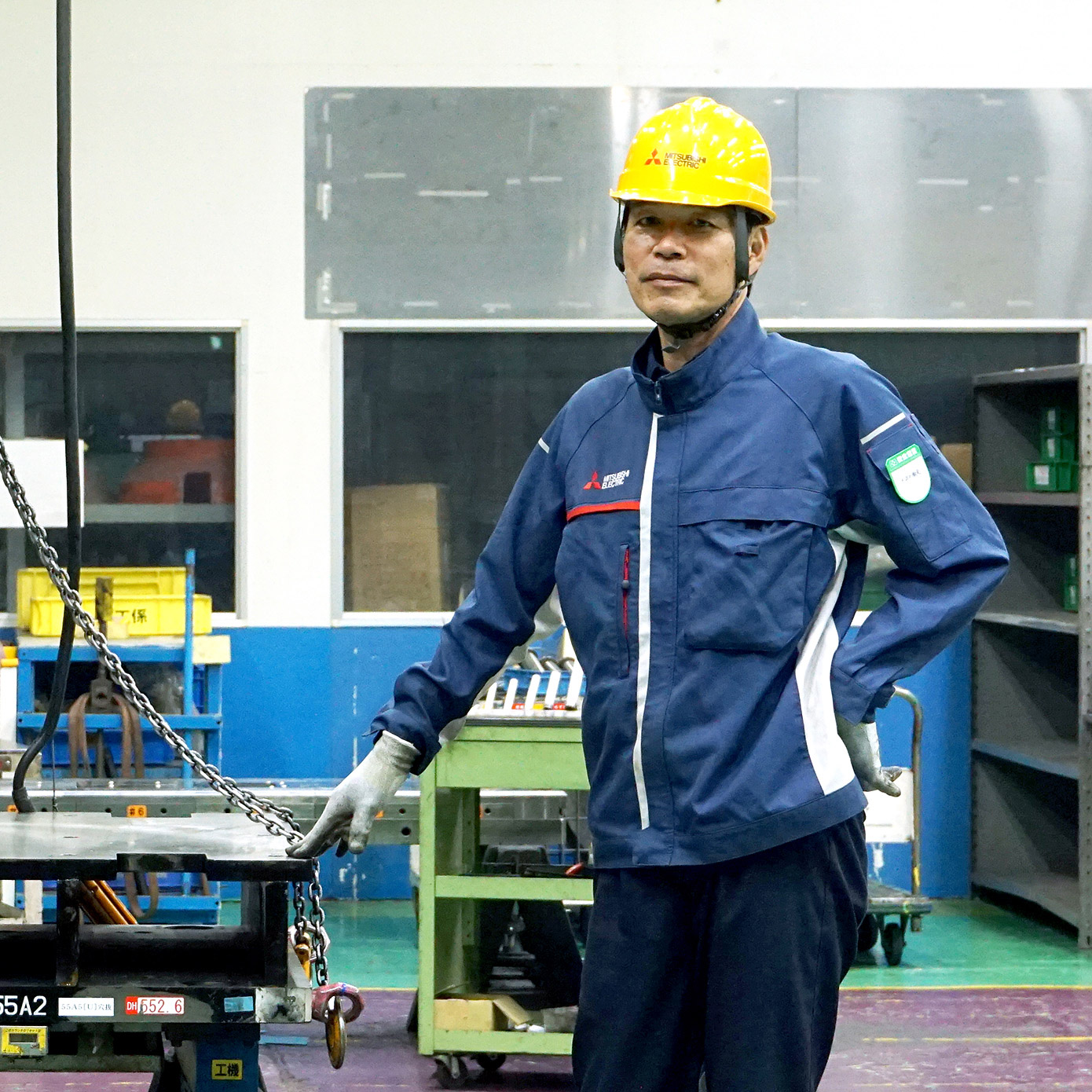
Contributing to society by educating future generations. A way to pass on skills that a modern master craftsman has achieved.
Automation has become the norm in manufacturing. However, there are tasks that can only be performed by the intuitiveness and hands of craftsmen. At Mitsubishi Electric Gunma Works, Kazuhiro Matsuzaki has honed his skills in making press dies and plastic molds, and has been making jigs and tools with his own hands to improve work efficiency. He was awarded the "Outstandingly Skilled Workers of 2023," also known as "Modern Master Craftsman" by the Ministry of Health, Labor and Welfare based on his skills that won him third place in the National Skills Competition, as well as his achievements in training younger workers. Mr. Matsuzaki generously shares with us his know-how and philosophy on how to improve his skills and train future generations.
Contents
This modern master craftsman was not passionate at the beginning.
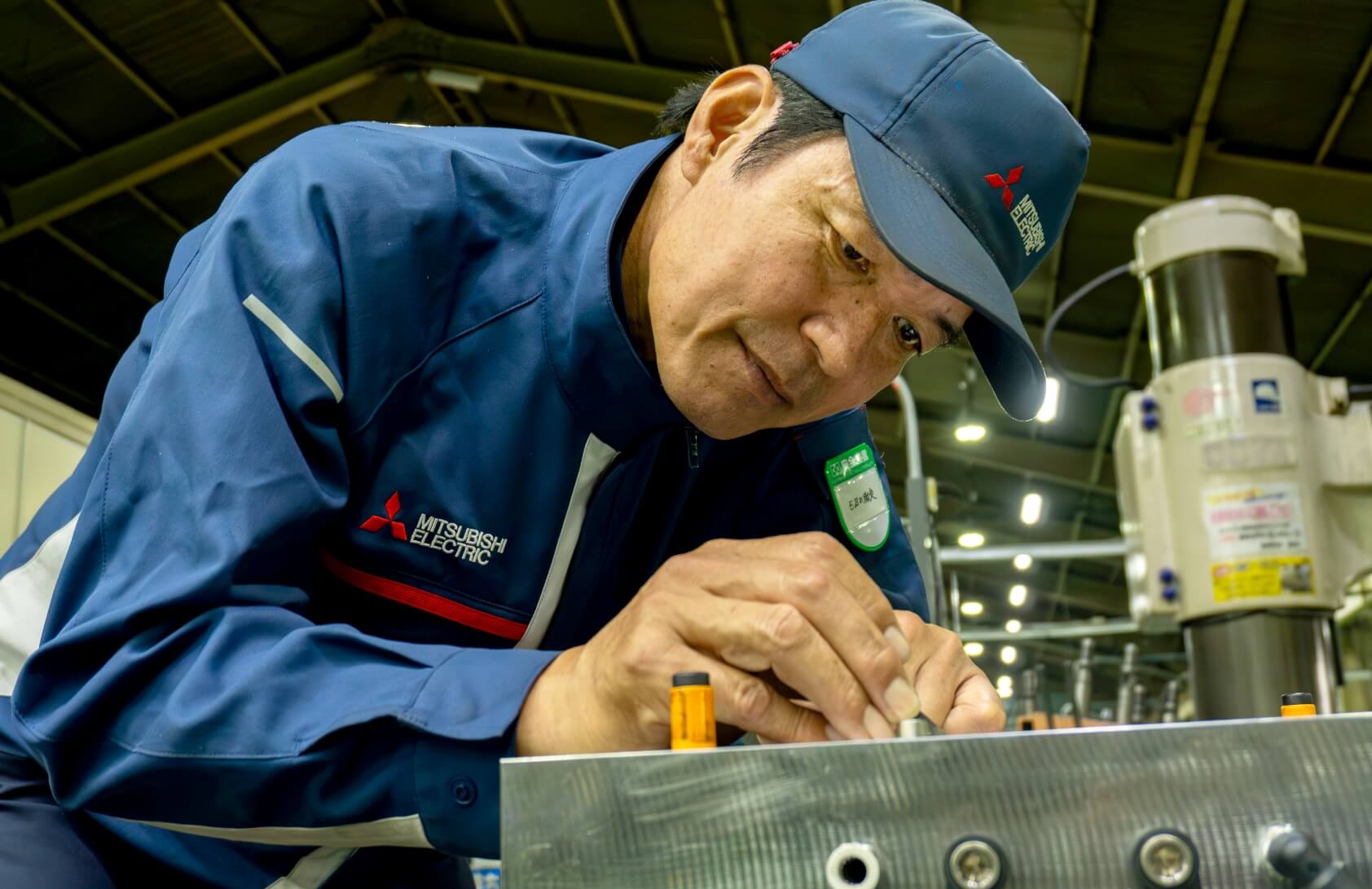
Mr. Matsuzaki has been awarded the title of "Modern Master Craftsman" and has a high level of skill that anyone would acknowledge. But looking back to when he joined the company 42 years ago, even he did not expect to reach such a high level of skill.
“When I joined the company as a technical trainee, I was subjected to rigorous disciplinary training without much explanation, unlike these days. I didn't like it. I didn't have a clear goal at that time, but I just felt that since I had joined the company, I should work properly to the end.”
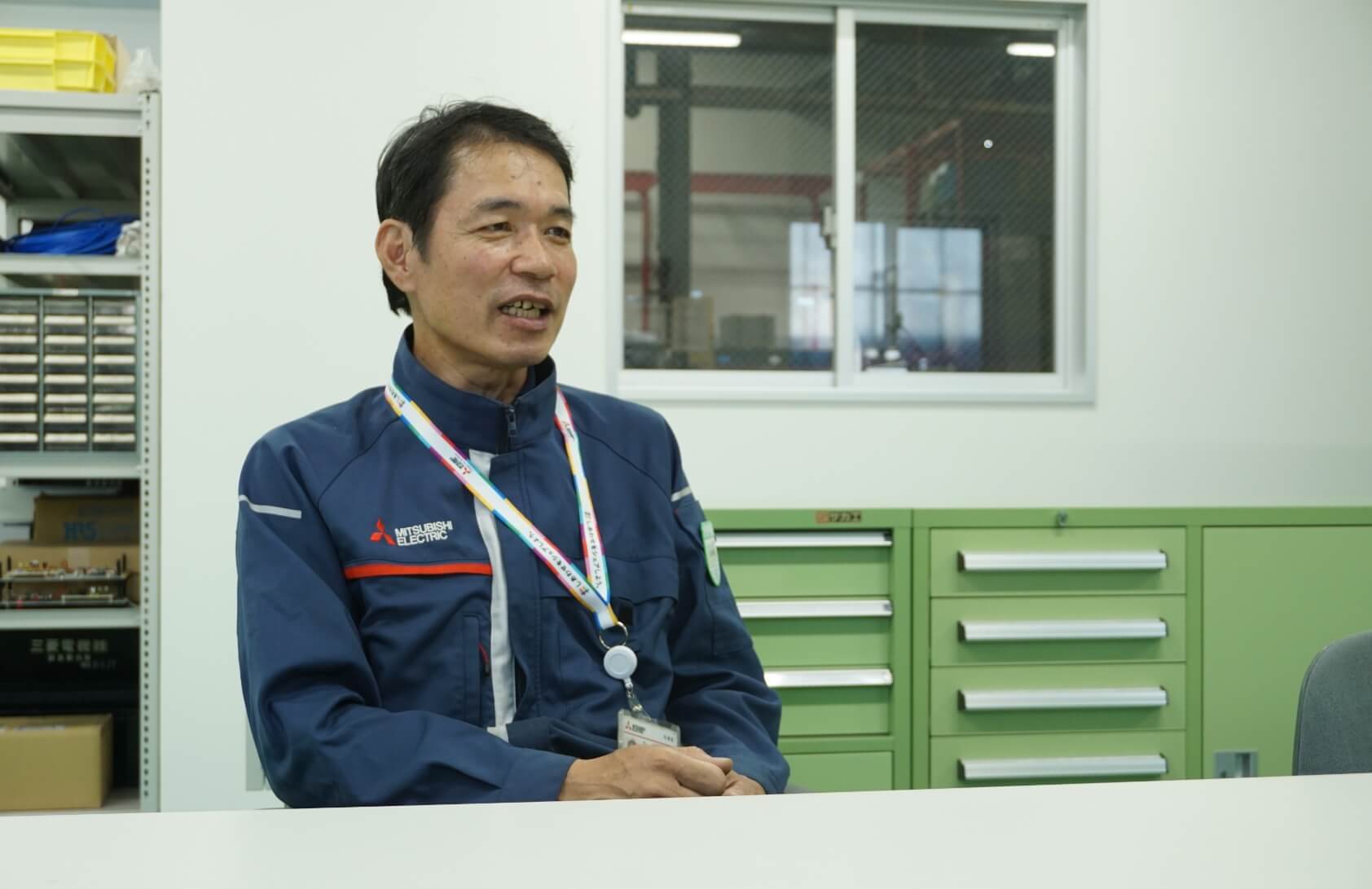
Still, life is interesting because you never know what may come next.
“I was motivated by my instructor’s words, ‘You are not an academic anyway, so you will have to earn your living with your technical skills.’ At that time, I honestly was a little pissed off (laughs). I thought, No matter how hard it is, no matter how many other people quit, I will never quit this company, and if that is the case, I have no choice but to become a first-class worker in this field.”
Steel is soft for Mr. Matsuzaki.
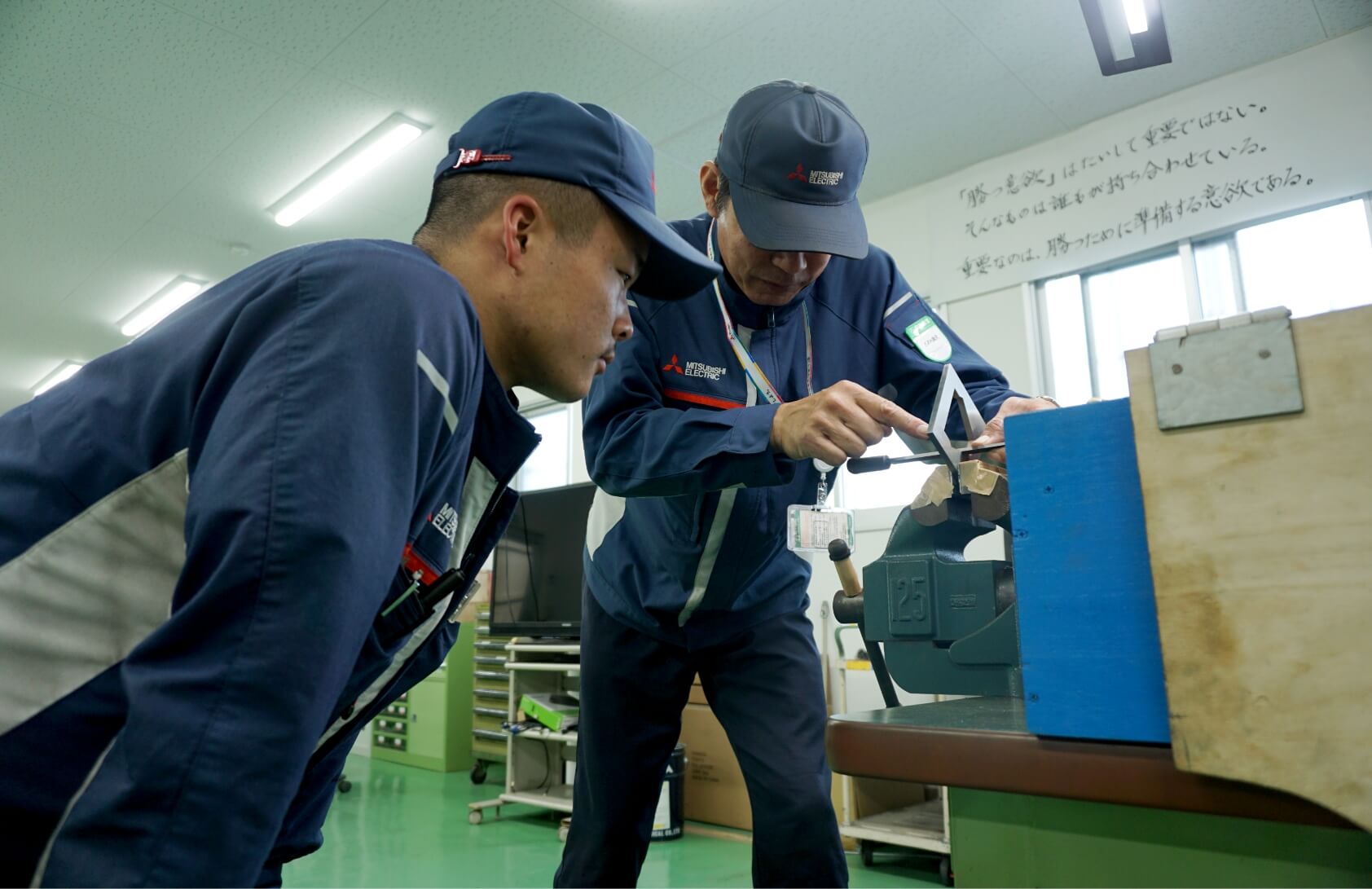
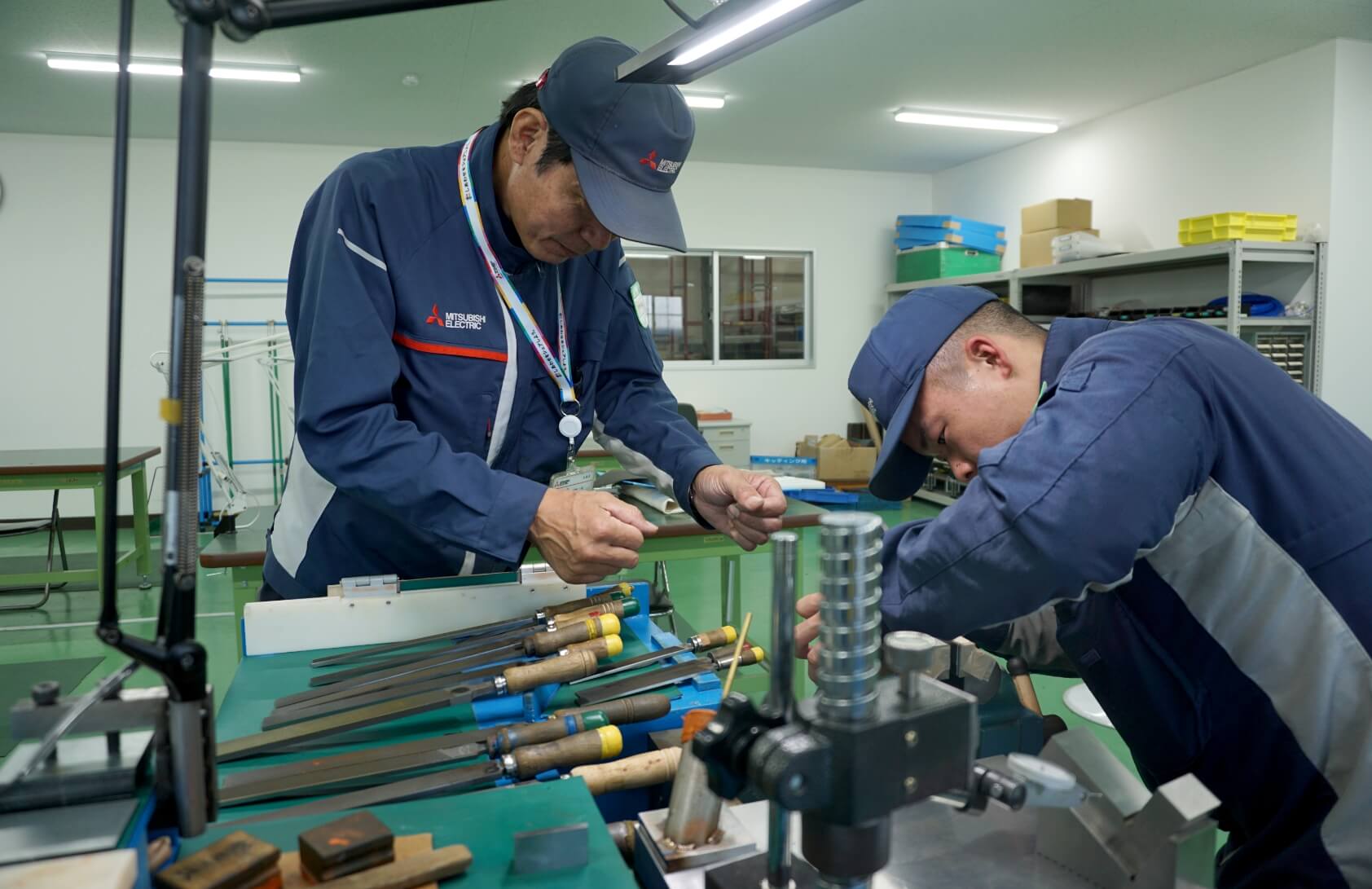 Mr. Matsuzaki teaches his student, Mr. Tamura (right).
True to his word, Mr. Matsuzaki aimed to be a first-class worker, and through on-site study, he acquired a high level of skill in mold making and finishing. When asked how he developed his skills, Mr. Matsuzaki analyzed his strengths, saying, "I am confident in my ability to visualize shapes and movements," and he expressed this image with great vividness.
“I have an image of steel, formed by my firsthand experience of the heat generated by grinding, the dent caused by hitting, and the crushing caused by dropping. When you ask people who have never touched steel what they think of it, they tend to say that it is cold and hard, but for me, the image I have of steel is that it is soft. For example, when a product is made using a drawing die, the iron material is placed in the die and pressed - and it flows smoothly through the die and changes shape in seconds. The image of softness matches perfectly with my senses.”
As with the verbalization of the image of steel, Mr. Matsuzaki has honed his ability as an instructor to adapt his language to the needs of others in order to convey the subtle feel and knack of the skill. Now in his 60s, he often takes on a leadership role, teaching in the field and training younger workers based on his advanced skills. But he still finds it just as rewarding as when he was on the front lines in the field.
“I am not in a mass production environment, so my daily work is like cooking a main dish. Sometimes there are challenges that are very difficult to solve. But when I solve them by bringing together everyone's wisdom and skills, I feel an indescribable sense of relief and accomplishment that gives me the greatest joy.
To keep asking, ‘Why?’
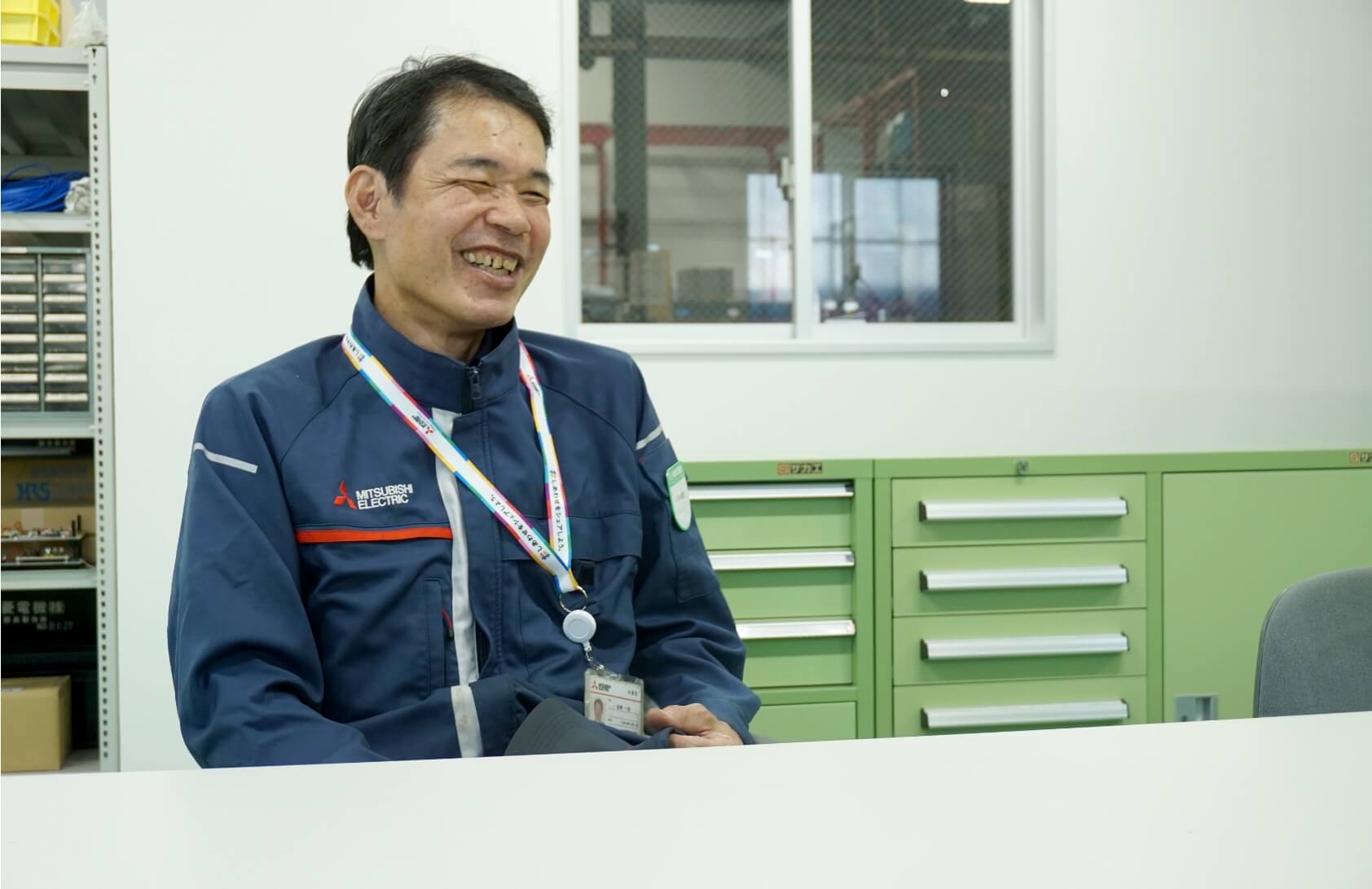
Mr. Matsuzaki explained would love to know how he was able to develop his skills so well expressing his gratitude to those around him, and shared with us some of the ideas he acquired from his daily training.
“First of all, I was fortunate to have good mentors, colleagues, juniors, and a spouse. It is also important to have the determination to be the best. How can we work things out? Keep focusing on the task, and keep asking why, why, why? There are no shortcuts to improving your skills. Think about the tools every day, and keep using them. Think about, “Why?”, especially when things go wrong. Don't be picky. The simpler the job, the more you will find clues to improve your skills.”
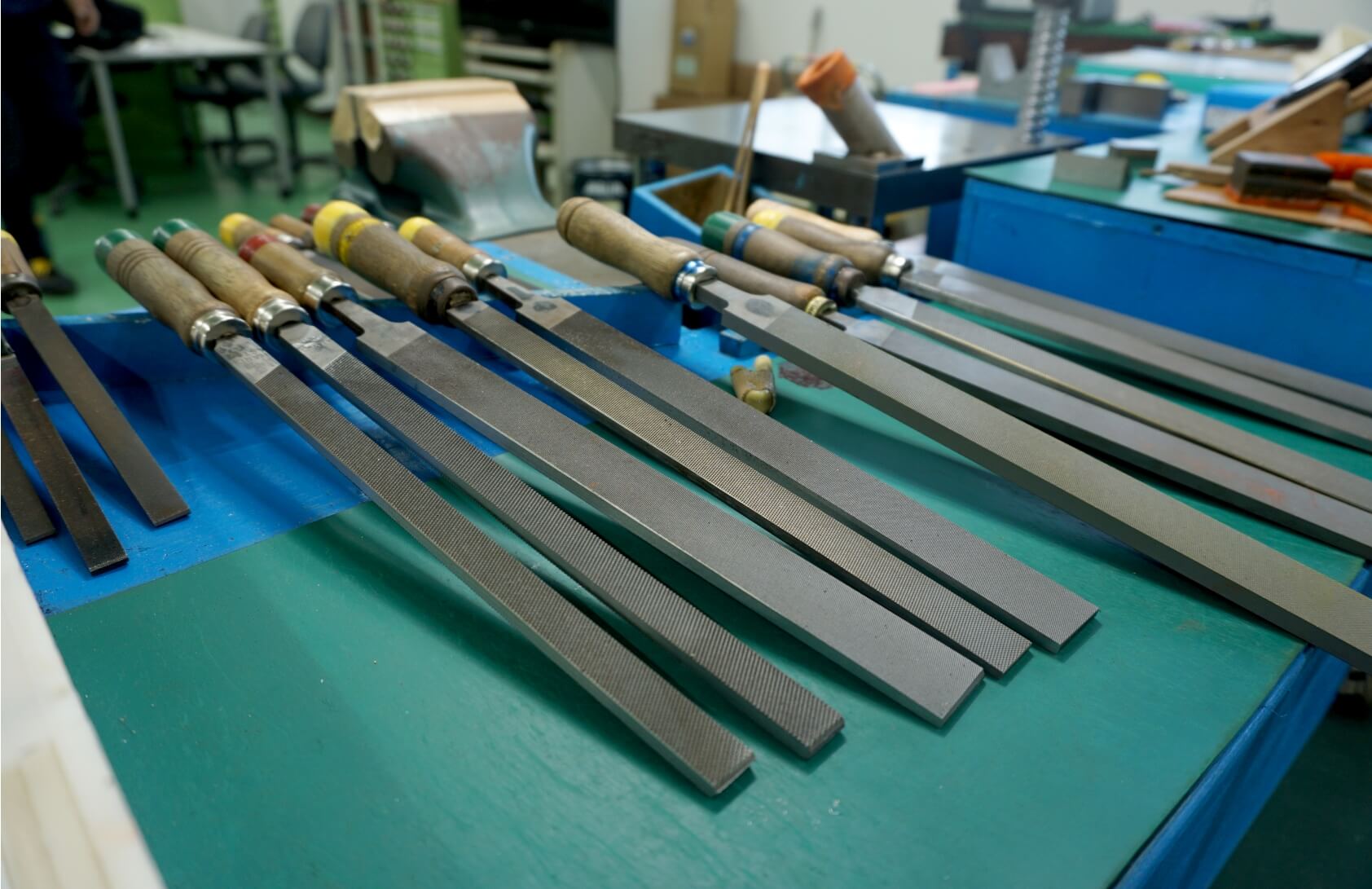 Files, essential tools for making jigs.
For example, even in such a simple task, there are hidden skills that will help you later in your career.
“Let's say you ask your trainees to do a task like cutting with a hacksaw. Most of them cut as hard as they can, to cut fast. But in my case, I tell them that to cut fast, they should focus on moving the blade in a straight line.”
His passion for the Mitsubishi Electric Group Skills Competition
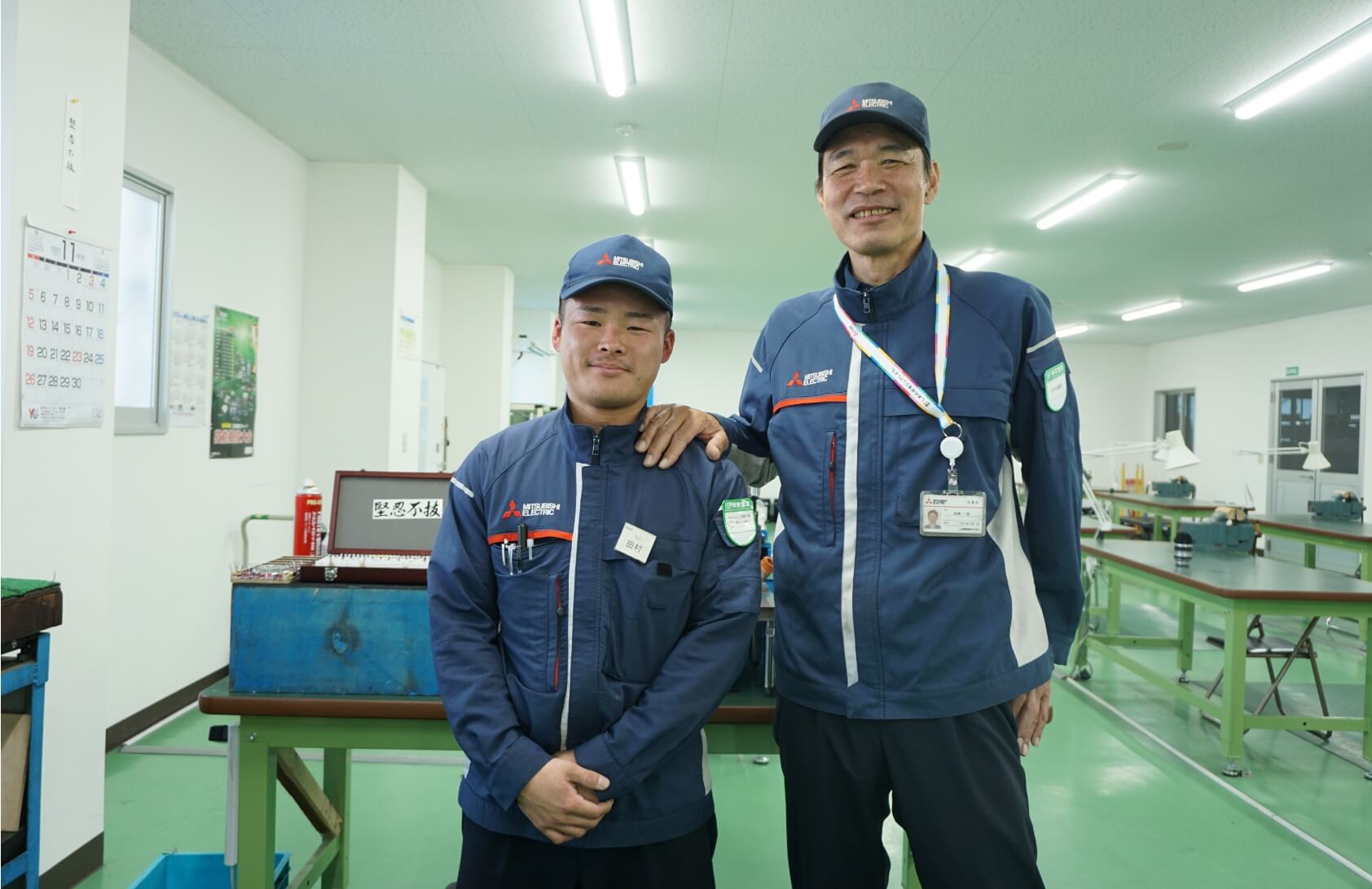 With his student, Mr. Tamura.
Mr. Matsuzaki, who has mastered his craft, is worried about something. The Mitsubishi Electric Group Skills Competition is a company-wide event held by Mitsubishi Electric. As the name implies, the competition brings together the best from each of the company's manufacturing plants - many of them are beyond the first level of the National Skill Test - to participate in the company’s skills competition. However, Mr. Matsuzaki's Gunma Works had not participated in the competition for 20 years.
“Craftsmen’s skills were obviously declining. When I was about 55 years old, I asked the section chief at the time to put me back in the industrial machinery division. I didn't need to be a group leader or anything like that, I just had to work with everybody on the site, and I was sure somebody would be affected. And finally, two years later, I was able to come back here.”
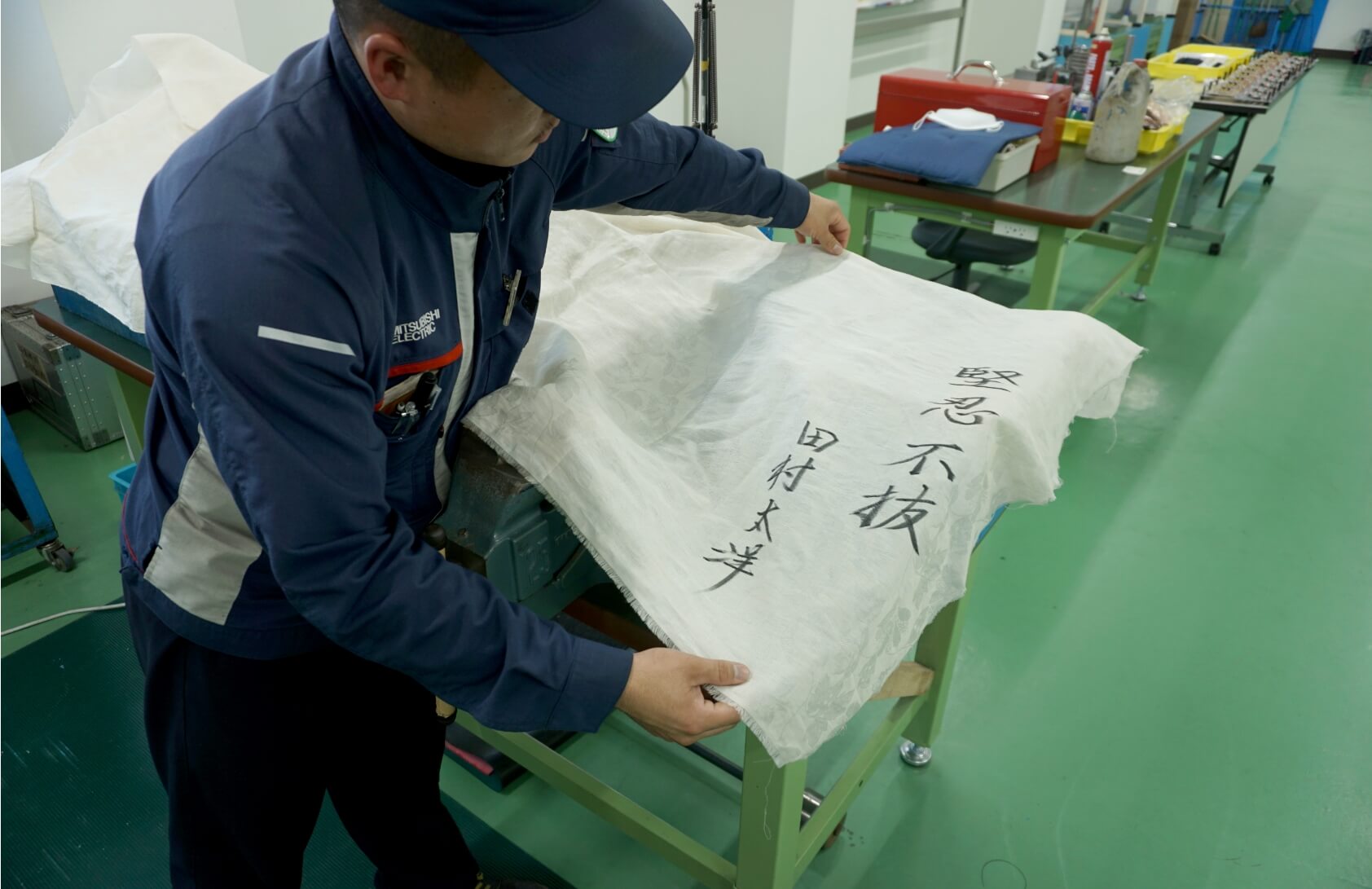 Mr. Matsuzaki passes on encouragement to his students. (For Mr. Tamura: ‘Kennin Fubatsu’ - endurance.)
He said, "By keeping the words in mind as your motto, you can concentrate on your job and more easily see if you’re doing it right. Above all, you can have a spirit you can count on.”
As a result of his passion and efforts, the spirit of skill improvement in the workplace has grown. Mr. Matsuzaki's students have participated in the company's skills competition; some of them have even passed the first grade of the national skill test, or won a technical skill award.
"This challenge - and seeing his accomplishments for the competition - has changed the atmosphere in the workplace. Their feeling is now, ‘We have to try harder!’ More and more young people are trying to take the National Skill Test , and some of them even volunteer to do the morning training. Of course, it costs money and takes time and effort to participate in the competition, but I think this is the way to raise the level of our production capabilities.
To bequeath techniques, and beyond.
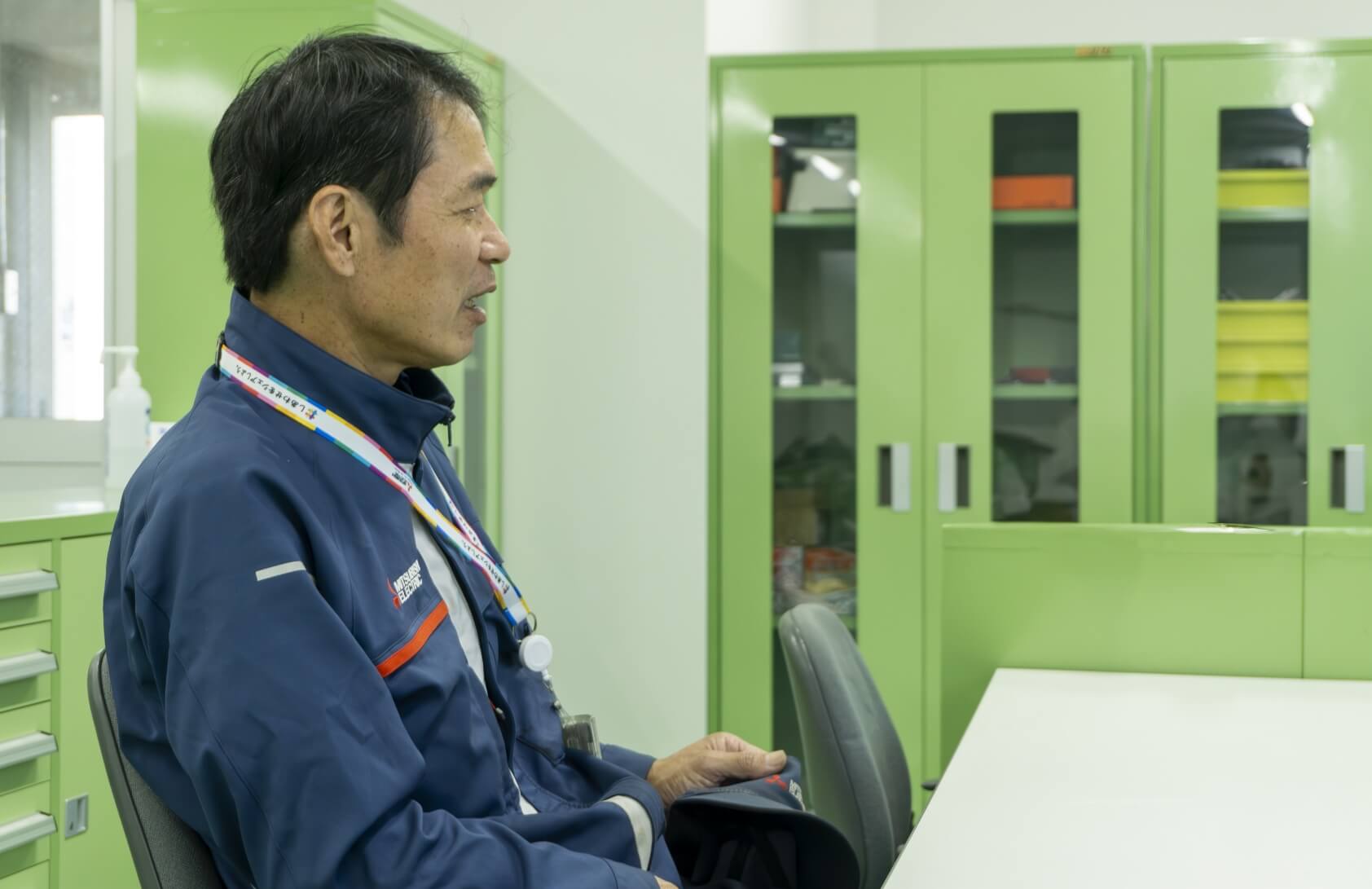
As a craftsman, he made molds for products, and as a mentor, he trained the next generation. Whatever his role, work and society as a whole are connected for him. Better products make both people and society happier - this is the basis of Mr. Matsuzaki's thinking.
“If someone's life becomes more comfortable or happier because of Mitsubishi Electric products, I think it's somehow related to my work. Regarding my present responsibilities, if I can teach my younger colleagues to work positively every day, it will lead to the betterment of society. And I think that is enough.”
Although he is now in his 60s, Mr. Matsuzaki's passion is still focused on nurturing future generations. He says there are many things he learns from teaching as a mentor.
“When I first started coaching at the age of 30, I thought, ‘What do I have to do to win?’ Because I had been taught in order to win at the competition - this is what led me to my improvements. But now that I am 60 years old, I have changed my thinking to, ‘What do I have to do to prepare them to win?’ Grades are important, but that's not the point. Of course I teach them all the skills I have, but what I really want them to learn is to think about how they can grow by honing their skills. That's why I teach them all the skills I have, and tell them to figure out the rest on their own.”
If even 1 person is helped, or feels joy…
During the interview, Mr. Matsuzaki often spoke of his passion to develop younger workers, and his motivation is the many people he helps and the joy he brings to others.
“some of my students have already grown up to be an assistant manager. I realized once again that the development of these younger students has already become an asset to me, and that making someone else happy or pleasant is connected to what I have done so far. So I will do whatever I can to make people happy, whether that is acknowledged by anyone or not. In fact, I have probably never said "no" to anything I have been asked to do since I joined the company. That is because I have always thought, ‘If I can be of help to more people, I will do whatever I can to make them happy.’”
Looking back on his journey from joining the company to the present, he speaks about his younger self.
“I miss the days when I used to think that Mitsubishi Electric was a big organization, and the chance to play an active role looked almost impossible. Now that I have worked for the company for many years, I have come to realize how contributing Mitsubishi Electric is to the world. There is something I always say to young trainees when I meet them for the first time: ‘I have been in this company for 42 years. At first, I probably felt the same way as you do. But after working here for so many years, you will realize even more that Mitsubishi Electric is a great place to work, so you should look forward to it.’ Then, everyone's face changes and they start taking work more seriously.”
INTERVIEWEE
Mitsubishi Electric Gunma Works
Kazuhiro Matsuzaki
Joined the company in 1981.
In 2023, he received the "Modern master craftsman" award in recognition of the high level of knowledge and skill he has acquired over the years through his involvement in the manufacture of jigs and tools, press dies, and plastic molding dies, as well as his training and mentoring of younger workers.