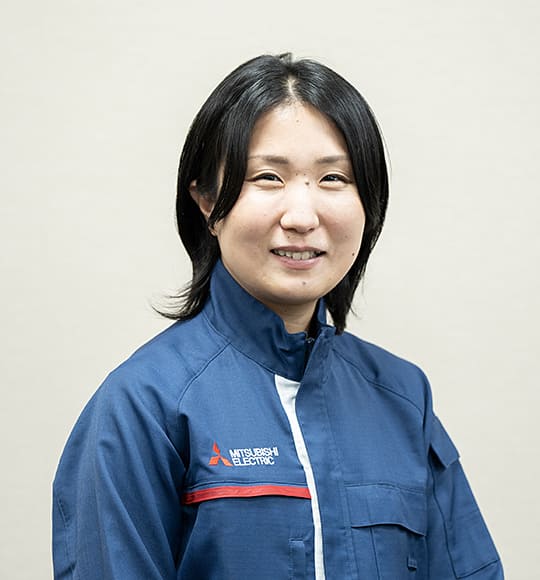
2024.03.14
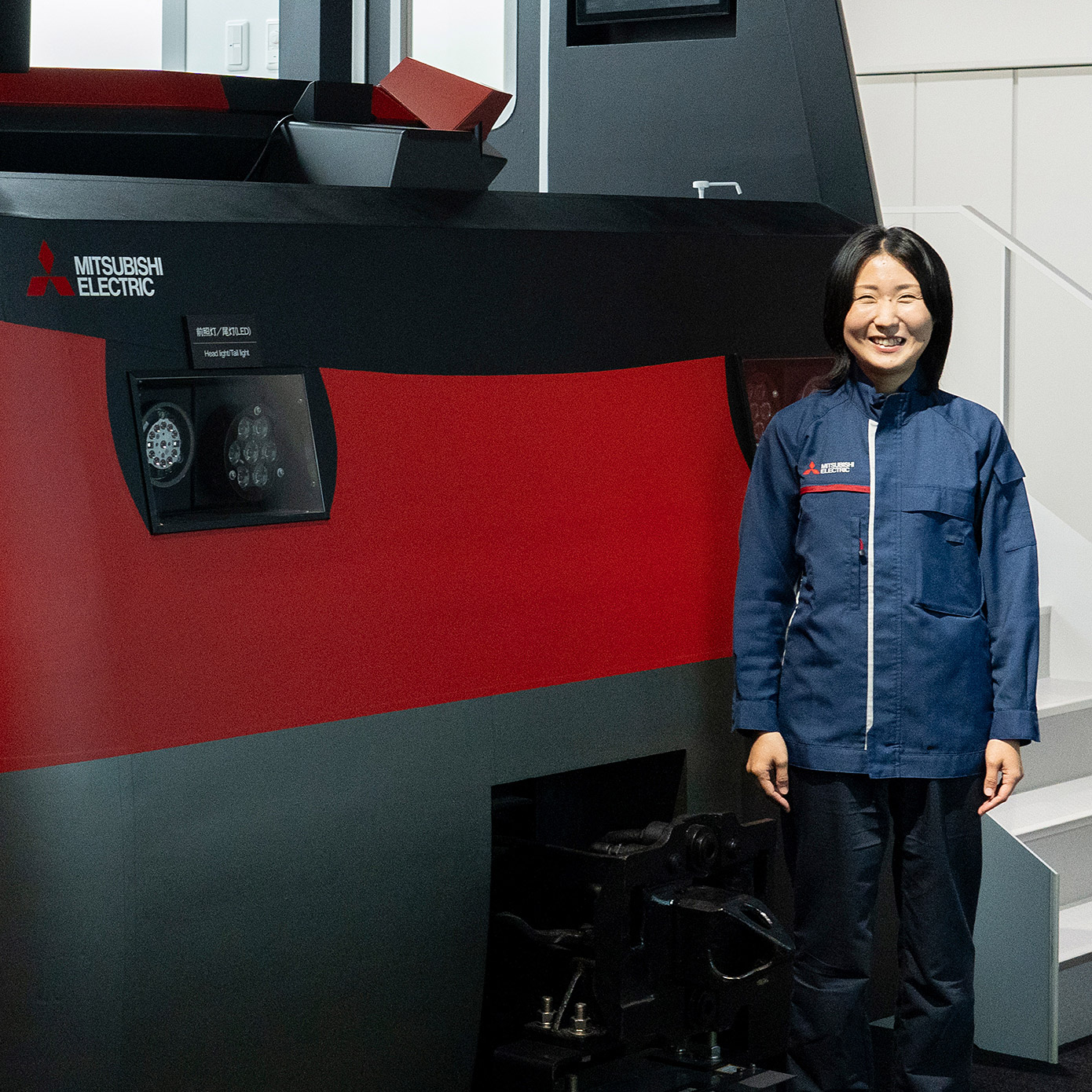
A designer who supports social infrastructure with an attitude of always aiming high, and her thoughts on her colleagues and the next generation.
“From home to outer space.” That is how broad Mitsubishi Electric's business domain is said to be. And within that domain is business related to social infrastructure - business which serves as the foundation of society and the nation. One example of such business is the designing of inverters, the propulsion control devices used in railroad cars. Born and raised in the Kansai region, Ms. Takada works at the Itami Works, located also within the Kansai area, and she is blessed with two children. As she struggles to balance work and family life, but what are her thoughts on the weft (her colleagues) in the workplace and the warp (the next generation)?
Contents
A childhood fascination with space led her to a career in science.
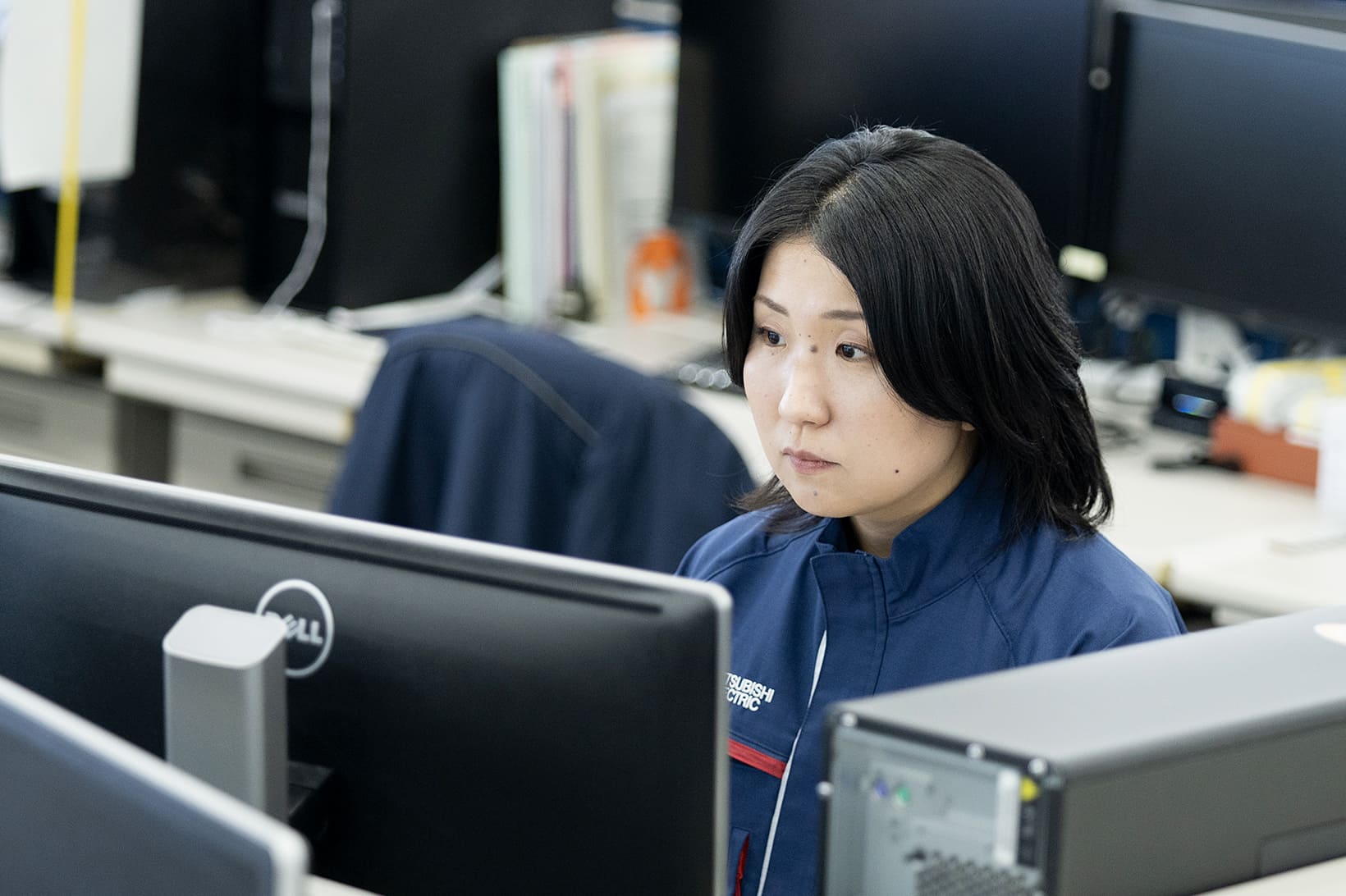
When we visited Ms. Takada's department, there were only a few women there, perhaps because it was a design department workplace. What led Ms. Takada to pursue a career in science was her passion for space that grew in her childhood, and an introspective look at herself.
“As a child, I wanted to be involved in space development. When I was in elementary school, Chiaki Mukai and Mamoru Mohri were active in space, and whenever I saw news about Japanese astronauts going to space on the space shuttle, I thought it was cool. I also liked mathematics and was aware that I was suited for science, so I decided to study mechanical engineering in university. I thought I would be able to build something like a foundation for myself there, since mechanical engineering is a discipline that is fundamental to the creation of things.”
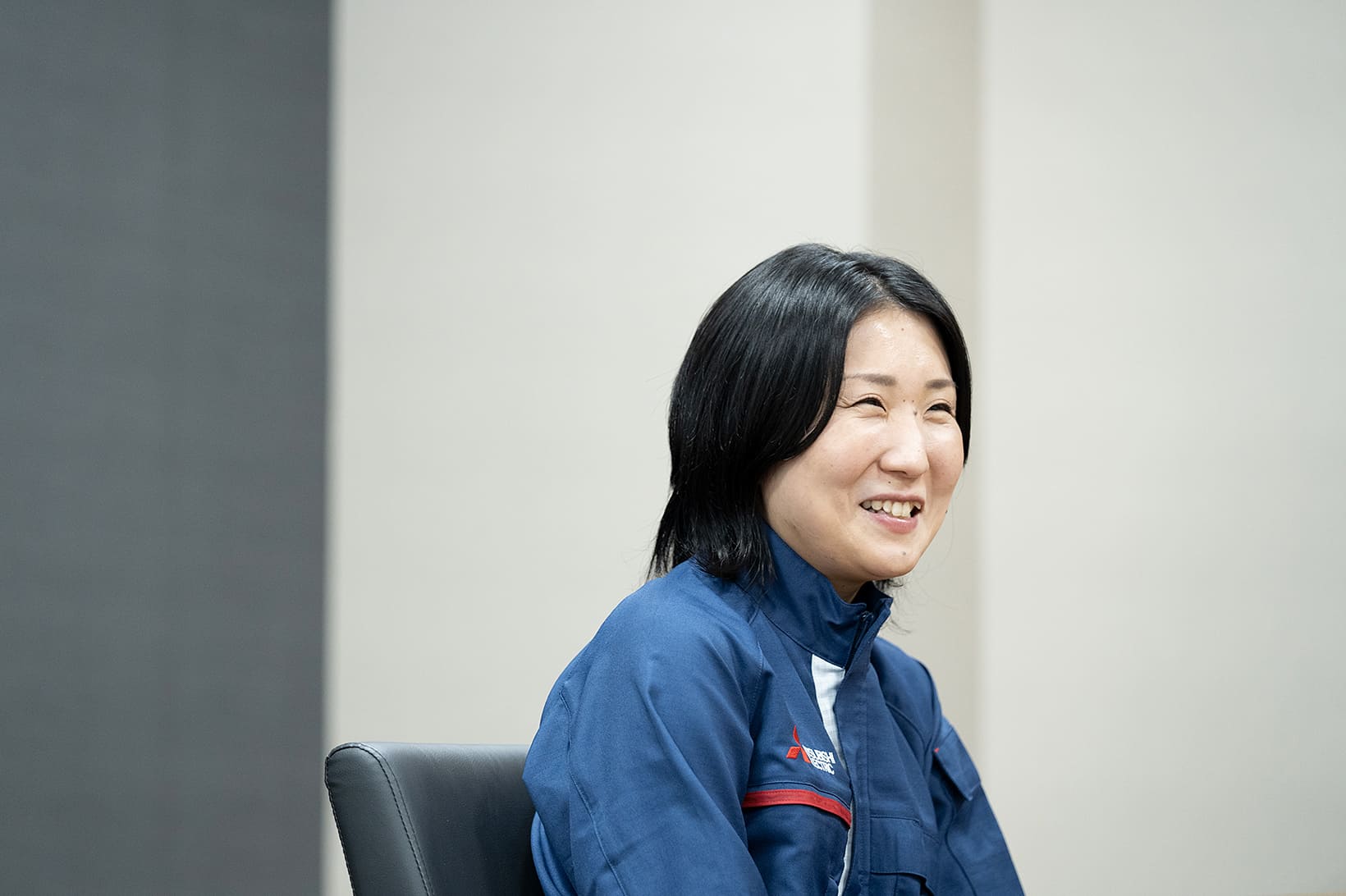
After that, she advanced from university to graduate school. Looking back, she says that space was what led her to Mitsubishi Electric.
“I first came to know about Mitsubishi Electric because it was a company that was involved in the space business. However, I realized that it would be difficult to go into space development from the field of mechanical engineering, which is what I had studied. I thus chose to be involved in the railroad business, which is one of the social infrastructures in Mitsubishi Electric's wide range of business areas, and so I decided to work for the company. The reason I was interested in social infrastructure was that I had always had a strong desire to help people, and I thought that improving this field would improve society as a whole because it is the foundation of society, unaffected by trends.”
What is an inverter? How is it designed?
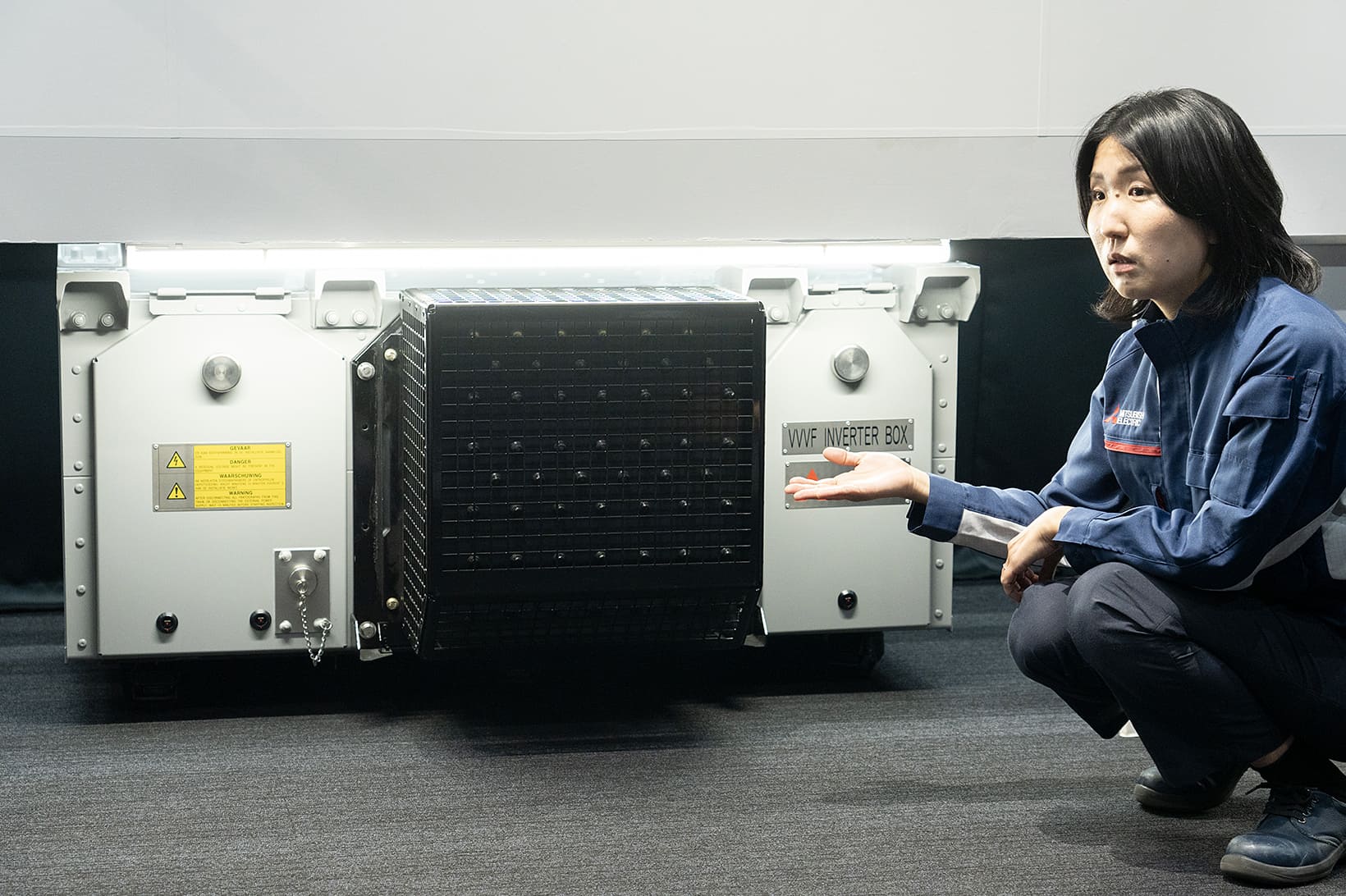 Inverters installed under railcars
Ms. Takada's job is to design inverters installed in railroad cars. An inverter is a device that converts the DC transmitted from the overhead wires into AC, which the train then uses to run the motor. The inverter can be compared to the brain and heart of a human being.
“In the design part I am in charge of, we listen to the requirements of the railroad company that placed the order, and incorporate them into the design, taking into account factors such as size, strength, and ease of maintenance. Our goals are to make the current flow more efficiently and to reduce the size of the inverter.”
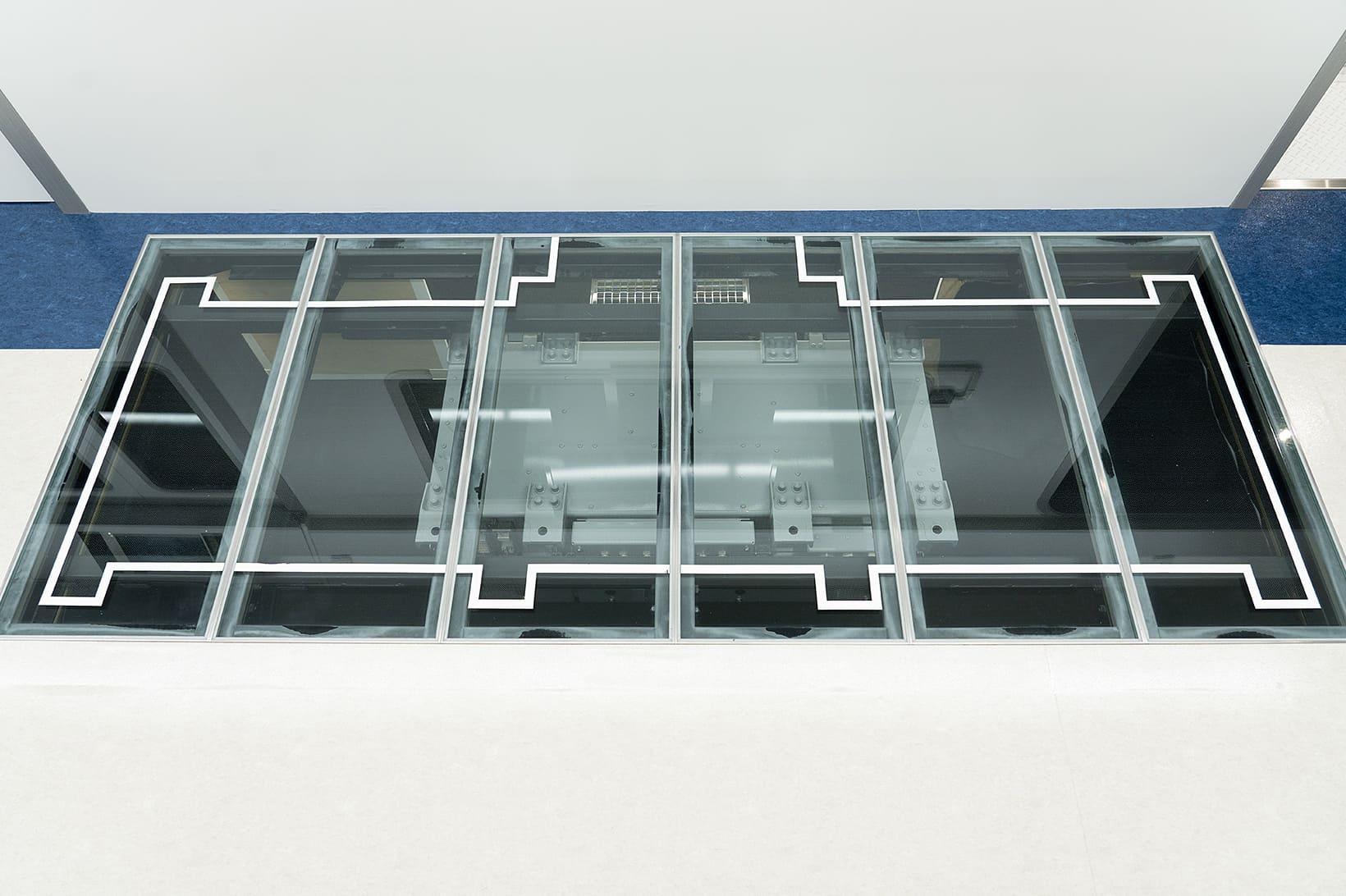 The white frame is the size of the previous model. It is evident how much smaller the inverter has become.
So, simply put, what is the difficulty of designing things?
“It is to create a "good design" for everyone. We go into design with the basic premise of complying with customer requests, but we also contemplate how we can make products easier for the customer to use, as well as what specifications would make it easier for the manufacturers to produce them. This is both difficult and interesting.”
How to tackle “work with no end?”
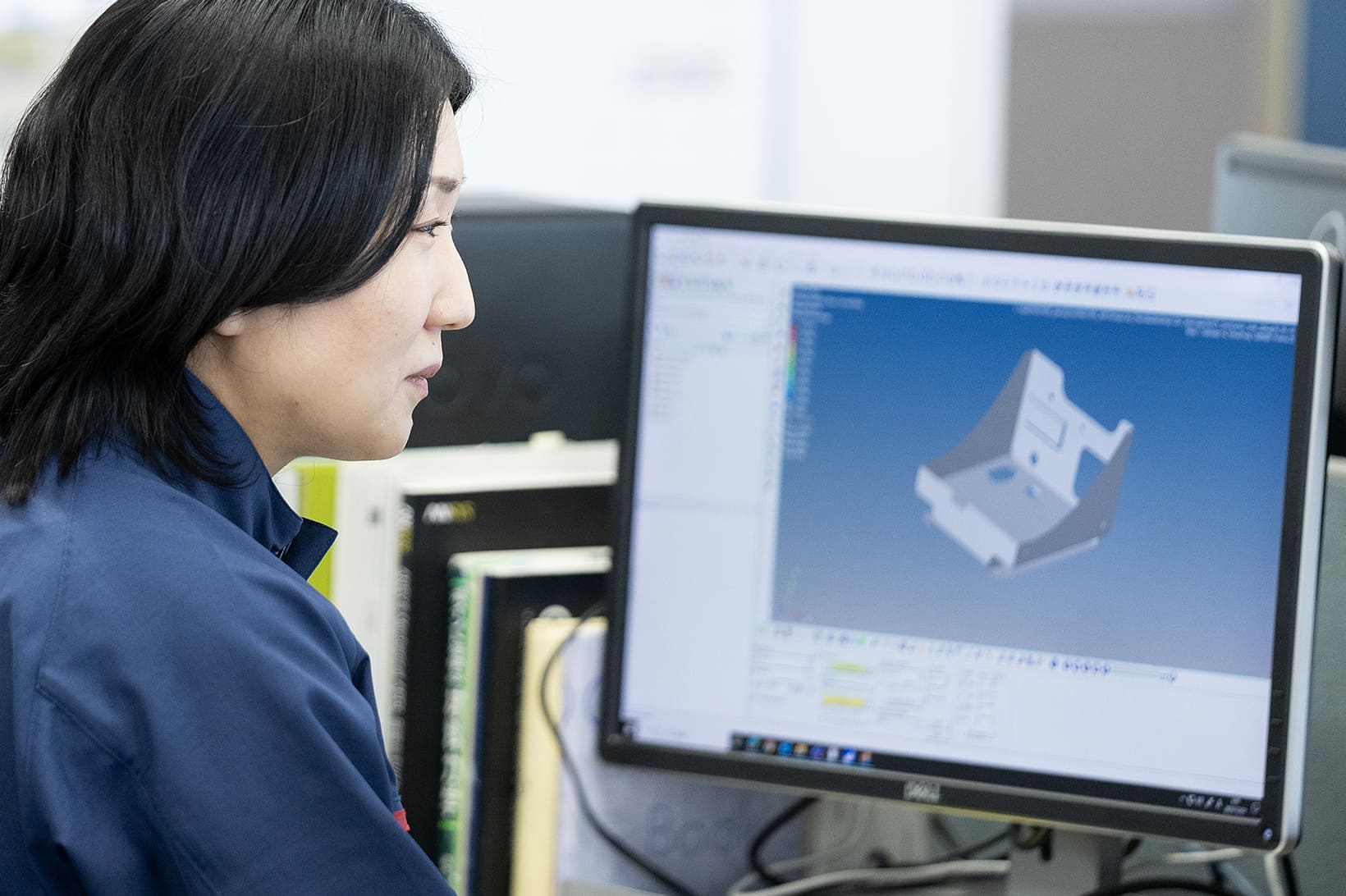
As is common in the railroad business, or other areas of social infrastructure, it is not uncommon for a project to last two or three years. What does Ms. Takada keep in mind as she works on a project like this?
“From my position as an designer, I feel a sense of crisis that I will be left behind if I do not continue to innovate. No matter what kind of work I do, I set a goal for each job, saying, 'Let's try this next challenge.”
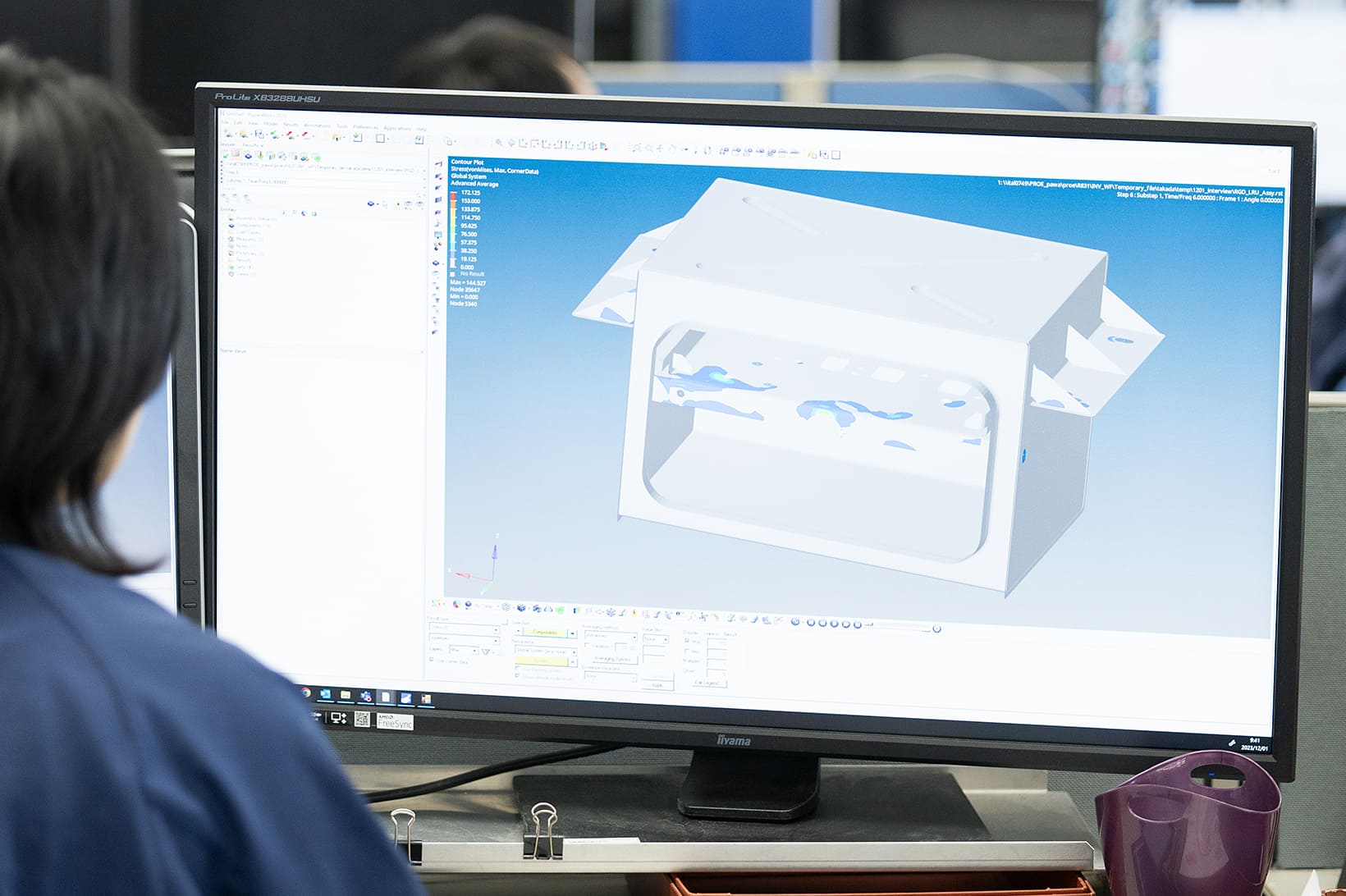
The root of this attitude - to always aim higher - is Ms. Takada's genuine curiosity.
“This is a job where you can never see limitations, where you can go as high as you want in your expertise. I have been with the company for about 15 years now, and there are still many things that I don't know. There are technologies and findings that arouse my intellectual curiosity, and I get really excited when I encounter those things.”
The presence of others who help me broaden my narrow perspective
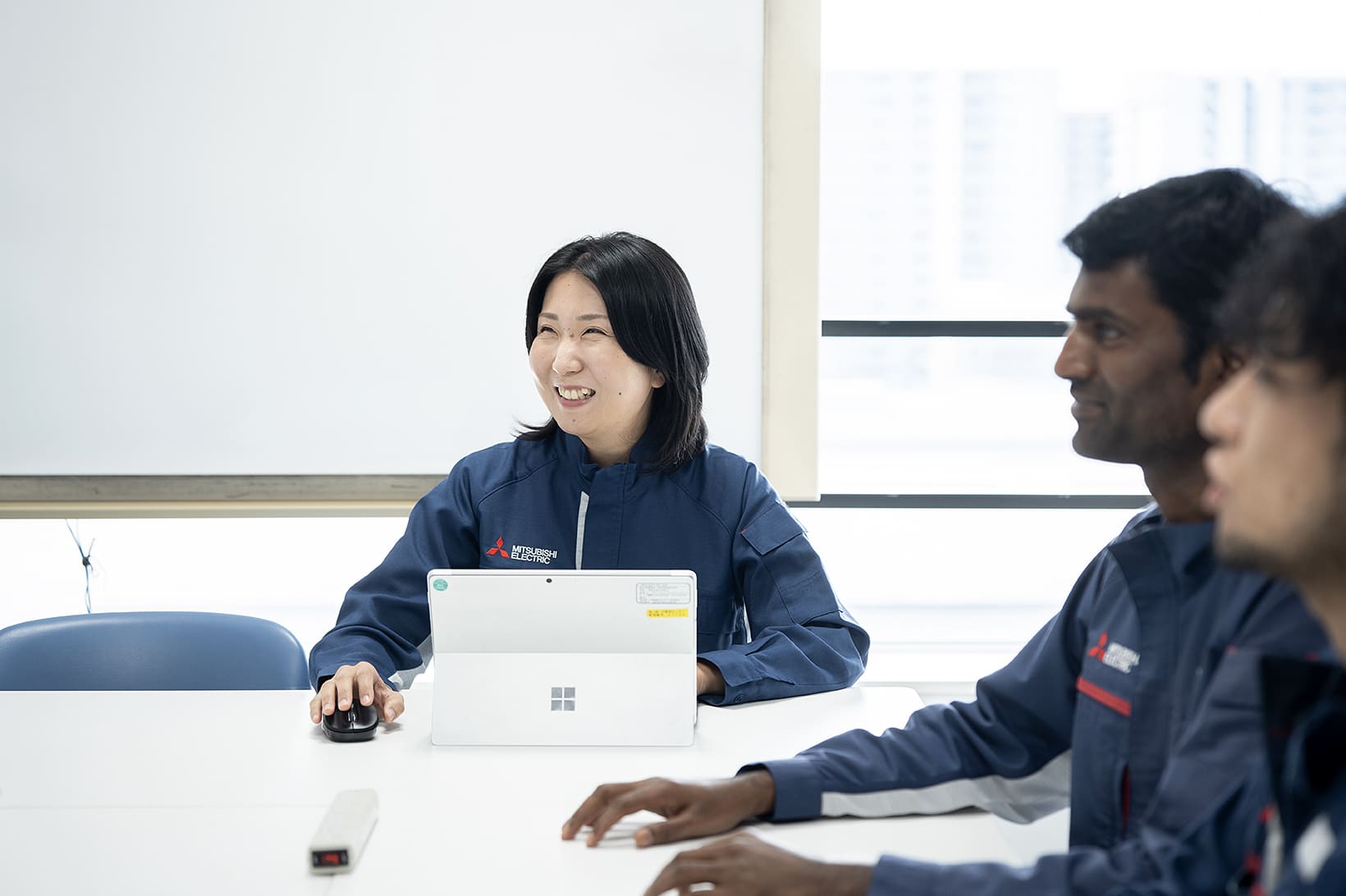
Another thing that Ms. Takada values in her work is her relationship with the people around her, whom she trusts.
“I am aware that I have a habit of stubbornly thinking, ‘This is the way it should be,’ and my perspective tends to narrow as I pursue the optimal solution for design work. To prevent this from happening, I listen intently to the opinions of those around me so that I can objectively consider opinions and values different from my own, all of which can lead to something even better."
Completing the inverter requires teamwork. And the success she achieves by working together with those around her propels Ms. Takada to her next task.
“When I joined the company, my seniors and supervisors taught me that you can't do a job alone, and that cooperation with others is important. Even people in the same department have different expertise. When I am able to solve a technical problem or fulfill a request from a customer in cooperation with those people, I feel a sense of accomplishment and happiness at the same time, knowing that I have made even a small contribution as a member of this team.”
How changes in personal life influence work
Ms. Takada has children. The maternity and childcare leave she took in the past has made her more aware of the people around her.
"As was the case when I took maternity and childcare leave, I have a child, a family, and a job that I have to balance. I have to balance work and family, so I have to ask for support from the people around me. I work every day aware of the connections I have with the people around me."
And the birth of her child gave her the opportunity to see not only the weft (her colleagues), but also the warp (the next generation).
She said, "Having a child - part of the next generation - so close to me, I wondered what I could do for this child, and for the people of the next generation. Because of this, I often think about how I can pass on my knowledge and skills to the next generation."
Maybe this job is making someone in a faraway place happy.
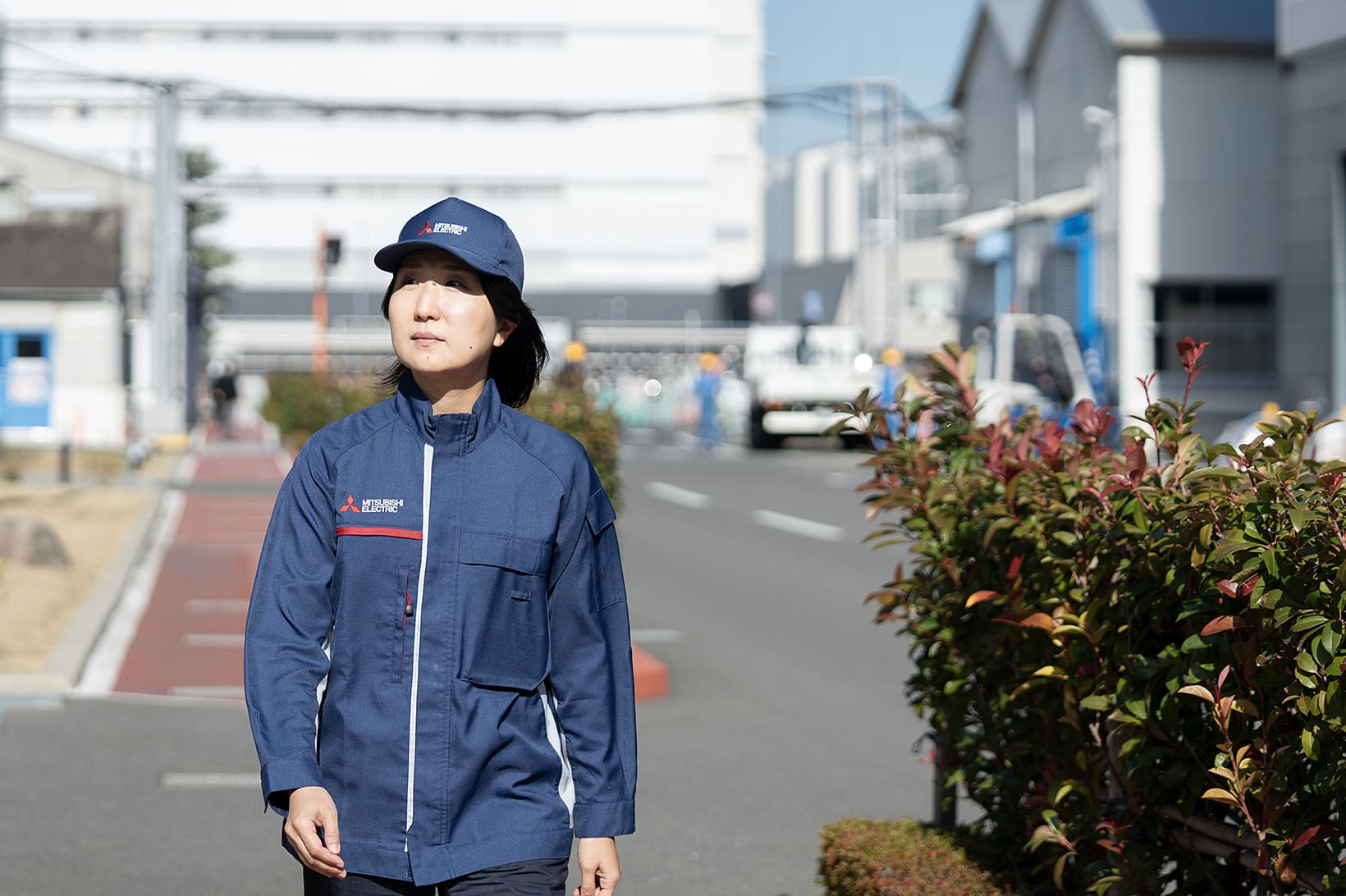
“Social infrastructure” is the foundation of society and is often invisible. Perhaps that is why, unfortunately, it is often the not-so-good cases that come under the spotlight.
“When I hear on the news or at the station that a train from somewhere is delayed, I get nervous and worried. It's like an occupational hazard.”
Still, the moment she hears welcome and unexpected news, Ms. Takada sometimes thinks, "Maybe I am making a contribution to society.
“When I hear the news that a new rail car has started operating somewhere, some time after the product I was involved in was shipped, whether in Japan or overseas, I think about my work. For example, when I realize that overseas railroad projects have the background of helping local people's lives, such as by relieving traffic congestion, I suddenly feel connected to people in faraway places.”
To update and pass on knowledge and technology to the next generation
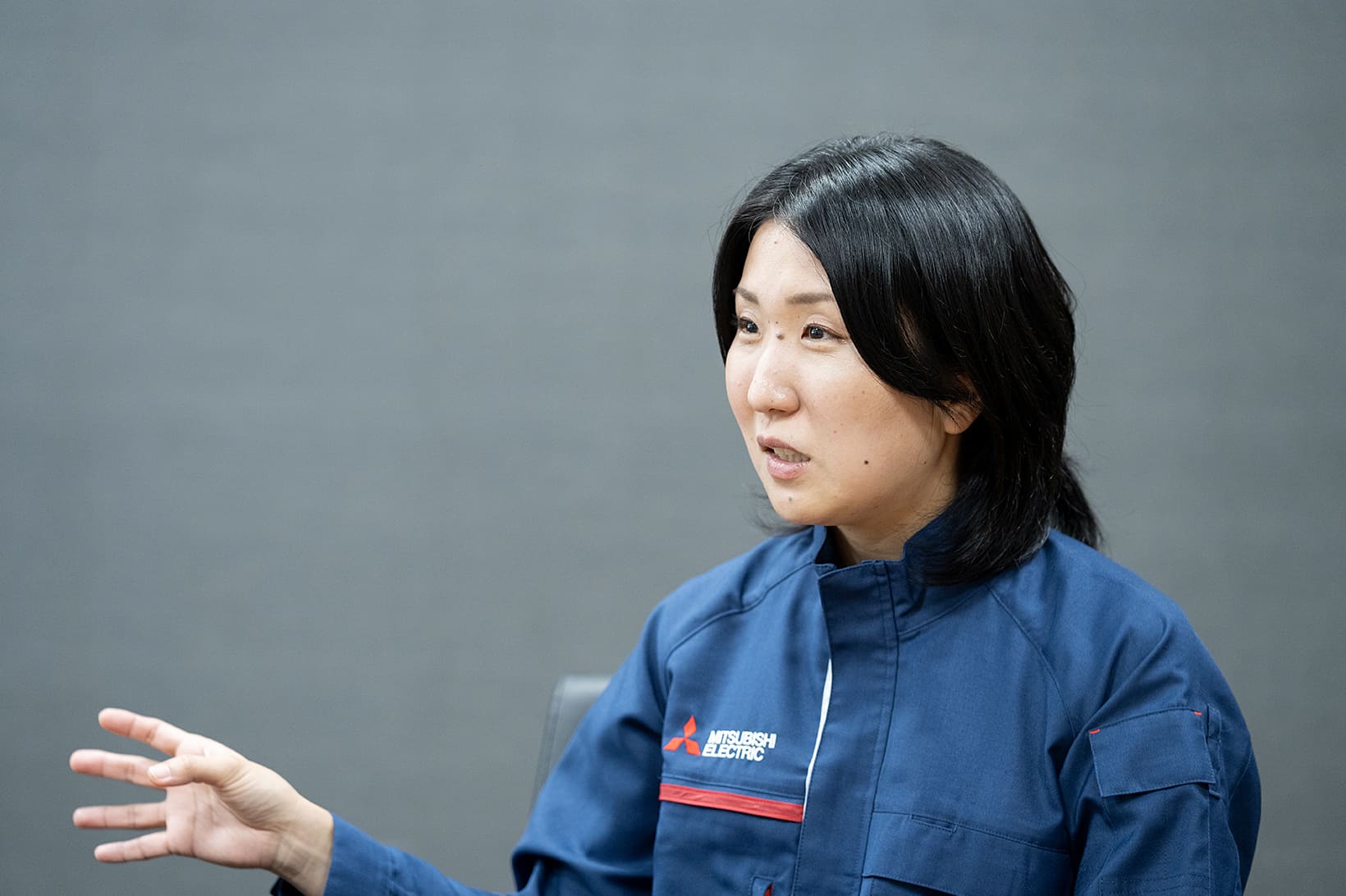
After a period of maternity and childcare leave, she has now been with the company for 15 years. What does ‘My Purpose’ mean to Ms. Takada, now a mid-career employee?
“I want to contribute to society by creating good products together with my trusted colleagues. As a mid-career employee, I want to pass on my knowledge and skills to the next generation. I believe that I am here today thanks to the wisdom of my predecessors, and I must pass that on to the next generation. On the other hand, even if the technology and knowledge are optimal at present, better solutions may emerge as technological innovation progresses and the surrounding environment and conditions change. Based on this, I will connect the future advances and changes to the next generation. I guess that is my mission in my position."
She continued with a mischievous laugh, "I was going to talk about my kid but somehow I didn’t.”
She continued, “I hope that when they become adults, we will have provided a better society than the one we have now. And for that reason, I want to pursue higher and better things than what we now enjoy."
INTERVIEWEE
Mitsubishi Electric Itami Works
Akiyo Takada
Joined the company in 2008. Born and raised in Kansai. Studied mechanical engineering in university and graduate school. After joining Mitsubishi Electric, was in charge of inverter design for railroad cars. Used to attend live performances by artists in Japan and abroad, but for the past 10 years or so, has also become a fan of stage performances.