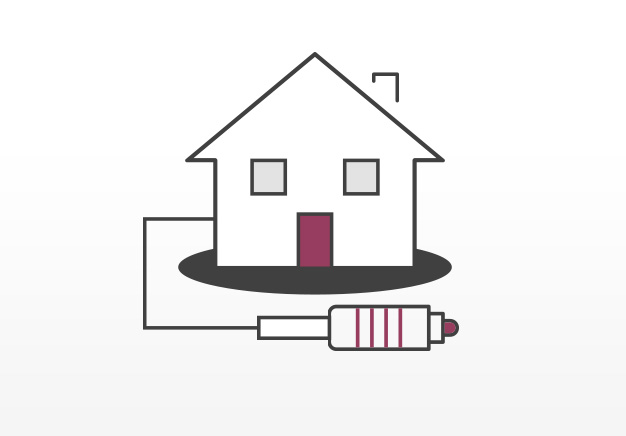
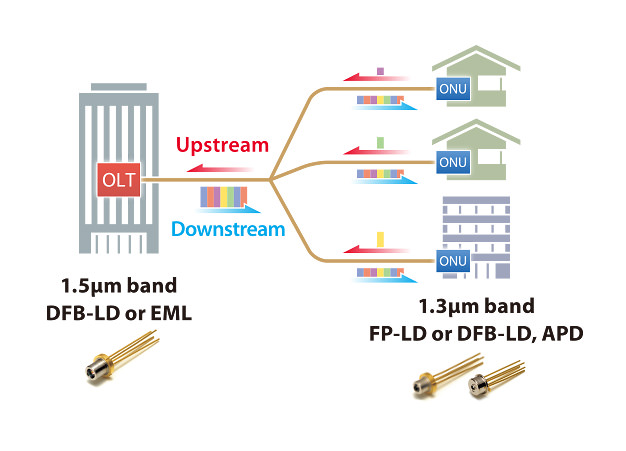
As streaming music and video becomes a common service, there is growing interest in Fiber-to-the-Home (FTTH), an optical communication system that provides high-speed, stable bandwidths to each household. The adoption of faster communication technologies such as 10G-EPON and XG-PON is progressing. Anticipating the future, field trials for 50G-PON—an even faster method of connectivity—are also underway, and we will meet our customers’ needs with a product lineup that supports these advancements.
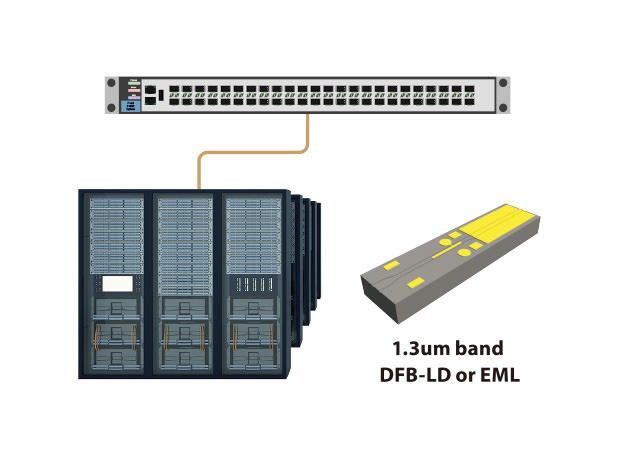
Data centers have been expanding as a platform for storing and distributing digital contents such as social media, photos, and videos on the ever-increasing Internet. In recent years, with the shift from on-premise-type to cloud-type storage, and the expansion of various cloud computing services, data centers are expected to grow as a platform that provides the foundation and infrastructure for cloud computing services. For the data center market, which requires advanced technologies, Mitsubishi Electric provides high-speed, low-power optical devices that contribute due to their unique characteristics of compound semiconductors.
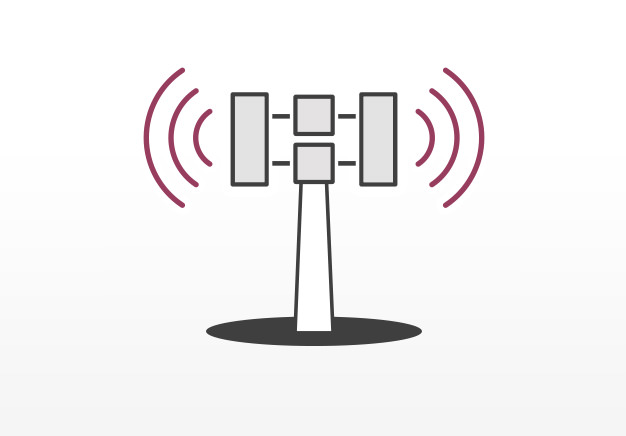
Base Transceiver Stations (BTS) of mobile communication system
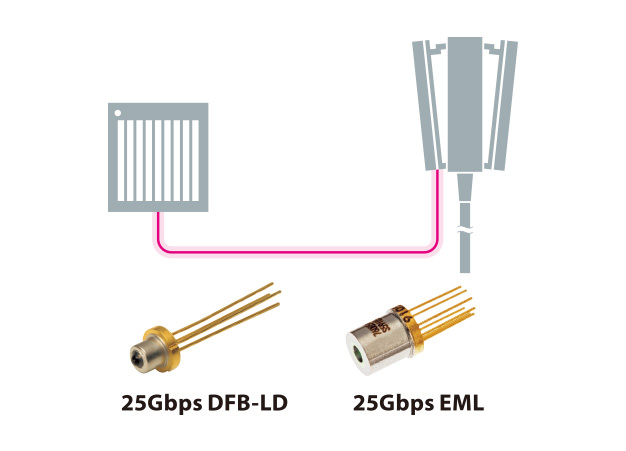
The 5th generation (5G) mobile communication system will offer ultrahigh-speed communication, low latency, and ultra-multiple connections. As such, the 5G mobile communication system is expected to become used widely around the world. With the increase in communication traffic, optical devices that support mobile base station networks are also required to operate at higher speeds, over a wider temperature range, and have higher reliability. Mitsubishi Electric utilizes the industry-standard TO56 package to expand the connectivity of various products such as 25 Gbps DFB. We are also developing 100 Gbps EML CAN for the future as well as services that will support the application and market growth of 5G mobile base stations. With these initiatives, Mitsubishi Electric is geared to support the market growth of 5G mobile base station applications in the future.
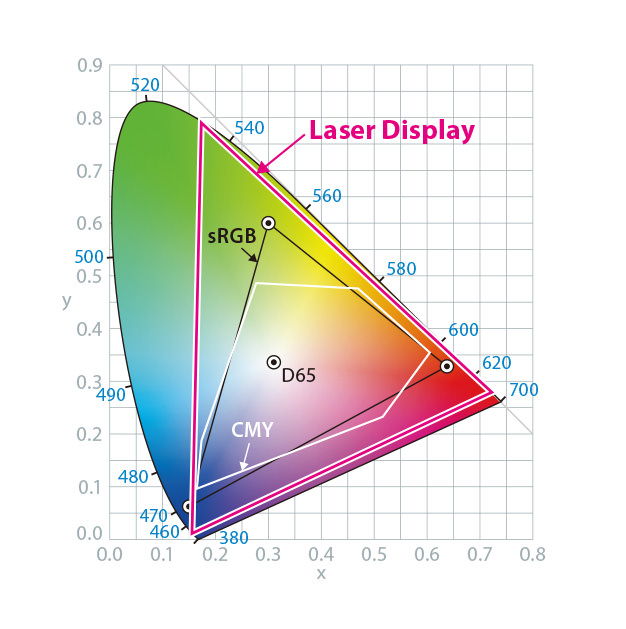
Compared to LEDs, semiconductor lasers have lower power consumption, higher output, and can be used with optical systems that have a higher maximum aperture. These considerable advantages mean that they can be used for projectors that do not require focal adjustment. Mitsubishi Electric has a range of lasers available, including a multi-mode semiconductor laser with a wavelength below 640nm and 1W output (when pulse-driven), or 1.55W output (when CW-driven), that provides highly visible, vibrant red colors for color projectors.